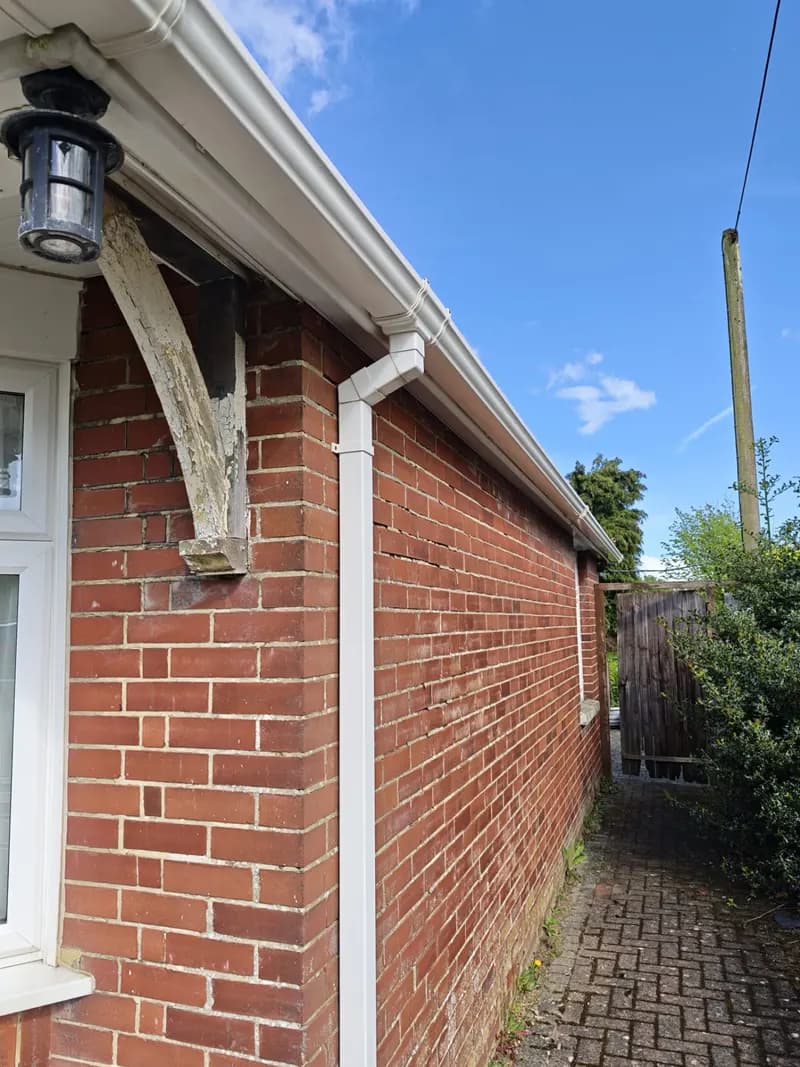
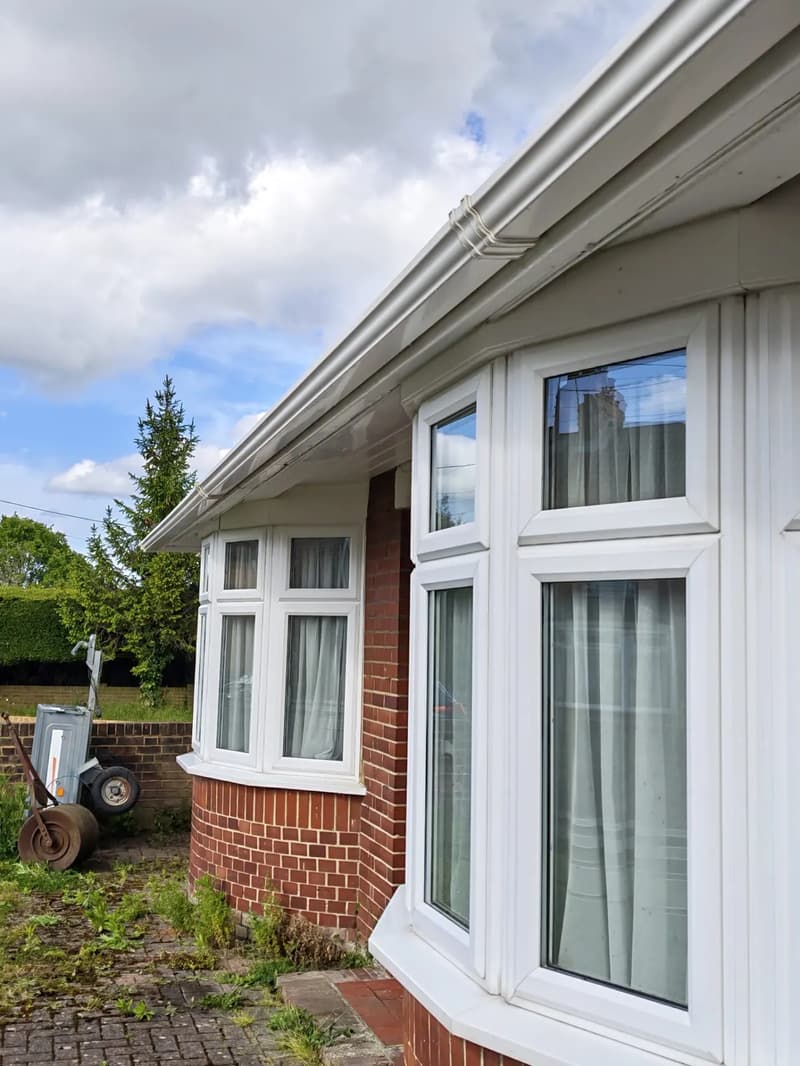
- On many properties, yes. High reach equipment lets the work be carried out efficiently from ground level, which is quicker and avoids leaning ladders against the roofline.
- Yes, and it usually makes sense. Gutter clearance can be combined with fascia and soffit washing in one visit to deal with dirt, cobwebs, algae and traffic film at the same time.
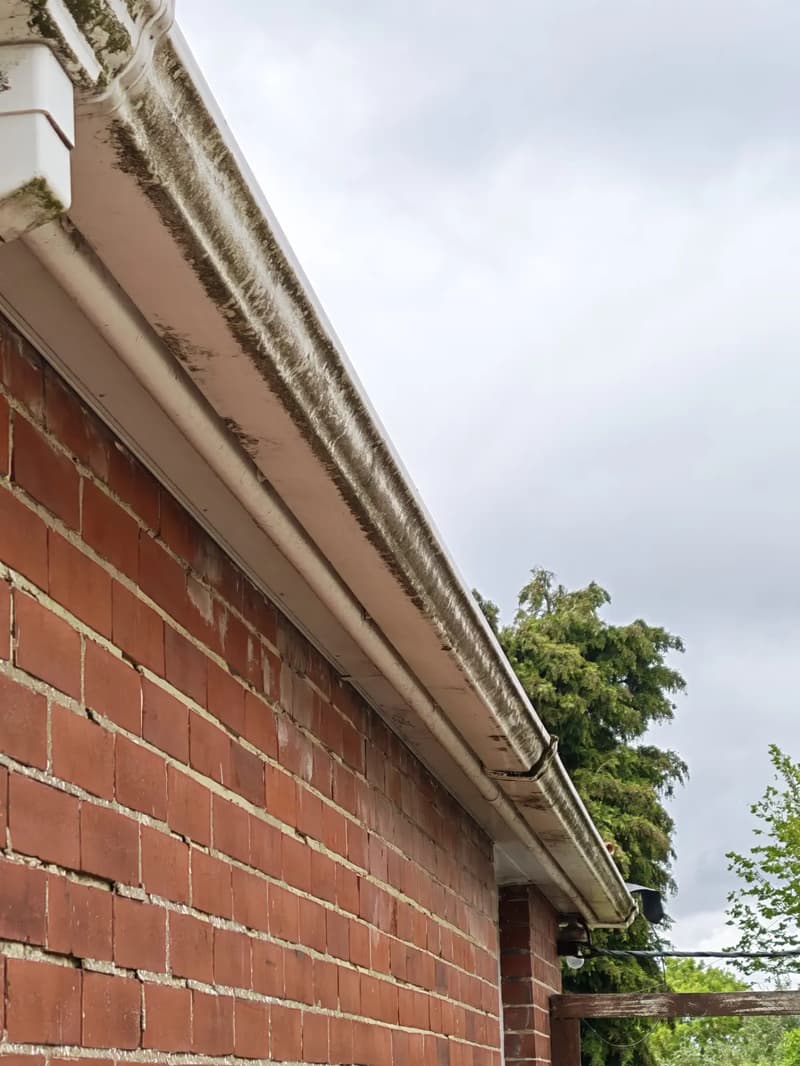
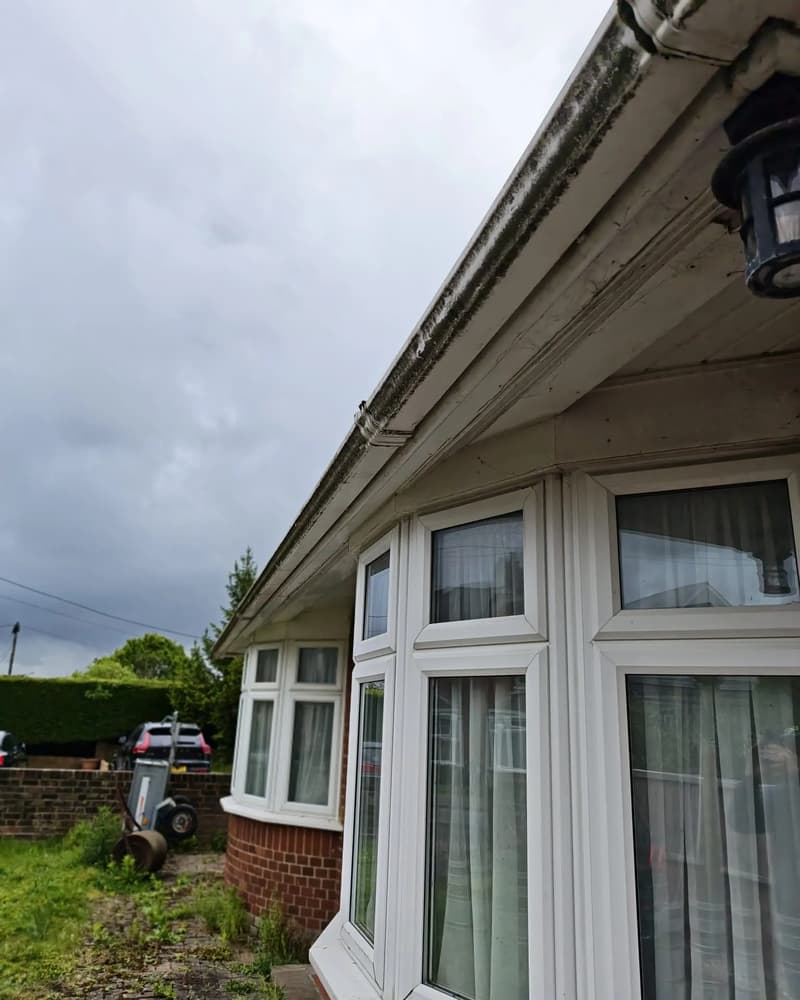
- White roofline plastics collect traffic film, algae and general airborne dirt, which shows as dark streaks. Washing the surfaces restores an even, well kept finish.
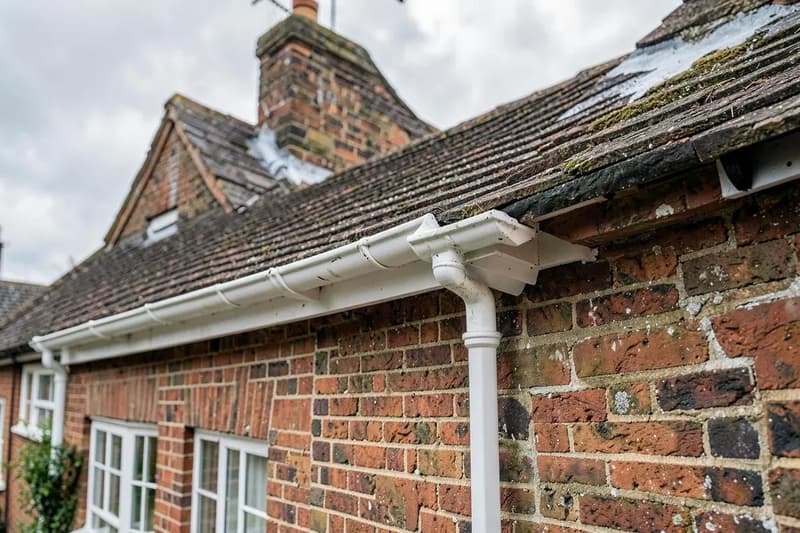
- Yes, because blocked gutters affect drainage as well as presentation. Clearing the debris lets water run to the downpipes as intended.
- Yes. Both domestic and commercial properties are covered, and larger sites can be scheduled around how the building is used.
- First distinguish debris inside the channel from dirt on its exterior. Clearance is planned for the run and outlet, with ground-level vacuum equipment used where access allows; exterior washing is scoped separately.
- Inspect only from a safe position and describe the height, obstructions and blocked areas. A professional assessment determines the approach; avoid climbing onto fragile roofs or leaning over a high edge.
- Leaves, moss and silt can obstruct the channel or outlet, causing rainwater to overflow rather than follow its intended route. Clearance addresses that debris, while building defects require separate consideration.
- It is washing the outside face of the gutter to address dirt and organic staining. It is not the same task as clearing the debris inside, although both can be requested.