
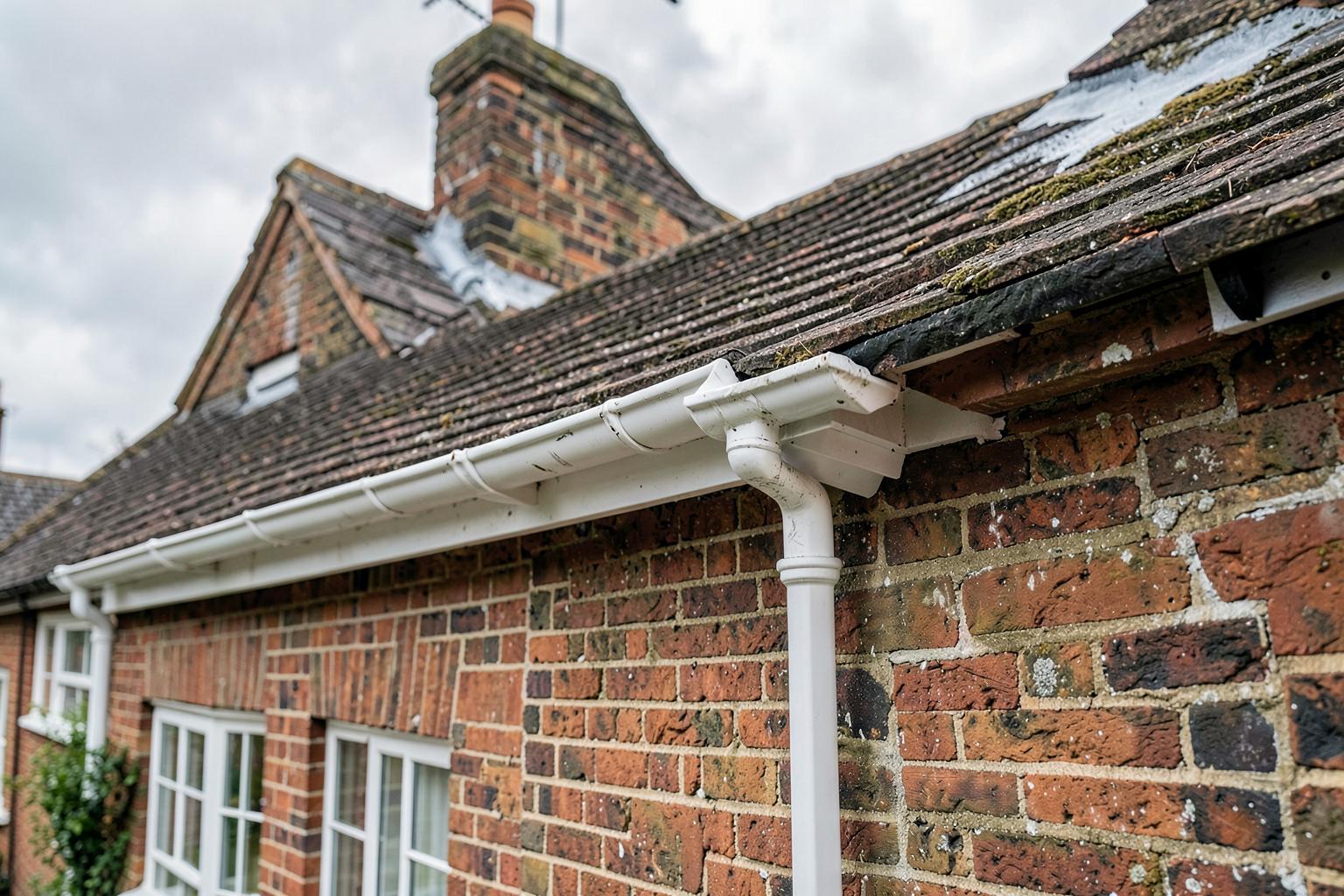
Why white roofline turns grey and streaked
Fascias sit directly below the gutter, so every overflow, joint drip and roof deposit passes close to them. Airborne dirt settles across the face, algae establishes around damp corners and cobwebs catch more debris beneath the soffit. The result is usually a broad grey film with darker vertical marks below gutter joints and outlets.
Cladding boards collect the same contamination over a larger area. Shaded boards may show green growth at laps and trims, while a roadside face often looks evenly dull. Mapping the pattern helps separate a drainage issue from general weathering.
Cleaning versus oxidation and chalking
Surface dirt transfers as grey, brown or green contamination and reveals a brighter finish beneath. Oxidised or chalky plastic behaves differently: the surface itself has changed and may leave a pale powder on a cloth. Washing can remove the contamination sitting over it, but it does not rebuild the original gloss or colour.
A small test area helps set expectations. If the test becomes clean but remains flat or uneven, the limitation is the material rather than unfinished cleaning. That should be discussed before the complete roofline or wall is booked.
A careful method for uPVC
Loose debris and cobwebs are removed first. The surface is wetted and cleaned with products and brushes suited to the plastic, working along boards and around joints rather than scrubbing randomly. Rinsing follows from the top down so dirty water does not dry across areas already finished.
Abrasive pads and harsh force can leave fine scratching or patchy gloss. High reach equipment lets much roofline work be completed from ground level, reducing the need to lean ladders against gutters. Delicate trims, vents and sealant lines still need close control rather than a one-setting approach.
Fascias, soffits and cladding are not identical
The fascia is the upright face behind the gutter and receives the most runoff. Soffits sit underneath the eaves, where insects, cobwebs and ventilation details are the main concerns. uPVC cladding covers a wall area and includes laps, corner trims, openings and fixings that control how water drains.
Each element therefore needs a different working angle and amount of rinsing. Vents should remain clear, water should not be driven behind laps, and runoff from the upper wall must not be left to streak the clean roofline below.
Clear the cause as well as the mark
If a bright fascia develops one dark line again, look above it. A blocked outlet, leaking gutter joint or roof debris can repeatedly feed the same streak. Combining gutter clearance with fascia and soffit washing deals with drainage and appearance in one visit.
Cutting back planting improves airflow beside low cladding, while moving stored items away from the wall lets damp boards dry. These simple changes will not prevent ordinary weathering, but they reduce the conditions that support concentrated growth.
What to include in the quotation
Confirm whether the work covers the outside gutter face, fascia, soffit, vents, downpipes and wall cladding, because roofline cleaning can mean different things. Note conservatories, extensions and narrow passages that affect reach. OOR External can pair clearance and washing, then record the agreed items in a written quotation before the visit.
- Inside gutter clearance if required
- Outside gutter face
- Fascia boards and corners
- Soffits and ventilation details
- Downpipes and visible fittings
- uPVC cladding boards and trims