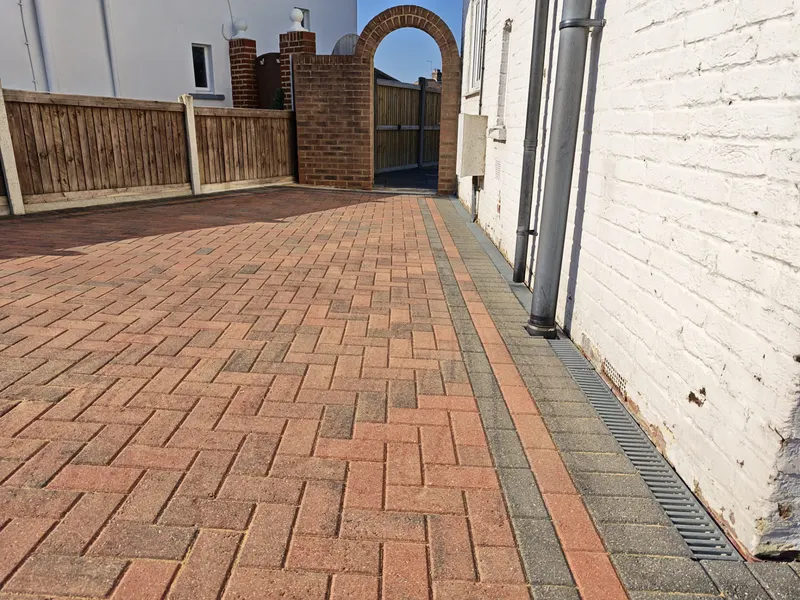
Pressure washing is at its best on robust, open surfaces where dirt sits on top or in the texture. Typical examples include concrete yards, garden steps, brick boundary walls, paths beside the house, bin stores that attract grime and odour, and the hard standing around commercial units where vehicles turn all day.
Each of these collects something different. Steps hold algae in the shaded risers, bin stores build up food residue and staining, and service yards carry tyre marks and diesel film. The method is adjusted for the deposit as well as for the material underneath it.
- Concrete yards and paths
- Brick and block boundary walls
- Garden and entrance steps
- Bin stores and refuse areas
- Commercial hard standing and loading bays
High pressure removes dirt by force, and that same force can etch soft stone, open up mortar, strip paint and drive water behind render or into cladding joints. On those finishes OOR External uses a soft wash: a cleaning solution applied at low pressure, left to work on the growth and then rinsed away.
Many properties need both. A rendered wall might be soft washed while the concrete path beneath it is jet washed, in an order that stops dirty runoff landing on a finished area. You will be told which method applies to each surface before anything is agreed.
Driveways and garden paving are the most common domestic pressure washing request, and they involve extra steps such as clearing joints and re-sanding block paving. Those details sit on the dedicated driveway and patio page, along with real project photographs, so this page concentrates on the other hard surfaces around a property.
On commercial premises the priority is keeping the site working. Yards are cleaned in sections so vehicles and deliveries can still move, and pedestrian routes are kept clear or redirected while each area is washed. Entrances and customer-facing paving can be prioritised so the front of the building looks right first.
Water management matters more on a large site. Drains, gullies and slopes are checked so wash water travels where it should, and heavy contamination such as oil is discussed before work starts because it may lighten rather than disappear completely.
Send the postcode, a few photographs and a short list of the surfaces, or ring Jordan on 07860 962107. From that he can usually identify the materials, the access and any problem areas, then recommend a method for each one and put it in a written quotation.
On the day, loose items are moved, doors and windows nearby are closed, and the work runs from the far end of each area towards the exit. If a biocide treatment would slow regrowth on shaded surfaces, that is offered as a separate line rather than added by default.