
Need this sorted?
Need help with roof moss removal? Book roof moss removal or get a quote from OOR External.
Why moss grows on roof tiles
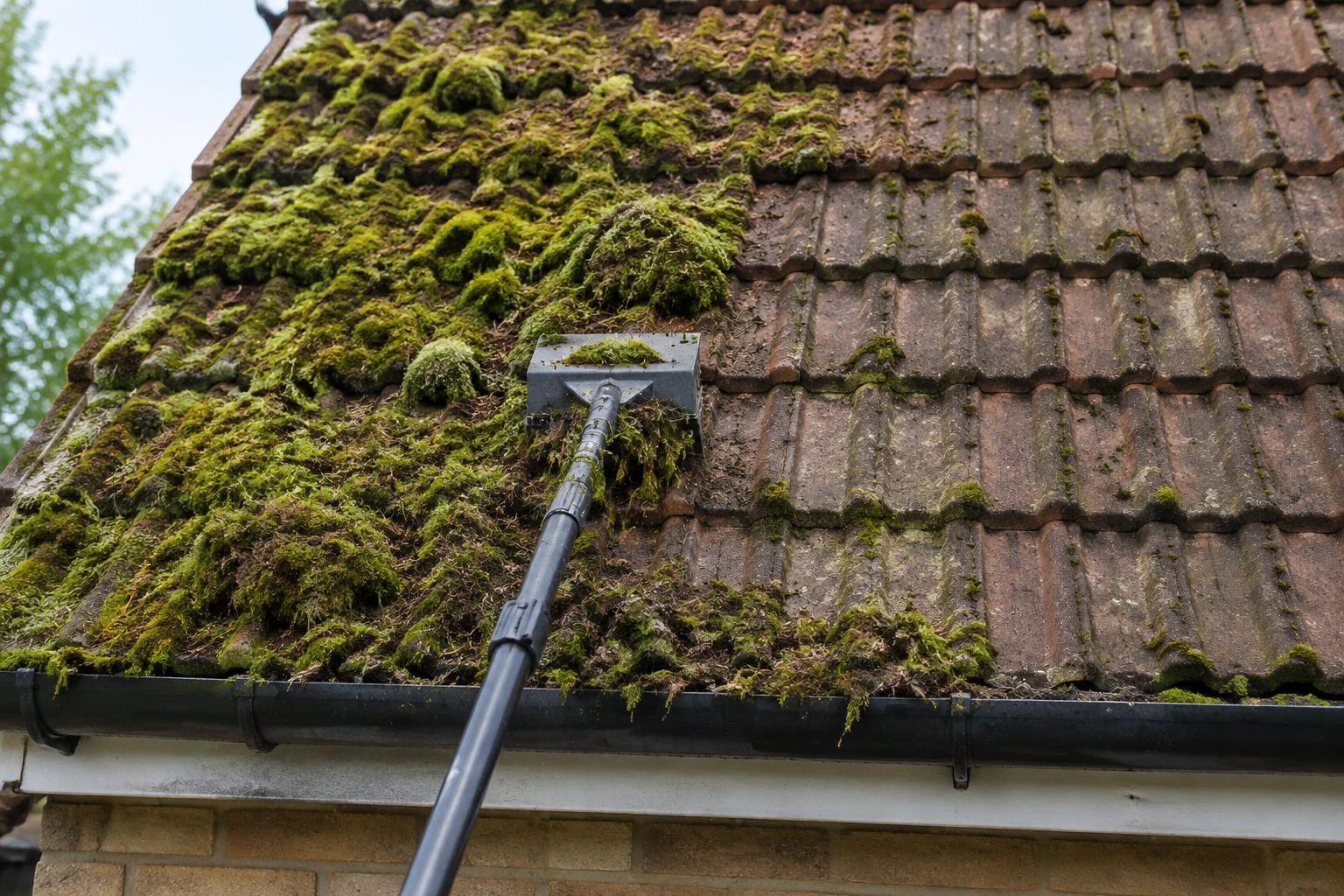
Moss needs moisture, some shade and a surface it can grip. Concrete and clay tiles have a slightly rough texture, and the overlaps between courses trap water and wind-blown soil. North-facing slopes, roofs under trees and coastal properties with damp air see the most growth.
Once a few spores take hold, the moss traps more debris and holds more water, so it spreads faster each year. That is why a roof can go from a few patches to heavy cover in a handful of seasons.
How moss can cause harm
A cushion of moss acts like a sponge. It keeps the tile surface wet long after rain, and in winter that water can freeze. Repeated freezing and thawing in a porous tile is one way surfaces start to flake. Moss also grows into the gaps where tiles overlap, which can lift edges slightly and let wind-driven rain reach places it should not.
The other common problem is drainage. Moss that breaks away in dry weather rolls down into the gutters and outlets. A blocked gutter overflows onto walls and fascias, and that water can cause staining or damp. In many cases the gutter is where moss causes trouble first.
- Water held against tiles for long periods
- Frost damage on porous surfaces
- Lifted edges where moss grows into overlaps
- Blocked gutters and overflowing outlets
When moss is mostly cosmetic
A light, even film of green on a sound roof is mainly about appearance. It may still be worth dealing with before it thickens, but it is not an emergency. Some older or fragile coverings are better treated gently and left to weather than cleaned hard. The decision depends on the covering and its condition.
What to look for from the ground
Do not climb onto the roof to inspect it. From the garden or the street, look for thick clumps sitting proud of the tiles, pieces of moss on paths and in the gutter, and any tiles that look out of line. During rain, watch whether water spills over the gutter at a corner or outlet.
Take photographs of each slope and the gutters below. Those pictures let OOR External assess the covering, pitch, condition and access before a method is agreed.
Dealing with moss without causing damage
Removing moss badly can do more harm than leaving it. High-pressure jet washing can strip the surface of a tile and force water under the laps. OOR External removes loose growth on tiled roofs with care and offers biocide afterwards as a separate line. Gutters and outlets are cleared after a roof clean.
If you are weighing up a shop moss killer against professional treatment, the moss killer guide compares them. Lichen is a separate growth with its own behaviour, covered in the lichen removal guide.
Should you act now or wait?
If moss is falling into the gutters, water is spilling during rain or tiles look lifted, it is worth arranging an assessment sooner rather than later. If the roof is sound and the growth is light, you have time to plan, and the work can be timed for a dry spell when a treatment has the best chance to work. Either way, the useful step is the same: send clear photographs from the ground and describe what you have noticed, so the right approach can be agreed for the covering you have.