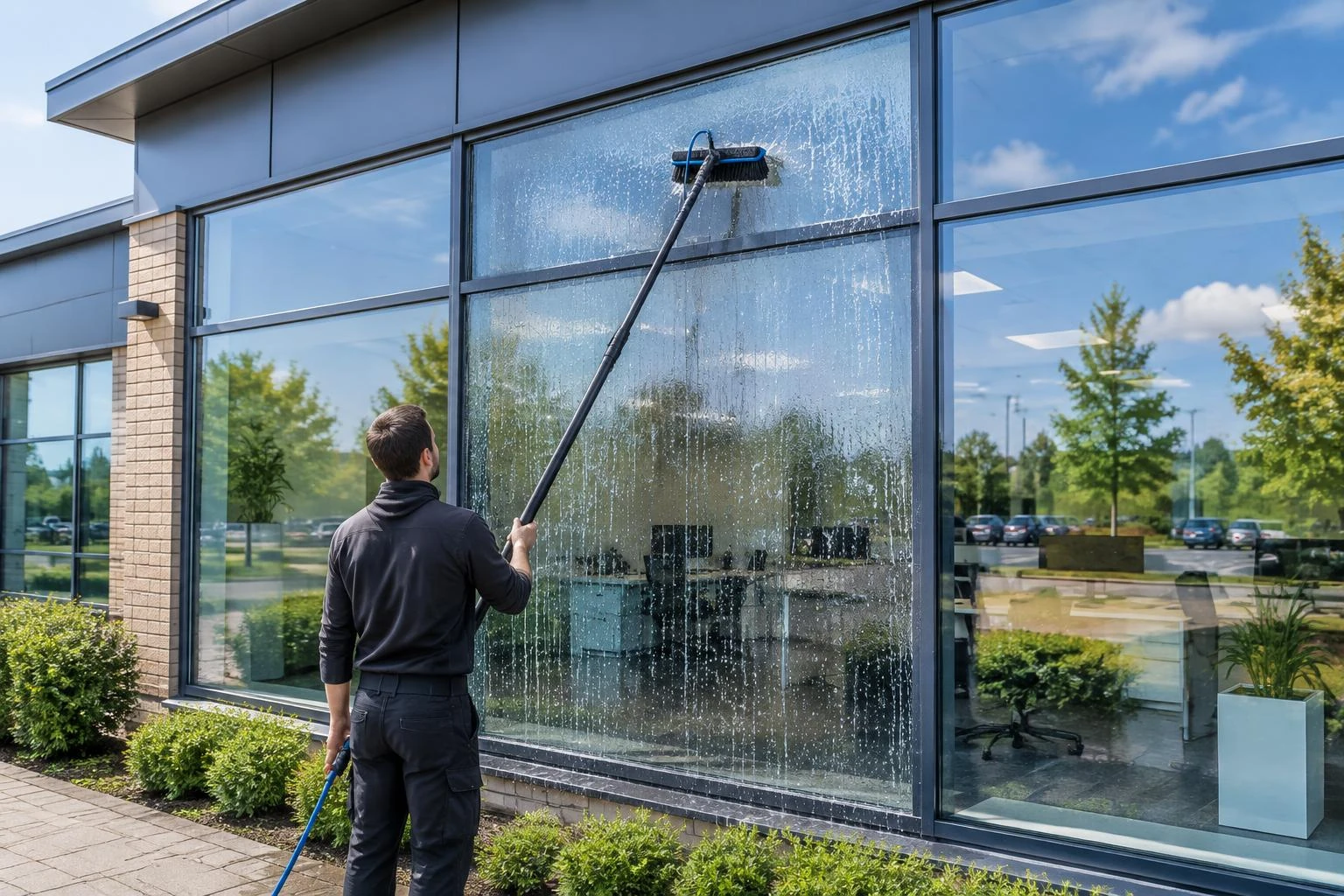
Commercial window cleaning means external glass on premises used for business, education or public services rather than private homes. The scope normally includes the panes and frames, and can extend to sills, glazed doors and entrance screens. Internal glass is a separate matter and is not assumed unless it is agreed.
Many sites combine window work with cleaning of the surrounding facade. Clad office fronts and retail units often look tired because the panels around the glass are stained, and treating only the windows can leave a contrast. The cladding cleaning service covers those panels where that is the better scope.
A shopfront is often the most visible glazing a business owns. Large panes collect traffic film, finger marks around the door and salt on the coast. Cleaning before opening or at a quiet time keeps the entrance usable and avoids rinse water running across customers.
Pavement space is limited on many streets, so the working area is kept tight and coned where needed. Canopies and fascia signs above the glass are frequently dirtier than the window itself, and the canopy and signage page explains how those are approached.
Office elevations may have long ribbons of glazing at first and second floor level. Schools have classroom windows facing playgrounds, which means planning around term time, break times and safeguarding rules. Industrial units usually have fewer windows but high, dirty glazing around offices and roller doors.
Each type is quoted on its own terms. Access through gates, parking for the van and a supply point if required are confirmed beforehand, and site induction or permit procedures are followed where a client has them.
Working from the ground keeps operatives off ladders on busy frontages and allows upper panes to be reached without blocking an entrance for long. Purified water leaves no residue, so no detergent film is left on the glass or running down onto paving and planting below.
The method has limits. Heavily bonded deposits, paint splashes or builders residue may need hand work, and some glazing is simply out of reach of a pole. Those cases are identified in the survey and priced separately rather than discovered on the day.
Shops on busy roads often want glass cleaned more often than offices on a business park, while schools may prefer work during holidays. A regular arrangement can be discussed after the first visit once the build-up rate is clear. No fixed interval is pushed on every site.
Send the site postcode, a rough count of windows or photographs of each elevation, and any times when work cannot take place. Commercial work is quoted across Kent from the Dover base, and the quotation sets out exactly which glazing is included.