The driveway is usually the first large surface seen from the road, while the patio is the part of the garden people use most. Both collect dirt and organic growth, but they do not always share the same material or exposure. A sunny concrete drive may mainly carry tyre film and general grime, while shaded paving behind the house develops algae, moss and stubborn spots.
Treating the two areas as separate surfaces produces a more even result. The quotation identifies each one, notes access and drainage, and sets out whether clearing, pressure cleaning, joint work or another step is included.
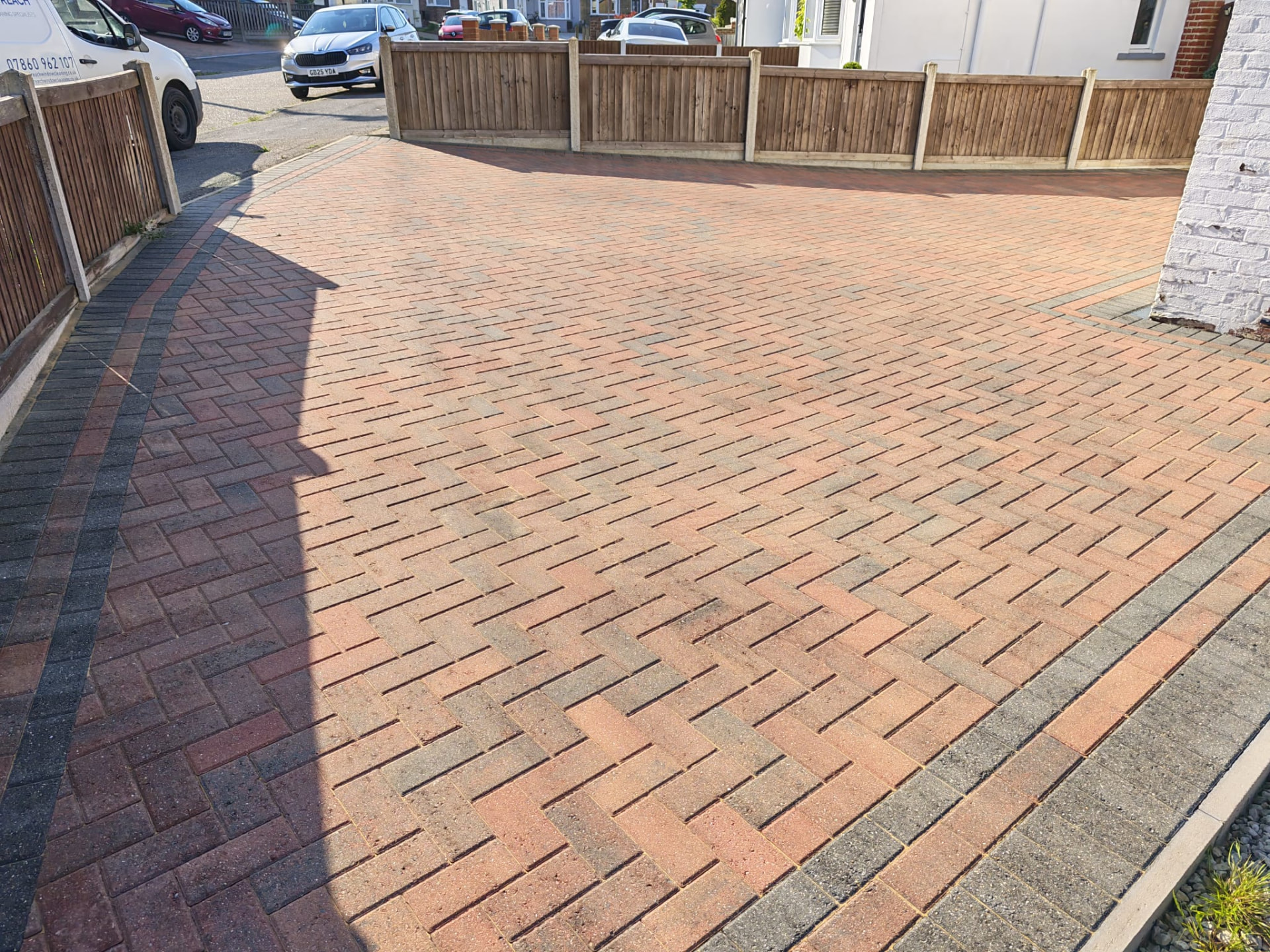
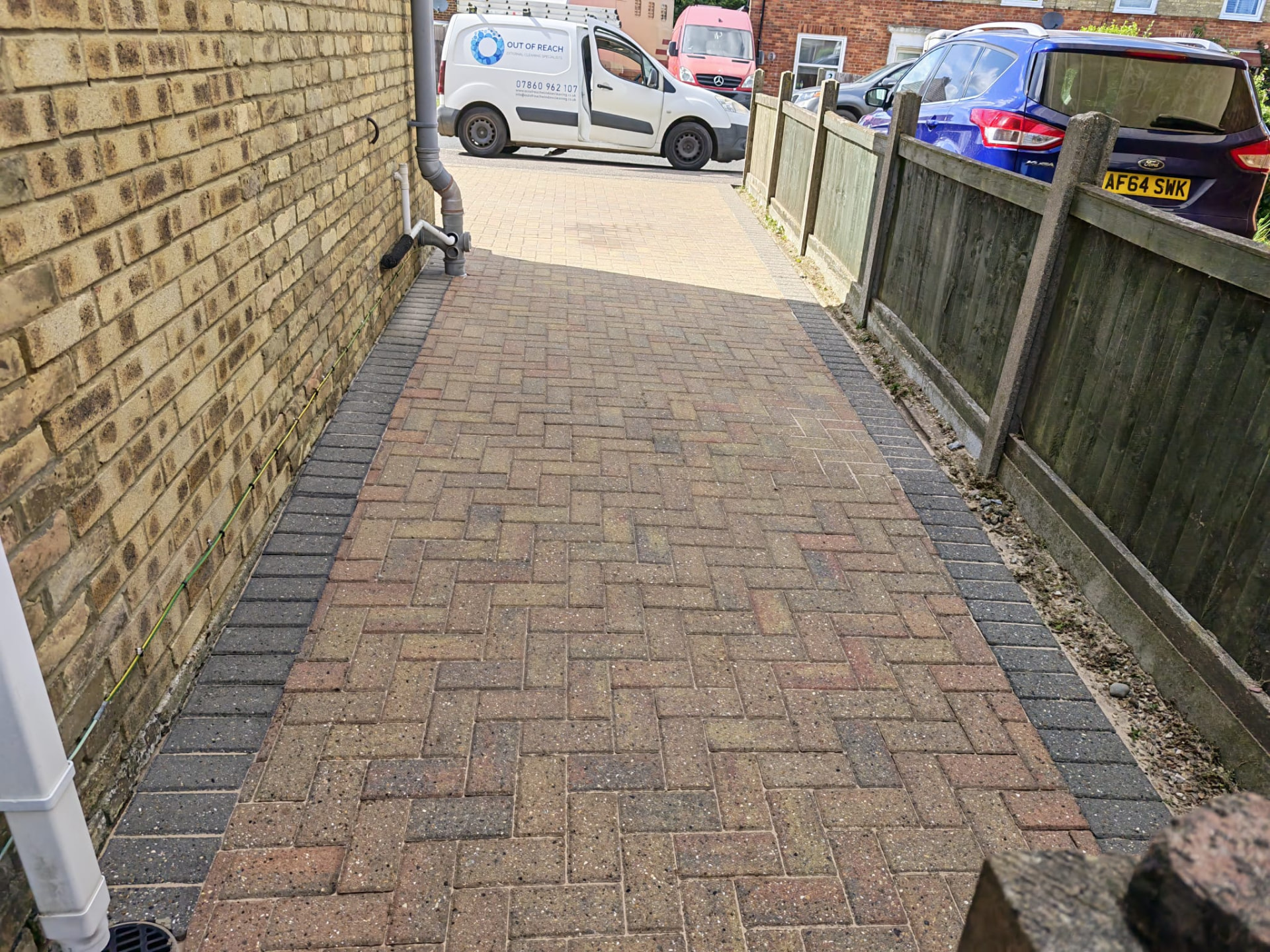
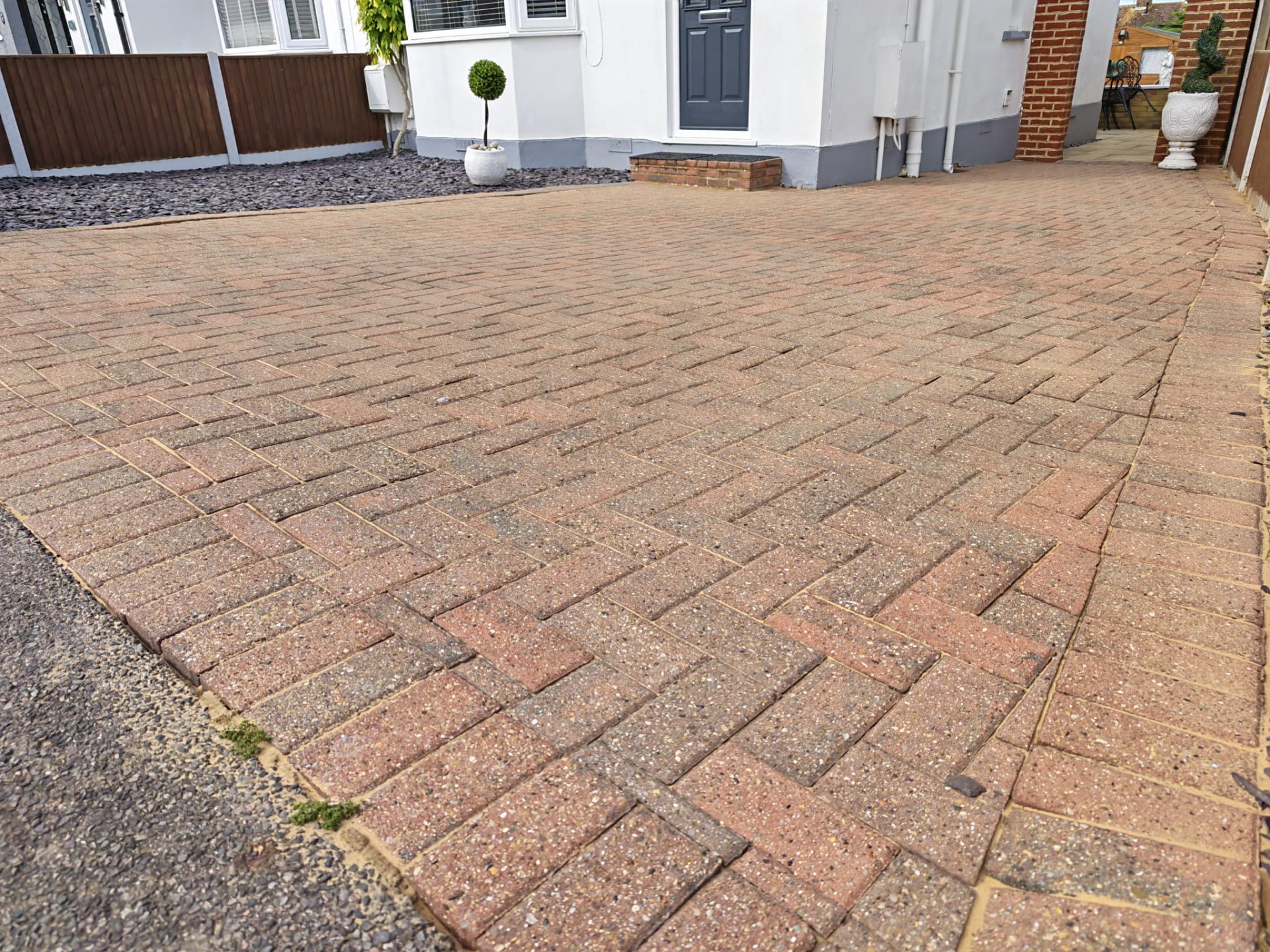
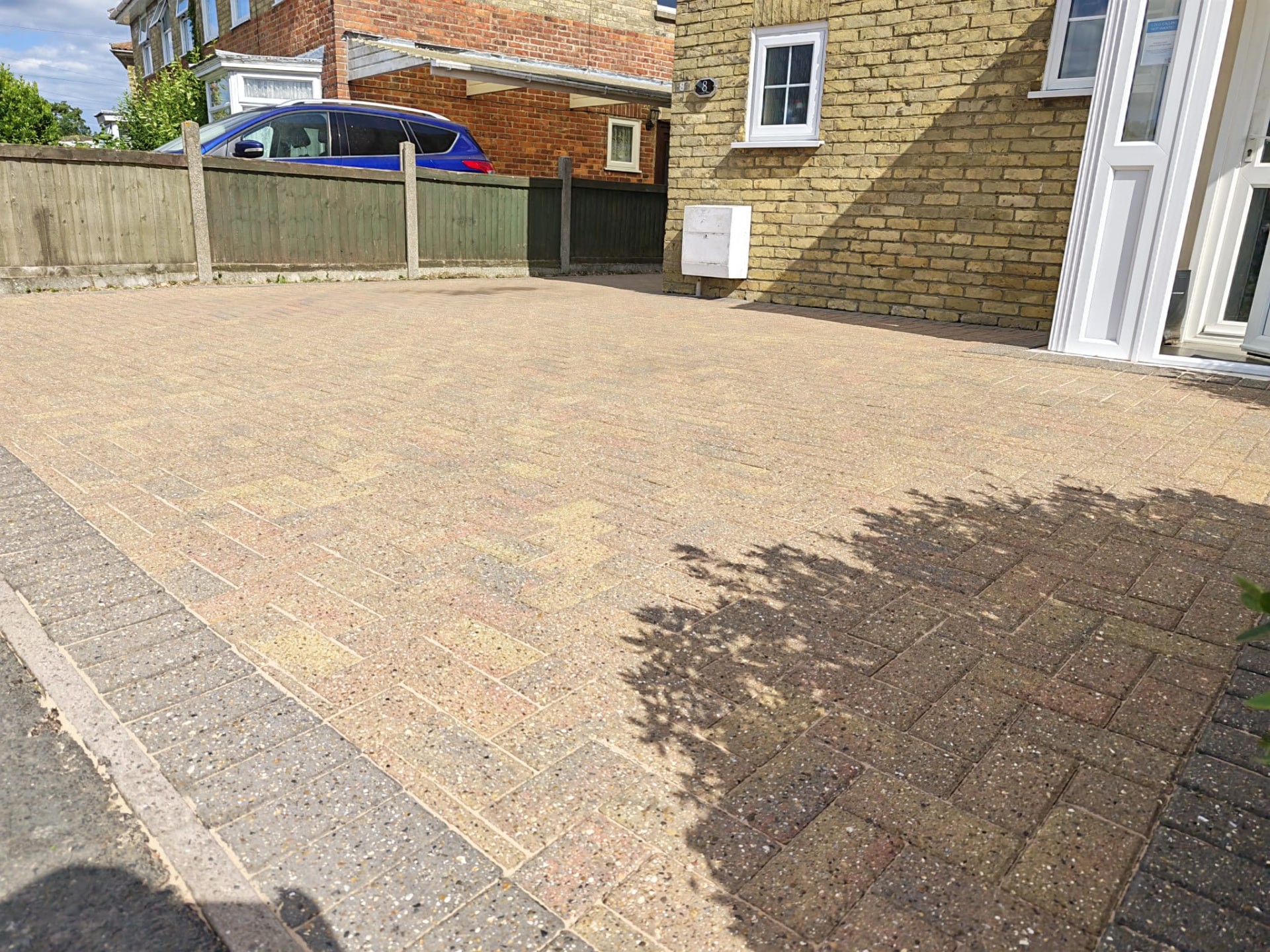
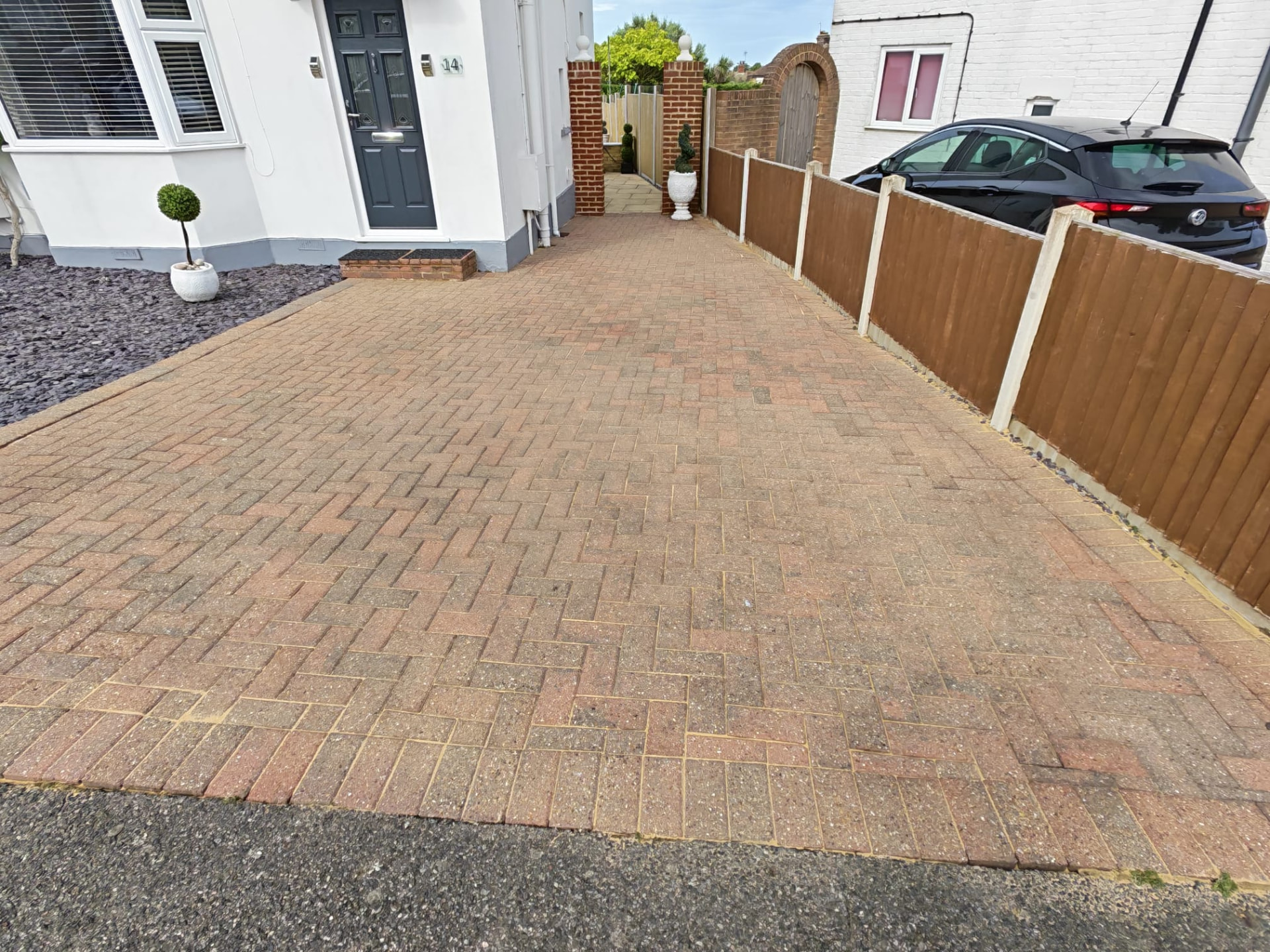
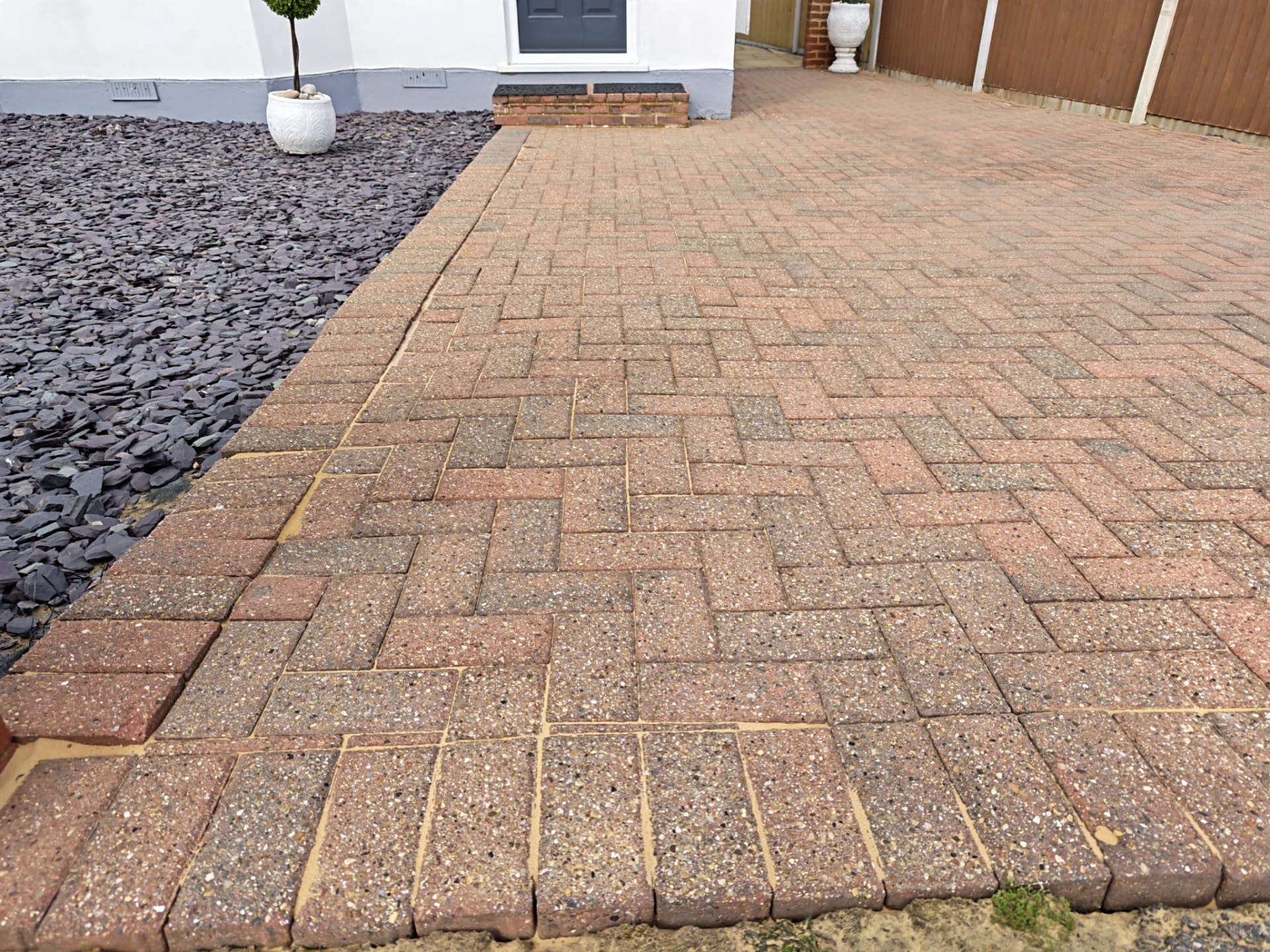
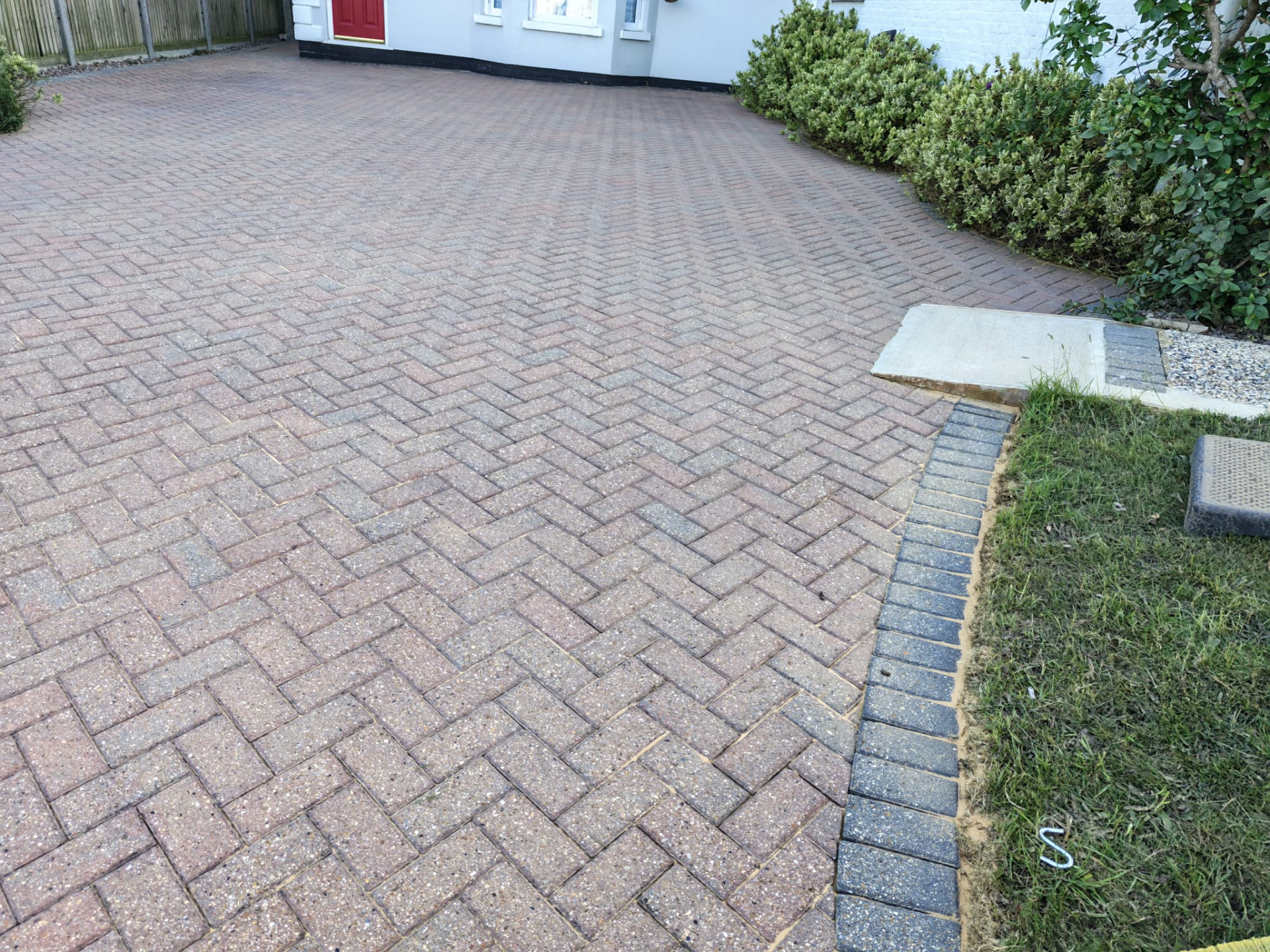
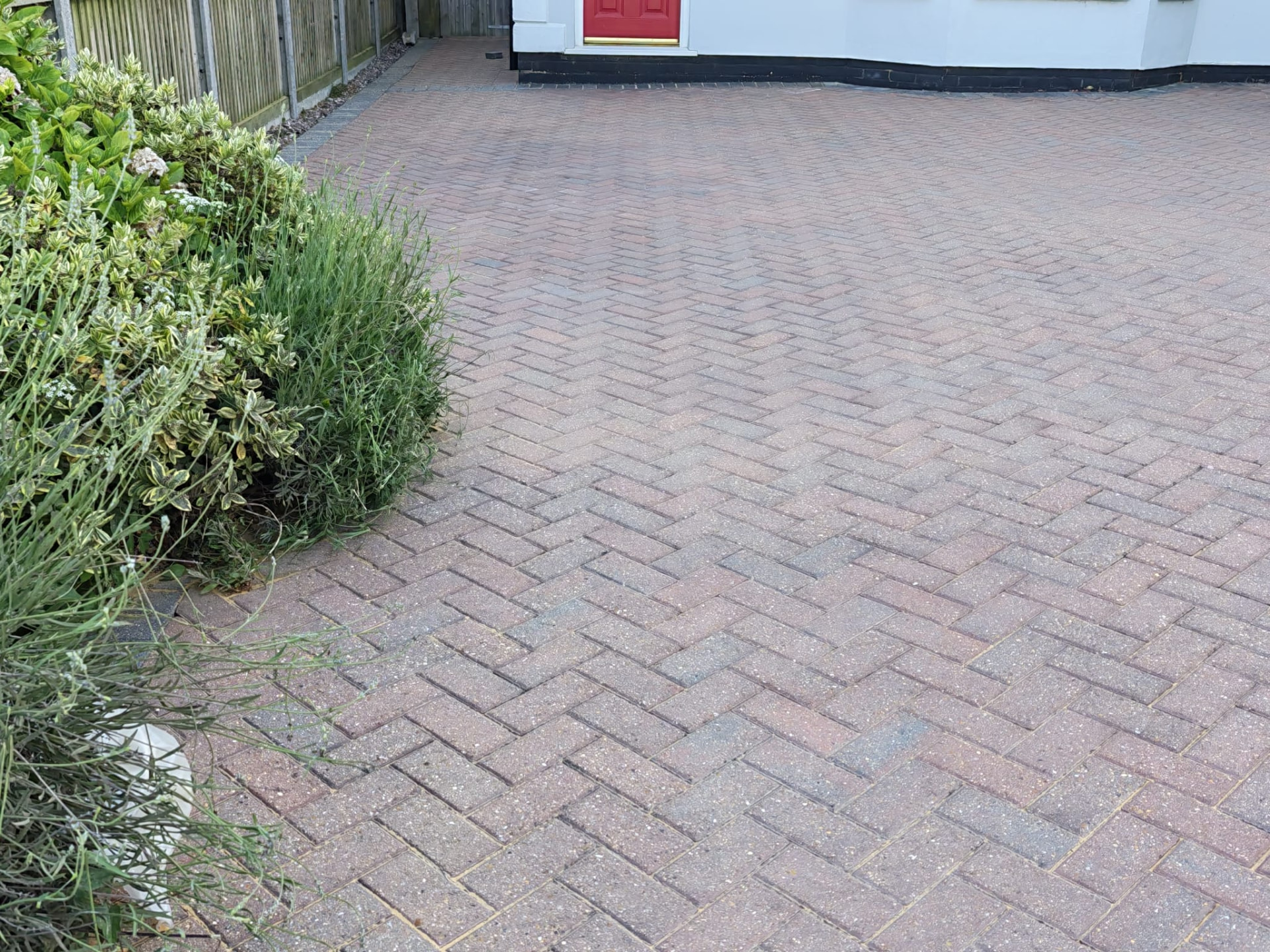
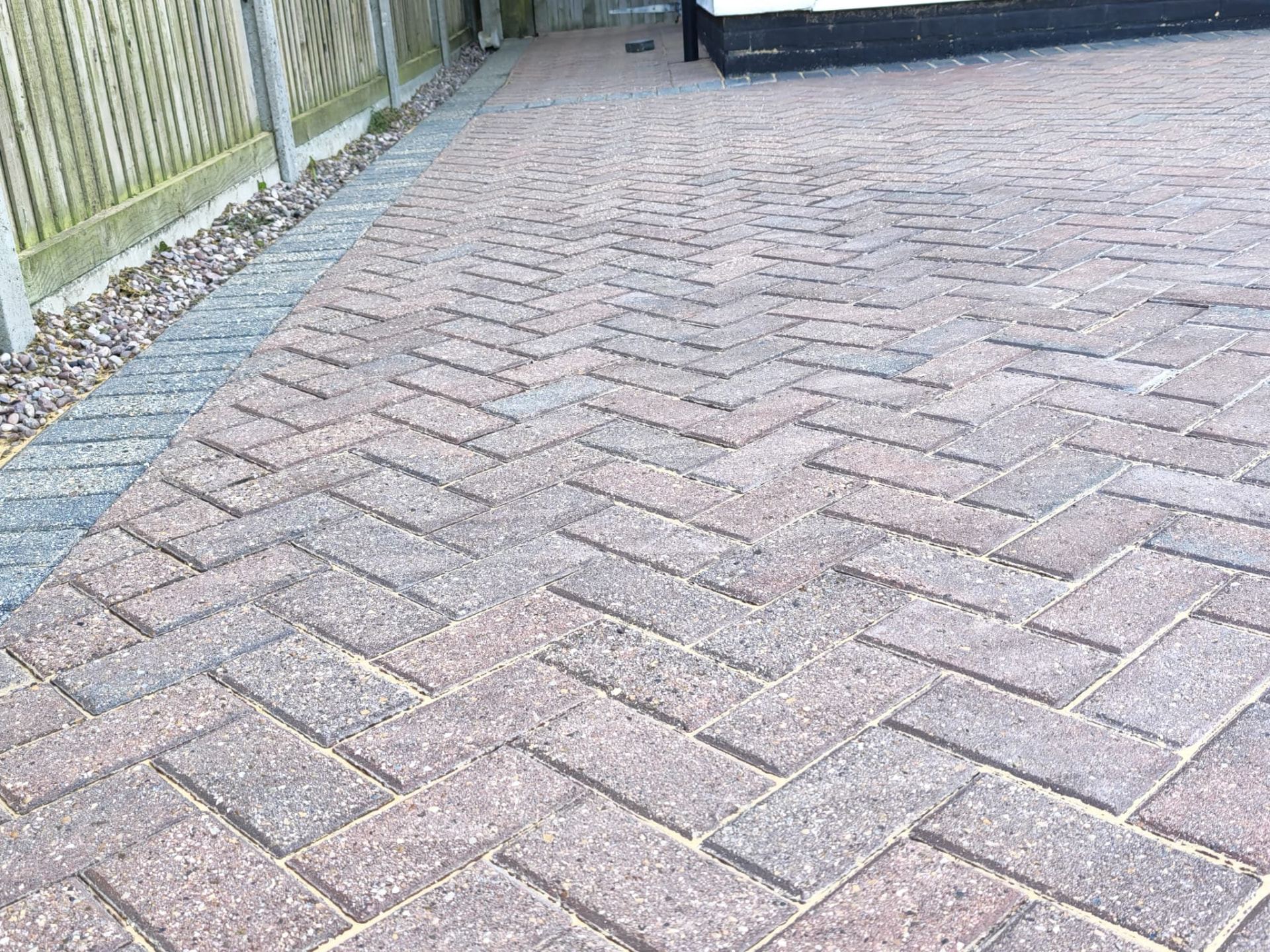
Block paving is made up of individual blocks supported by sand-filled joints. The face can take controlled pressure, but the joints need care because washing removes contaminated sand along with moss and weeds. Once the surface has dried sufficiently, kiln-dried sand can be brushed back into the open joints where this is part of the agreed work.
Concrete is continuous and more robust, though its age and finish still matter. The surface is worked in overlapping passes rather than narrow lines, reducing visible stripes. Existing oil that has soaked into the material may lighten without disappearing completely, so any obvious deep staining is discussed before cleaning.
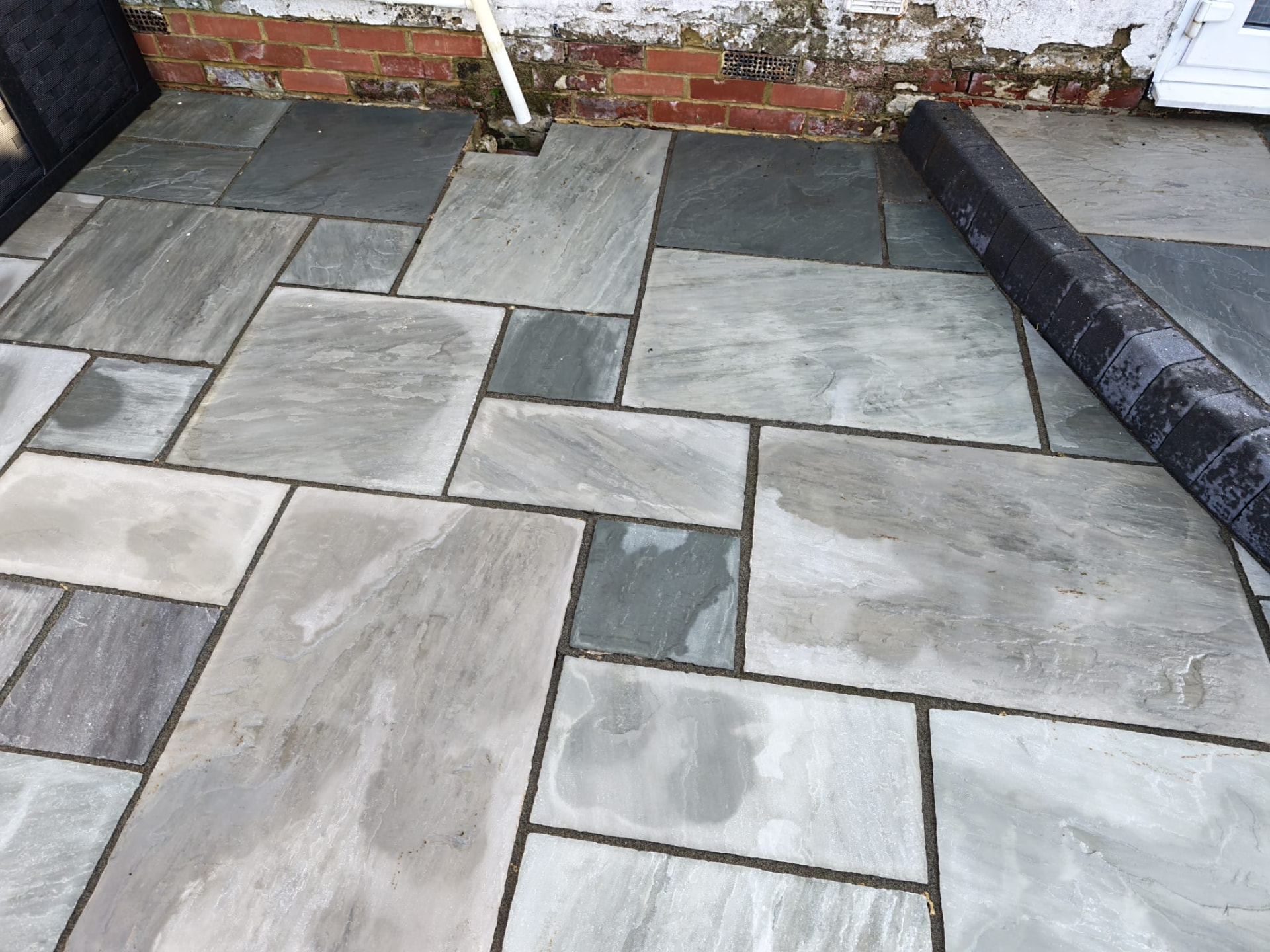
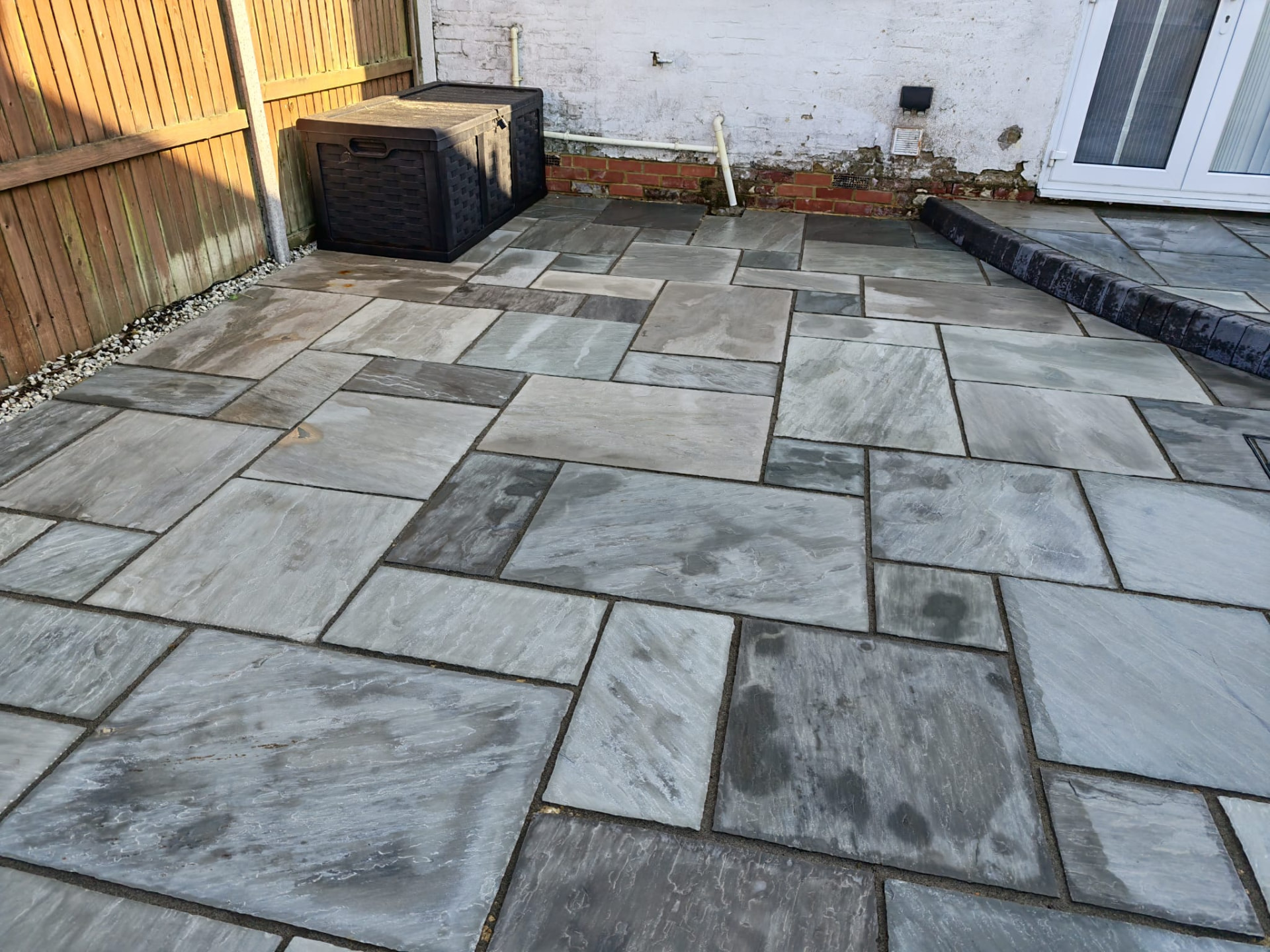
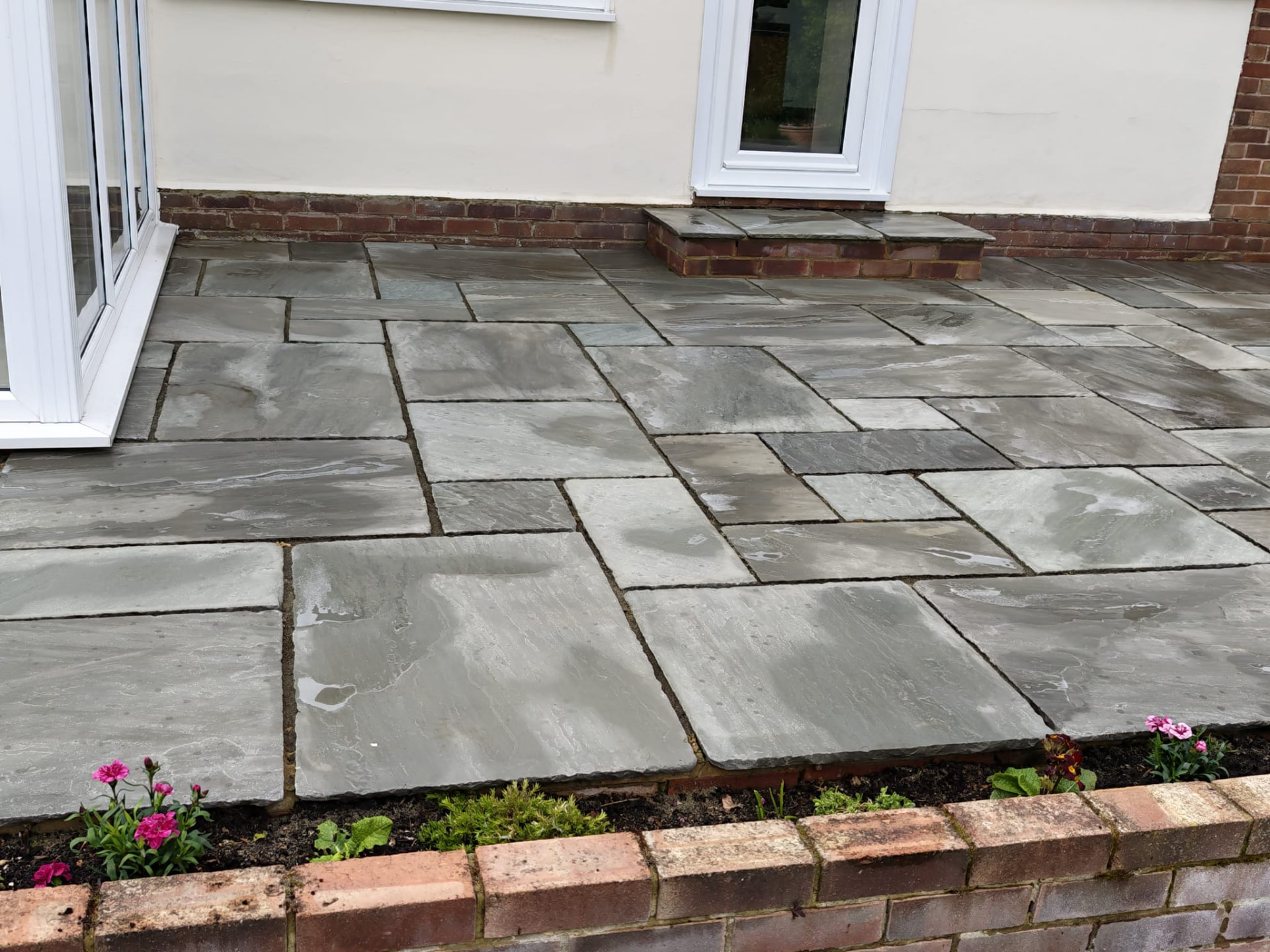
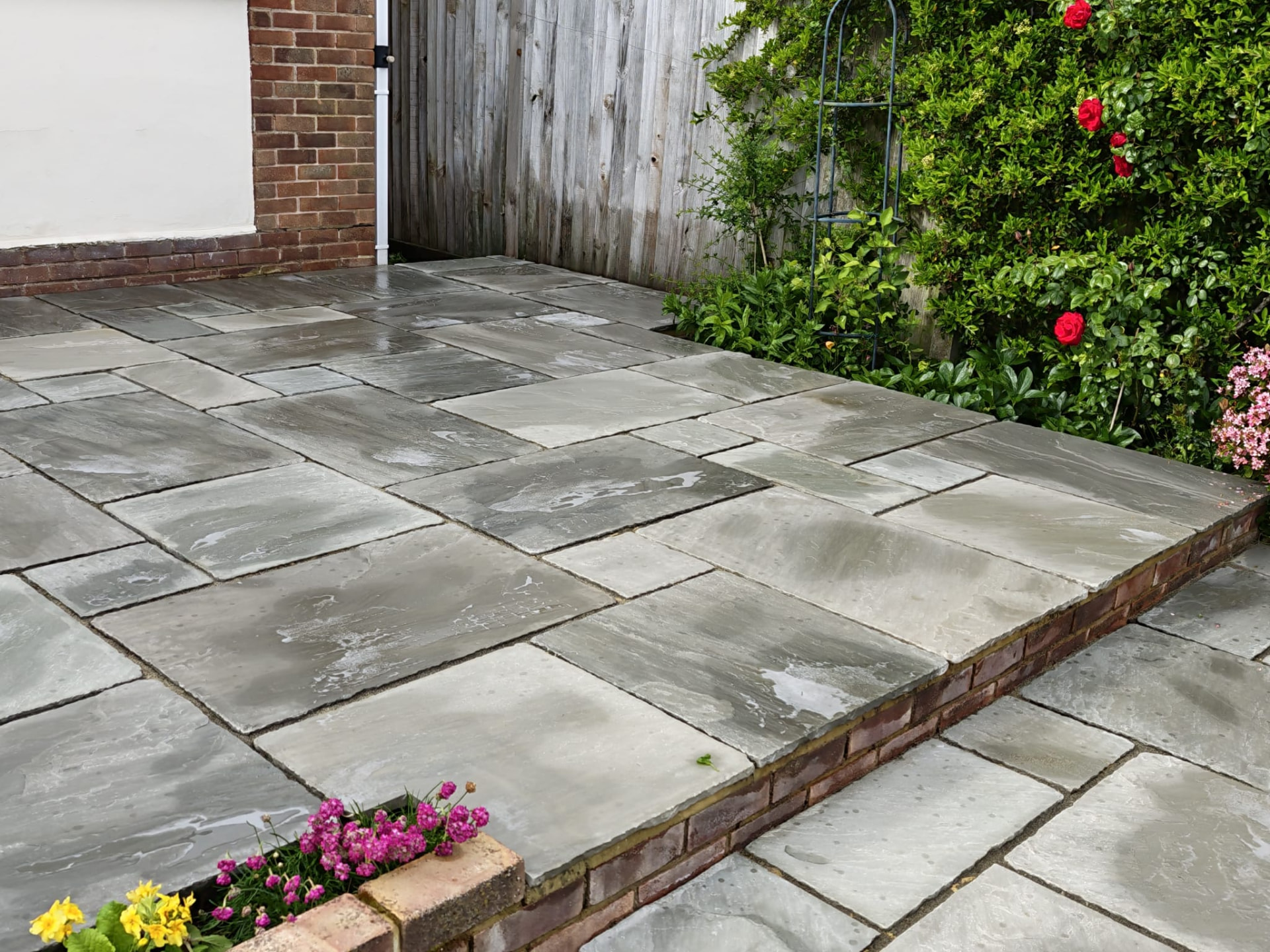
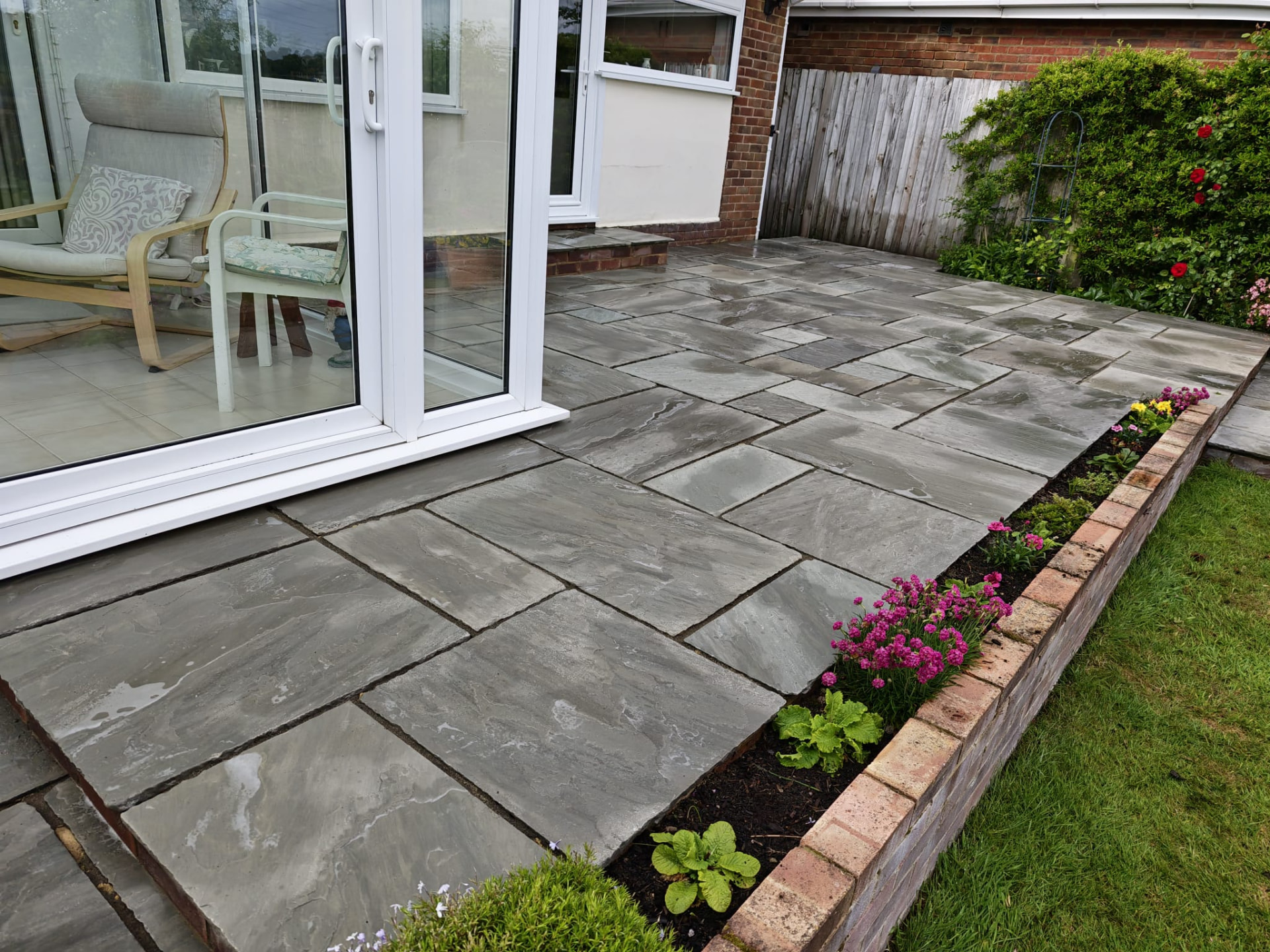
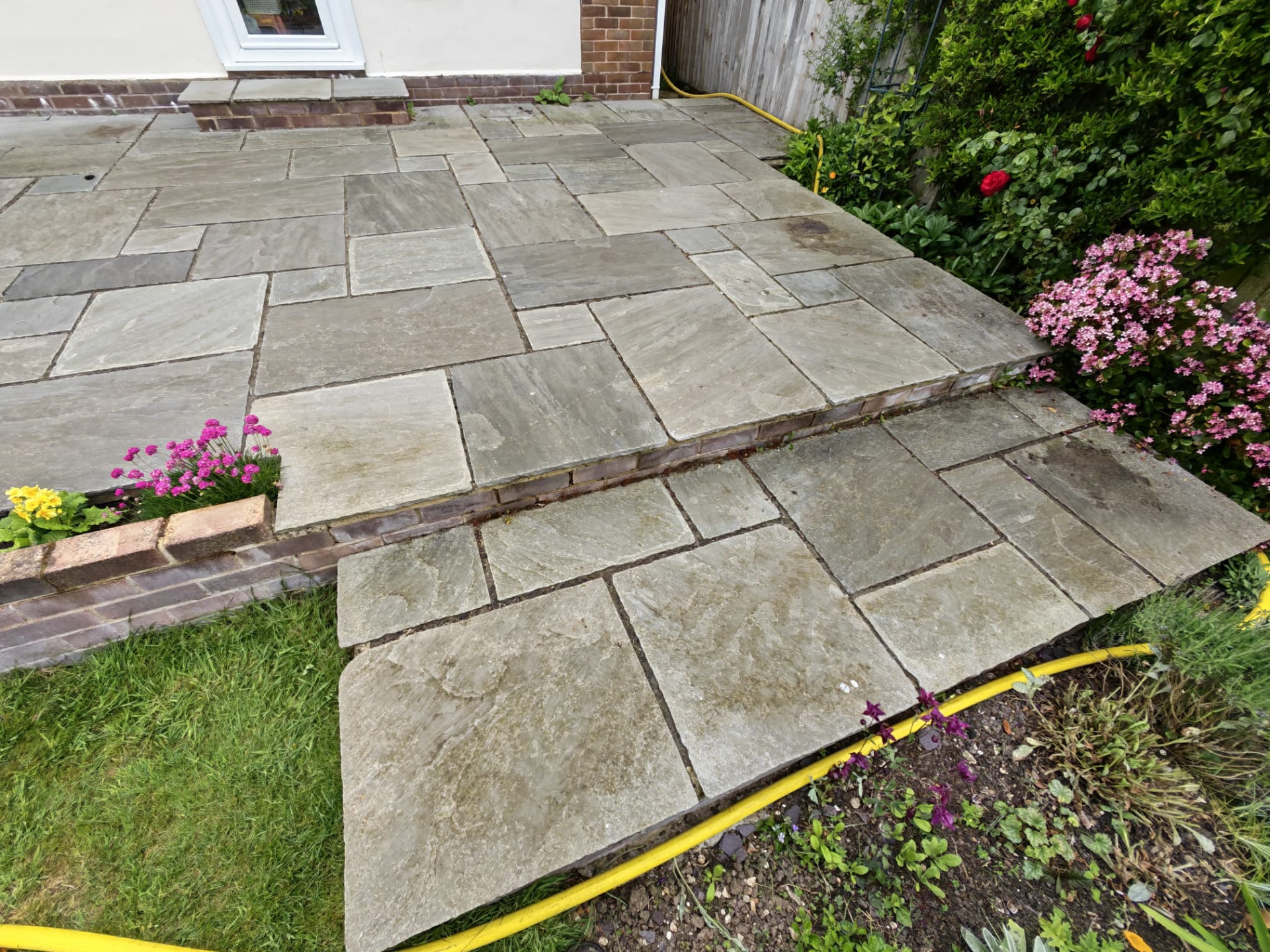
Patio cleaning starts with identifying the paving. Concrete slabs, sandstone, limestone, slate and older pavers do not respond identically. Softer or layered stone needs a gentler technique, and damaged mortar joints can limit how close the cleaning can work.
Furniture, pots and loose items are removed from the active area. Growth is cleared from joints where appropriate, the paving is washed methodically and runoff is directed away from doors and planted beds. The surface is then rinsed so loosened material is not left to dry back onto the slabs.
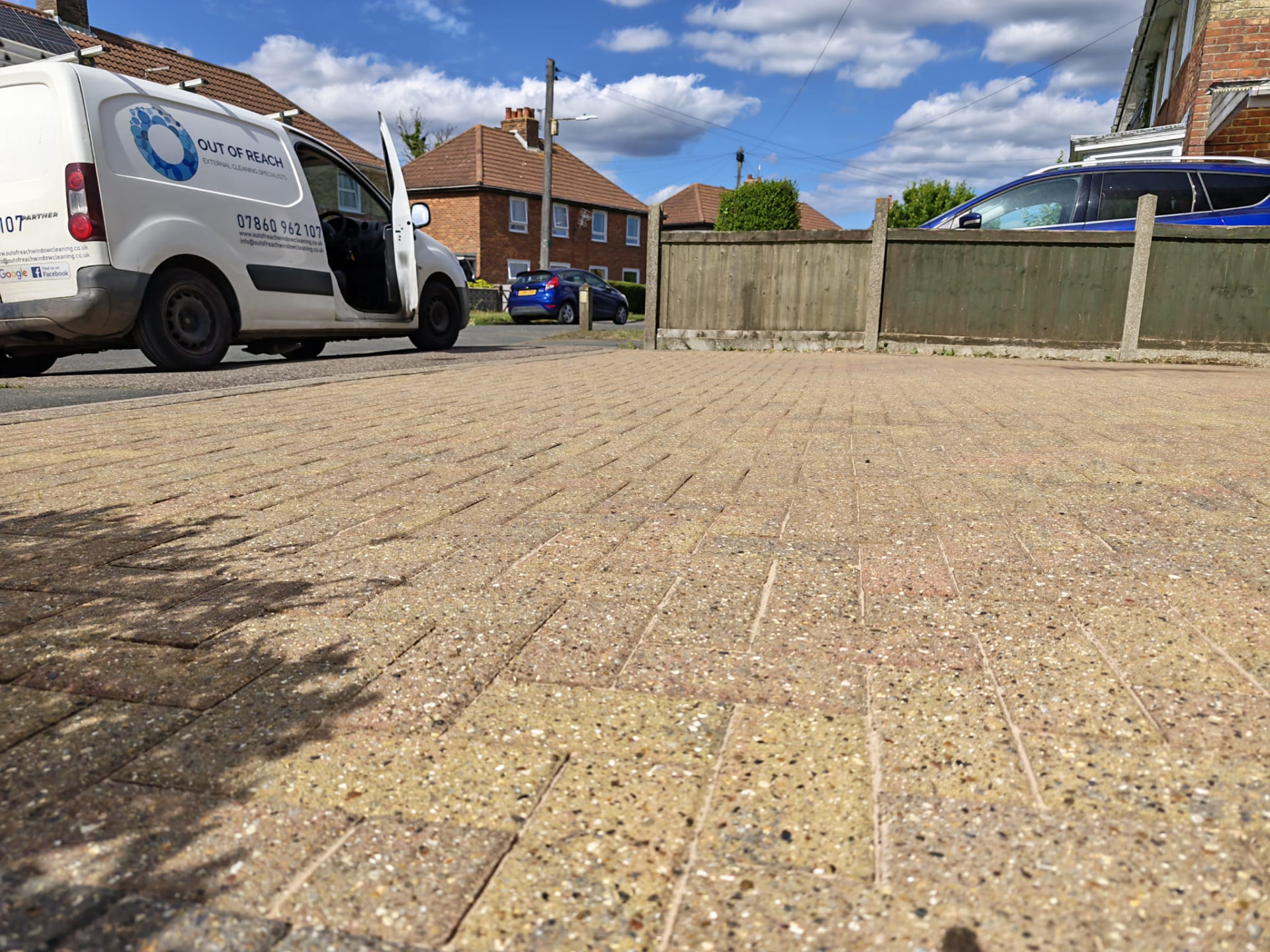
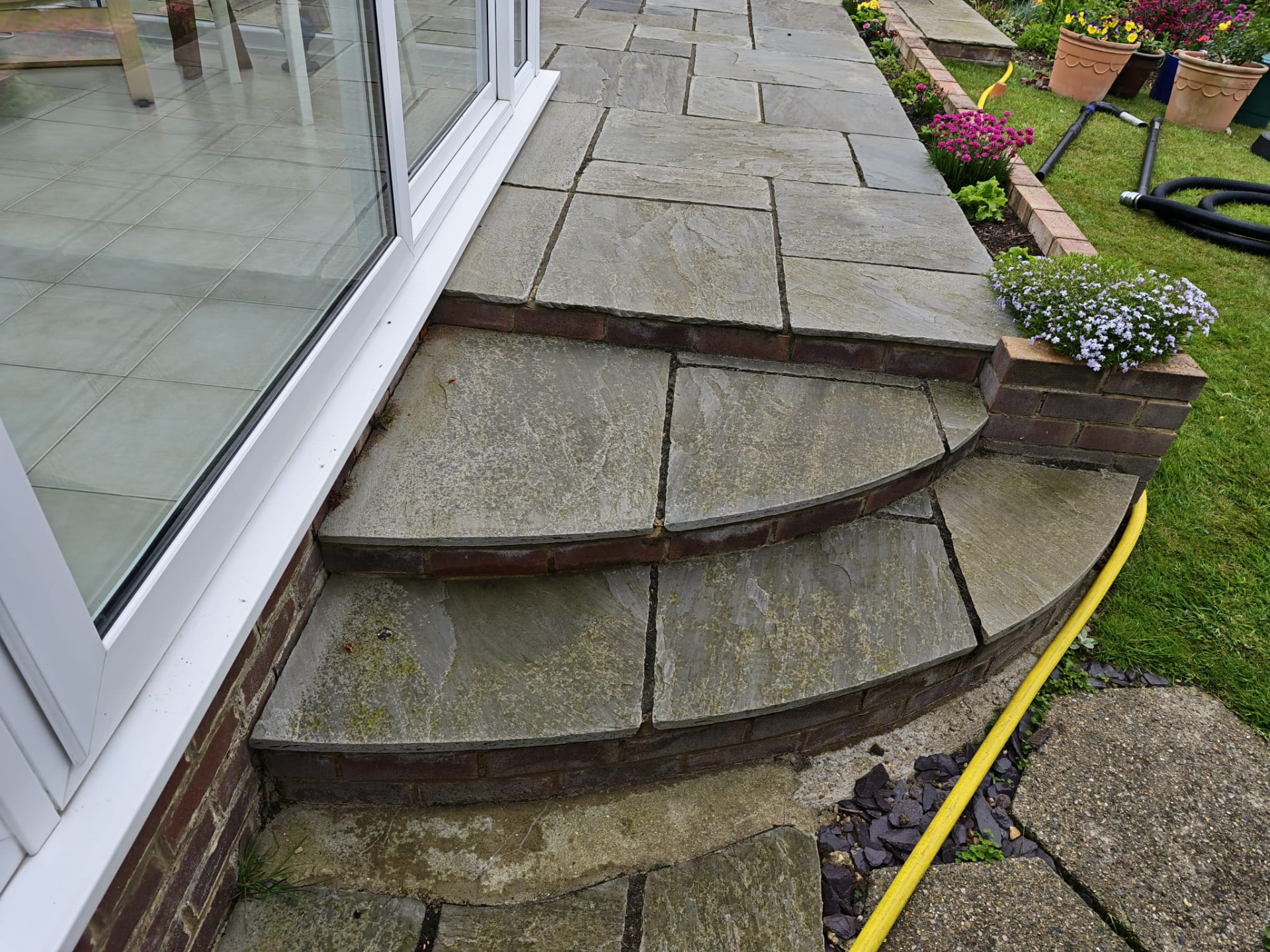
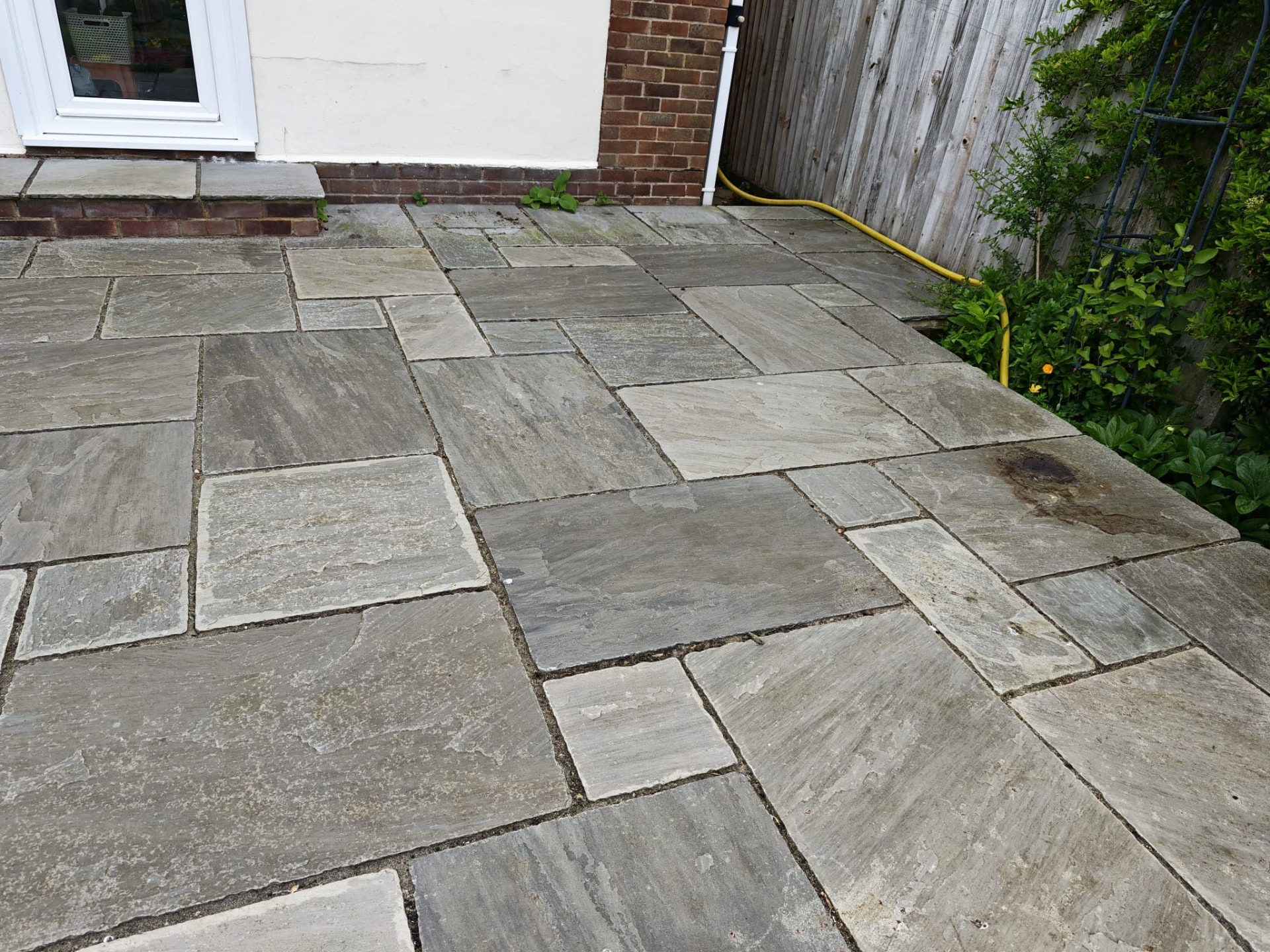
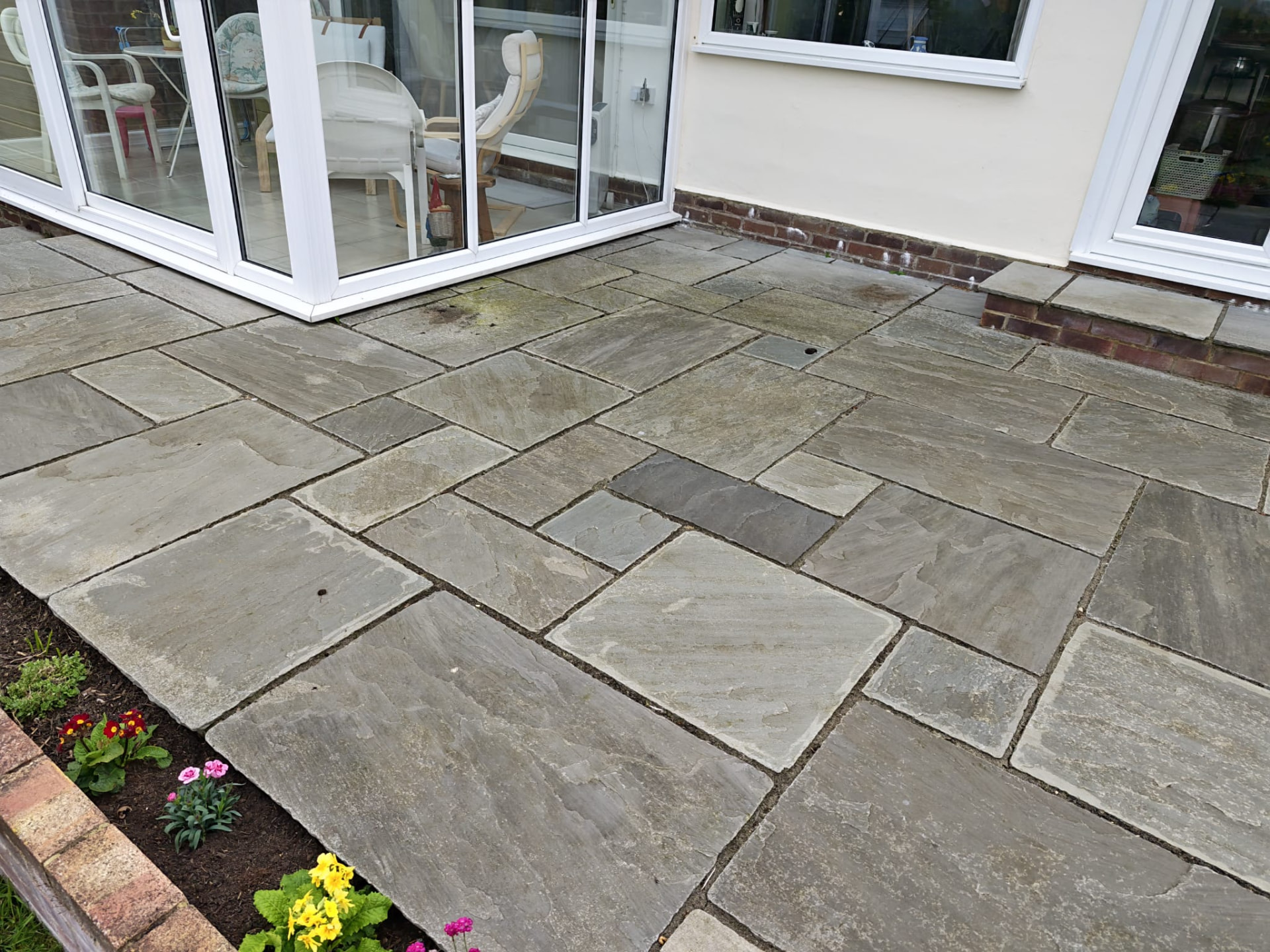
The galleries on this page are from real OOR External driveway and patio work. They show the scale of the paved areas, the condition before cleaning and the completed surface rather than a cropped stock photograph. Project galleries are useful because they reveal consistency across a complete area, not only one dramatic corner.
Before quoting, Jordan can use photographs of your own property to identify the likely material, access and problem areas. Where the paving or joints need a closer look, that can be considered before the scope is finalised.
Move vehicles, furniture, toys and plant pots away from the cleaning area. Doors and windows beside the paving should stay closed, and anything delicate near the edge should be mentioned. Access to the whole surface helps avoid a patchwork finish around items that could not be moved.
The route taken by rinse water is also checked. Gullies, steps, borders and neighbouring surfaces can all affect the order of work. Cleaning normally progresses from the furthest point towards a suitable exit so completed paving is not repeatedly crossed with equipment.
Driveway and patio cleaning can sit within a broader exterior-cleaning visit. Render is soft washed rather than treated like paving, gutters and roofline use high-reach equipment, and each part keeps its own suitable method. Coordinating the sequence means dirty runoff from walls is not sent over a patio that has already been finished.
OOR External is based in Dover and works across the stated Kent service area. Send the postcode, photographs and a list of the surfaces to include, or call Jordan on 07860 962107. The written quotation will state what is covered before a date is arranged.