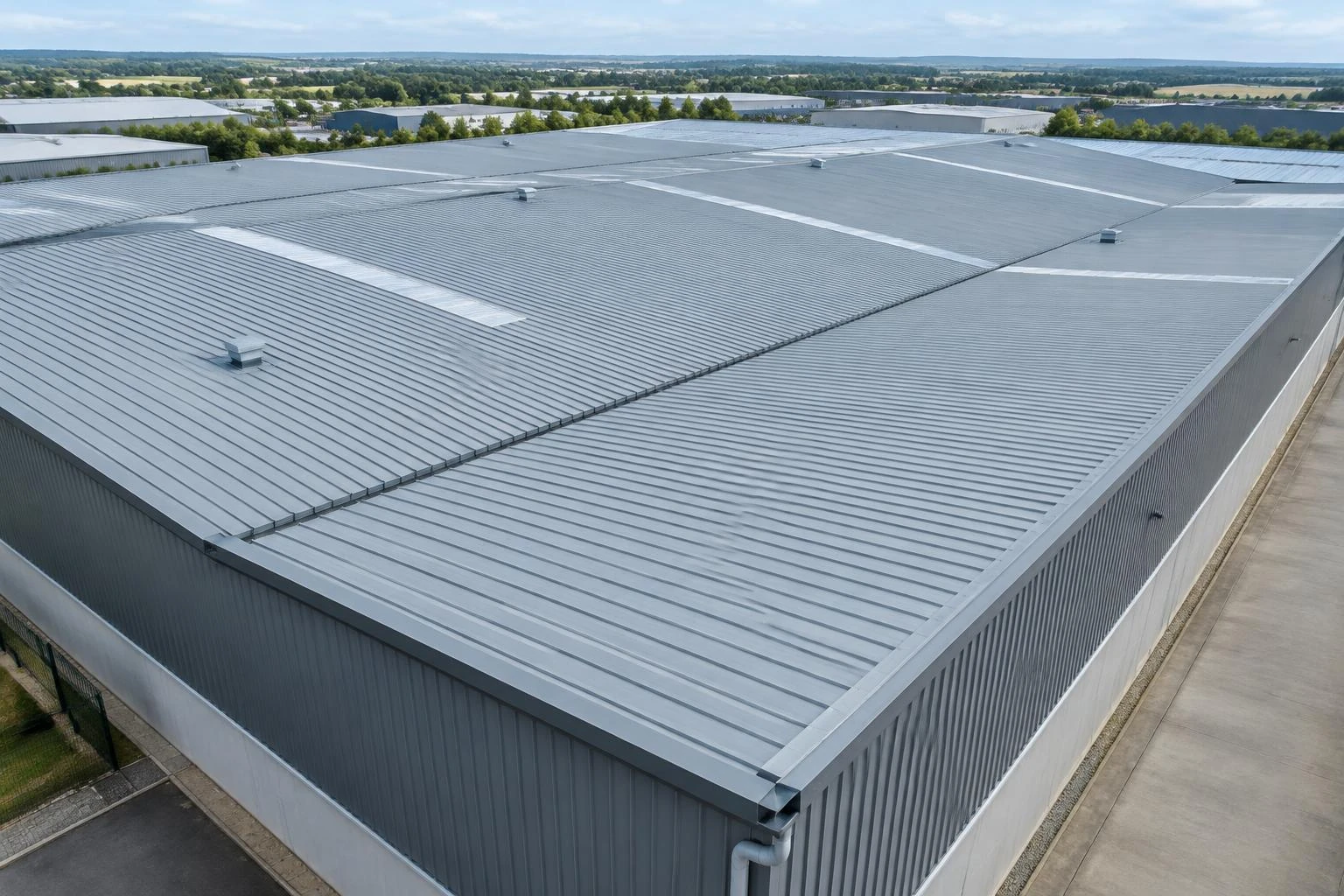
Profiled metal sheets need their coating considered as well as the deposit on top. A low-pressure soft wash suits coated metal: the cleaning treatment has time to act before rinsing, rather than relying on force against the sheet. Send an overall roof view if you have one already, and identify the covering from building records where possible. Do not go onto the roof to take photographs.
Fibre cement requires a different conversation. Sheets and translucent roof lights can be fragile, so their position and condition affect whether cleaning can be proposed and how it could be reached. Unprotected walking on fragile sheets is not part of the approach. Specialist access requirements are discussed and priced before a booking proceeds, not left for the team to discover on arrival.
For flat roofs, the scope considers accumulated debris and the outlets receiving it. Tiled or slated commercial roofs are assessed for pitch, covering and condition before a method is selected. Loose growth on tiles is removed carefully, with biocide considered afterwards. A building with several roof materials may need separate methods rather than one treatment over everything.
Cleaning above a gutter without considering what falls into it leaves part of the job unresolved. We include clearance of gutters and outlets after the roof clean, with valley and box gutters identified in the scope where present. Tell us about internal channels or outlets that are not obvious from the frontage. A plan showing their positions can be more useful than a close photograph of one dirty sheet.
If the outside fascias or soffits also need washing, mention that separately. Clearing the drainage channel and improving the appearance of the roofline are related but different tasks. Setting both out in the enquiry helps establish exactly what you want included.
A roof survey includes access at ground level, not only the covering overhead. Explain where deliveries unload, which doors remain in use and where customers or staff pass the building. Exclusion zones need to fit those movements. Where activity changes through the day, the cleaning sequence can be discussed around trading and delivery times instead of assuming the whole premises can close.
Phasing may be useful when one part of the site has different access arrangements from another. Identify any areas controlled by a tenant, school office or facilities contact so the proposed sequence can be discussed with the right person. Tell us your preferred working window when requesting the quote; the timing is agreed for the site rather than offered as a fixed out-of-hours package.
Biocide treatment is available as a separate line. It can be considered after careful removal of loose growth on tiled roofs, and its inclusion is explained before work starts. Ask Jordan to distinguish the cleaning stage from the treatment stage so you can decide on the scope with a clear understanding of both. The covering and condition still determine the recommendation; an optional treatment does not replace assessment.
If the roof is only one part of the building needing attention, send the other elevations with your enquiry. Cladding, commercial softwashing and external building cleaning can be discussed together, while retaining the appropriate method for each surface. This is useful when you manage the whole property and want the roof, walls and drainage described in one scope. Identify your priorities rather than simply asking for everything to be washed.
Start with the site postcode, roof type if known and photographs already obtainable safely. Include access notes, site hours and any fragile roof lights shown in your records. Say whether gutters alone or a wider exterior clean should be included. Call 07860 962107 or email info@thecladdingcleaners.com to discuss the next step with OOR External. Our commercial roof guide provides background if you are still comparing cleaning approaches.
Industrial roof cleaning covers warehouses, factories and distribution buildings where long runs of profiled sheeting, gutters and roof lights sit high above a working floor. Process residue, traffic film and organic growth build up differently on each, and the roof is assessed for covering, drainage and access before a method is agreed. Coated metal sheeting suits a low-pressure soft wash; fragile fibre cement and roof lights are assessed carefully.
Work is planned around deliveries, staff and vehicles.
Commercial gutters and outlets often need clearing after a roof clean, and many sites combine the two in one visit. The commercial hub brings together cladding, roofline and hard-surface services for buildings that need several tasks scoped together.