
Streaks follow the water
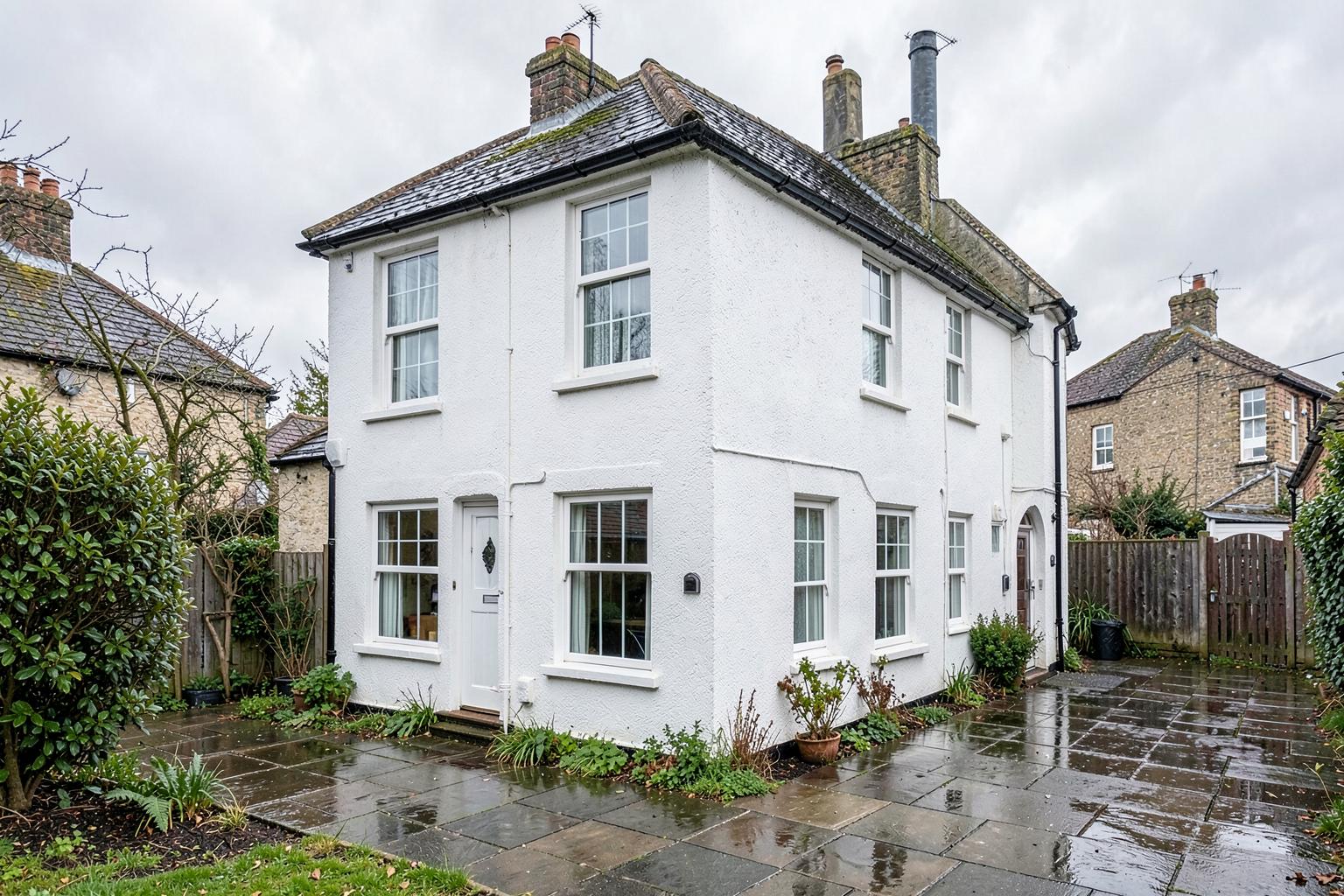
Every black streak marks a route that rainwater takes down the wall. Water collects on a ledge, picks up dirt, pollution and organic spores, then runs off at the same point every time it rains. Where it runs, the wall stays wetter for longer and deposits build up in a line. That is why streaks start at the ends of sills, from drip points under copings and from any overflow, and why a wall with no ledges often stays much cleaner.
Dirt, algae or both
Some streaks are mostly atmospheric grime: soot, traffic film and dust carried by the rain. Others are mostly organic, with dark algae living along the wet track. Many are a mix. The difference matters, because grime can be washed off, while living growth needs to be treated or it grows back in the same line within months. On render, black streaking is very often organic even when it does not look green.
Why a quick rinse does not last
Hosing or blasting a streak can make it disappear for a while, but if the growth has not been killed it re establishes in the same wet channel. High pressure on render or coated cladding also risks marking the surface, which makes new dirt cling harder. That is why streaks treated by force alone often look worse a year later than they did before.
How streaks are cleaned properly
The lasting approach on render and coated cladding is a soft wash: a suitable treatment applied at low pressure, left to dwell so it breaks down the growth and grime, then rinsed gently. Heavy staining may need a second application. The whole elevation is cleaned rather than just the streaks, otherwise the cleaned lines stand out as pale stripes against the rest of the wall.
- Identify the ledges and drip points that start each streak
- Soft wash the whole elevation for an even finish
- Allow proper dwell time on heavy staining
- Rinse at low pressure to protect the render or coating
- Check sills, copings and gutters that feed the streaks
Stopping them coming back so quickly
Cleaning removes the streaks, but the water route is still there. Blocked or overflowing gutters are a common cause, so gutters are worth clearing at the same time. Sills without a proper drip edge and copings that shed water straight onto the face will always streak eventually. Where a building suffers badly, those details are worth raising with whoever maintains the fabric, while regular cleaning keeps the appearance under control in the meantime.
Homes and commercial buildings
On a house the streaks usually sit under window sills and beside downpipes. On commercial cladding they tend to run from parapet flashings, panel joints and roof edges, sometimes across a whole elevation. OOR External cleans render and cladding for homeowners and for commercial clients across Kent from our Dover base, and every job starts with a free written quote.