
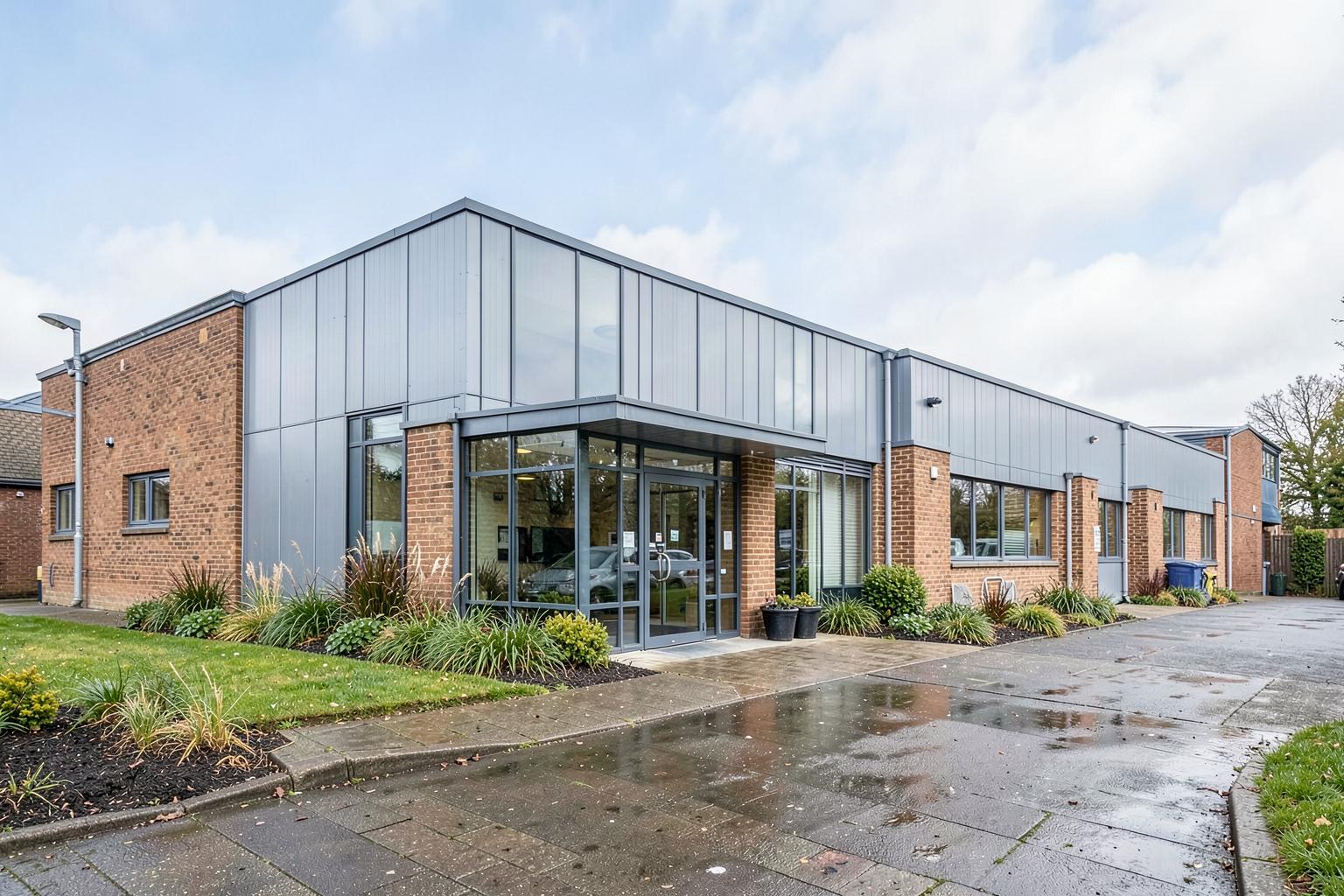
Start with a walk round and a list
Walk the whole boundary and photograph every elevation from the position a visitor or surveyor will use. Note staining, blocked gutters, damaged panels, faded signage, weed growth and anything that reads as neglect. That list becomes the scope, and it stops the work drifting into whatever is easiest to reach.
Work top down
Sequence saves money on a commercial exterior.
- Roof and any moss or debris first, because it all comes down
- Gutters, fascias and soffits next, clearing what the roof work released
- Elevations: cladding, render and glazing frames
- Entrances, signage zones and canopies
- Ground level last: yards, service areas, paths and parking
Allow enough time
Book the work well before the date rather than the week of it. A single building elevation is often a matter of days, while a multi building site is a phased programme, and weather can move a soft washing day. If the roof is being treated rather than scraped, the appearance keeps improving over the following weeks, so earlier is better.
Scheduling can be planned around deliveries, staff, customers and neighbouring property, so a phased approach rarely means shutting the site.
The details that get noticed
Surveyors and buyers look at the same things repeatedly: whether water is getting to the drains, whether the roofline is intact and clean, whether the entrance looks maintained, and whether the yard is tidy. A clean elevation above a stained, weedy service area still reads as a neglected property.
Keep the evidence
Photograph each elevation before and after, and keep the scope and dates. For a sale or a dilapidations discussion, being able to show what was cleaned and when is useful, and it also gives you the baseline for the next maintenance cycle.
One scope, one contact
Cladding, render, roofline and entrance cleaning can be combined into a single coordinated scope, which cuts mobilisations and gives property managers one point of contact for the external presentation of the building. That is usually both cheaper and easier to programme than booking each surface separately.