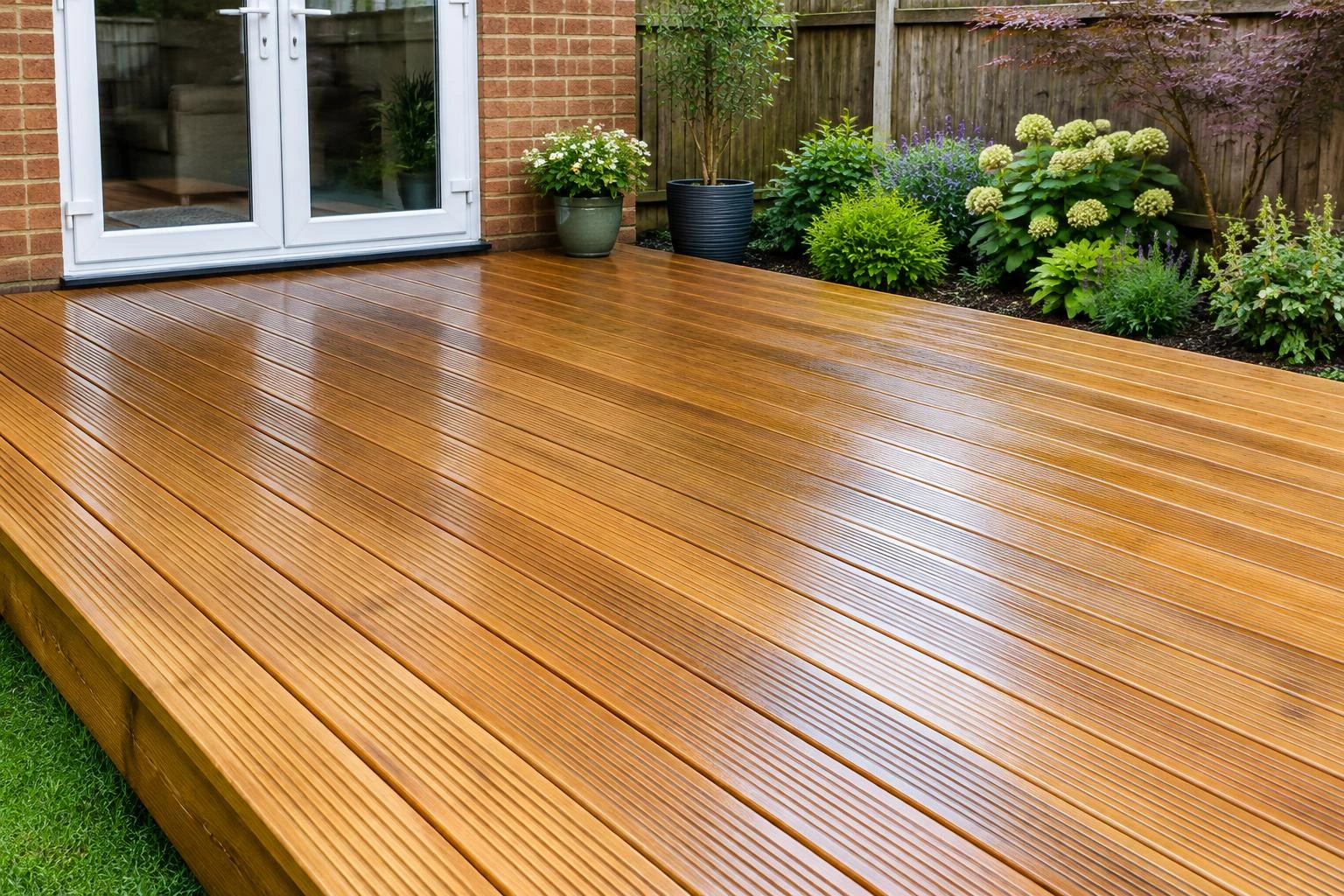
Most garden decks are pressure treated softwood. The boards are relatively soft, and the ridged grip surface traps dirt in its grooves. Algae grows quickly on shaded decks, and by autumn the surface can be genuinely dangerous underfoot. Cleaning works along the board rather than across it, at modest pressure, so the grooves are cleared without tearing the ridges.
Older softwood that has turned grey and fibrous may look patchy after cleaning, because the weathered surface varies from board to board. Splits, soft spots and loose screws are pointed out rather than washed over, as cleaning cannot fix structural problems with the frame or boards.
Hardwoods are denser and tolerate cleaning better, but many have been oiled. Strong products can strip that finish unevenly, and high pressure can still mark the surface. The cleaning solution is matched to the timber, rinsed thoroughly, and the deck is left to dry before any re-oiling you choose to arrange.
If you plan to oil or stain the deck yourself afterwards, mention it when asking for a quote. The deck needs to be properly dry before any finish goes on, and the timing of the clean can be planned around that.
Cleaning uPVC decking and composite boards is a different task. These boards do not absorb water like timber, but their surface can be scratched or have its texture worn smooth by aggressive pressure. Many manufacturers give specific cleaning guidance and some warn against jet washing composite decking at all, so that guidance is followed where it is available.
Algae and mould still grow on composite boards, especially in the gaps and on the shaded side of a garden. A gentle wash with soft brushing and low-pressure rinsing usually lifts it without affecting the finish.
A green deck is a slip hazard, particularly on steps and near doors. Algae holds moisture on the surface and turns slick in damp weather. Removing it and treating the boards to slow regrowth makes the deck safer to use. The soft washing page explains the low-pressure principle used on delicate surfaces like these.
Decks under trees or beside hedges will grow algae again in time. Keeping leaves swept off and gaps between boards clear helps water drain away and lets the surface dry between showers.
Raised decks often sit over concrete or paving. When a deck is oiled or stained, drips fall through the gaps and leave dark marks on the surface below. Cleaning decking oil off concrete needs a different product from algae removal, and older stains may lighten rather than disappear completely.
Where the area below the deck is reachable, it can be included in the same visit, along with patios, paths and fences nearby. The fence cleaning page covers boundary panels and posts that often sit alongside a deck.
Searching for decking cleaners near me usually means wanting someone local who will look at the actual deck. Send photographs, the approximate size, the board type if you know it and your postcode. Domestic work is normally within about fifteen miles of Dover; please check your postcode if you are further away. Quotes are free.