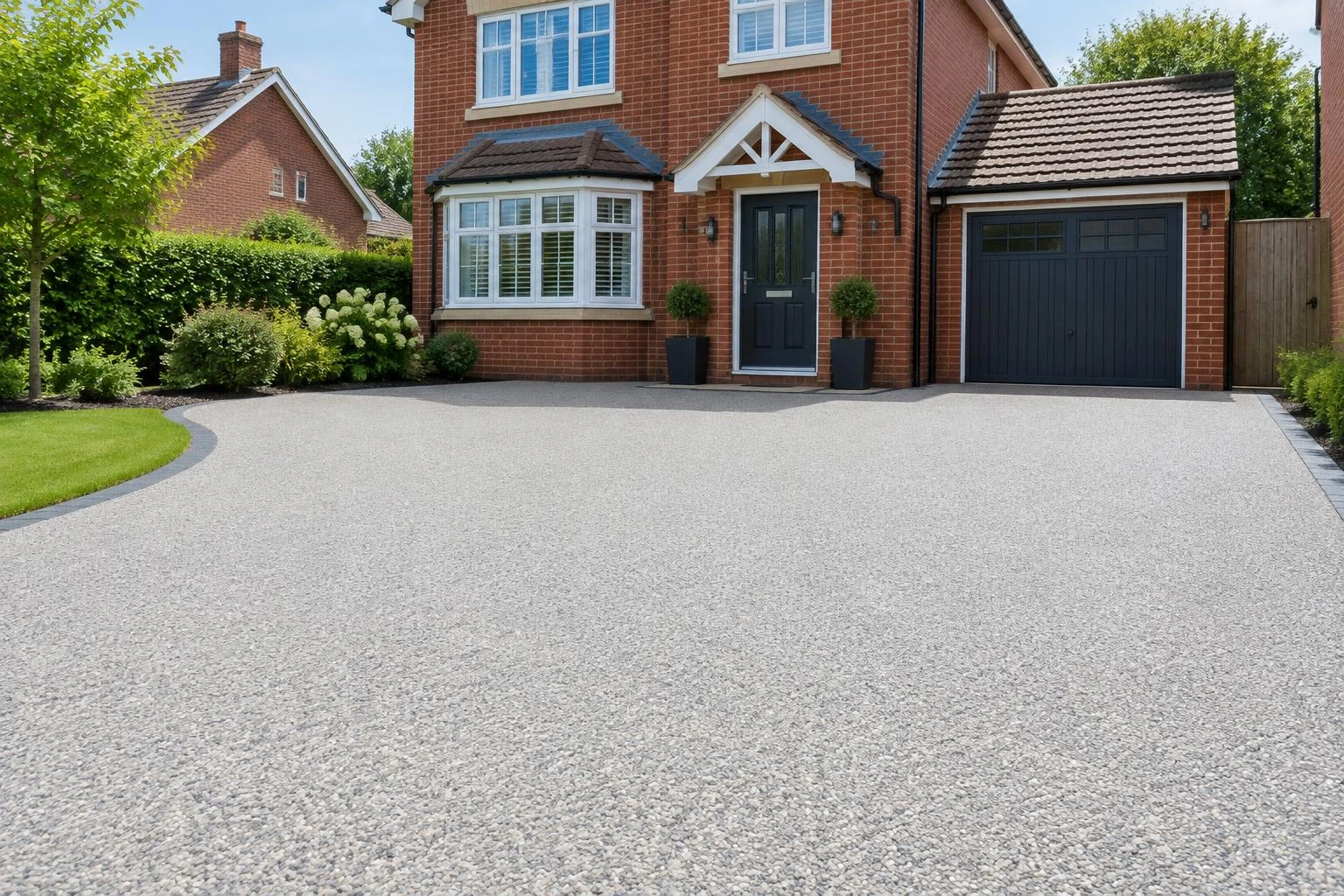
Resin-bound drives are porous by design. Rainwater passes through the surface into the base, but dirt, moss fragments and fine silt can clog those pores over time. When that happens water sits on top, algae grows and the surface goes green or black in patches, especially under trees and in shade.
Cleaning aims to lift that surface layer and unblock the pores without loosening the stones. Jet washing resin driveways with a rotating surface cleaner at low pressure, or a fan nozzle held well back, gives an even result. Pinpoint nozzles are avoided because they concentrate force on a tiny area and can pluck stone out.
Resin-bonded surfaces have loose stone sitting on top of a resin layer. Some loose stone is normal, and too much pressure will strip more of it away. These drives are cleaned very gently, mainly with a cleaning solution and a soft rinse, accepting that the aim is a clean surface rather than a blasted one.
If large bald patches already show the resin beneath, cleaning will make them more obvious, not less. That is explained before work starts so expectations match the condition of the drive.
Algae on resin shows as a green or dark film, often worst along the edges, by downpipes and where cars rarely park. A suitable treatment is applied, given time to work, then rinsed at low pressure. Treating after cleaning can slow regrowth on shaded drives.
Weeds rarely grow through a well laid resin-bound surface, but they can root in the edging and in cracks. These are removed at the same time where present.
Hot tyres can leave dark marks on resin, especially where cars turn on the spot. These marks are often in the resin itself, so they may lighten rather than vanish. Oil drips need a product suited to resin, as some degreasers can discolour it. The oil stains on driveway guide explains how stains behave on different surfaces.
UV-stable resins resist yellowing, but older or cheaper resin may already have discoloured. Cleaning cannot reverse that colour change.
A resin surface is only a few centimetres thick, and the bond between resin and stone is its weak point. Pressure that is fine for concrete can break that bond, and once stones loosen the area tends to deteriorate. Correct nozzle, distance and pressure protect the investment in the drive.
The broader driveway and patio cleaning service covers block paving, concrete and tarmac drives, and the pressure washing service explains how pressure is chosen across different surfaces.
Send photographs of the whole drive and a close-up of the surface so the type can be identified, plus your postcode. Mention any stains, bald patches or areas where water sits. Domestic work is normally within about fifteen miles of Dover, with postcode checks further away. Quotes are free.