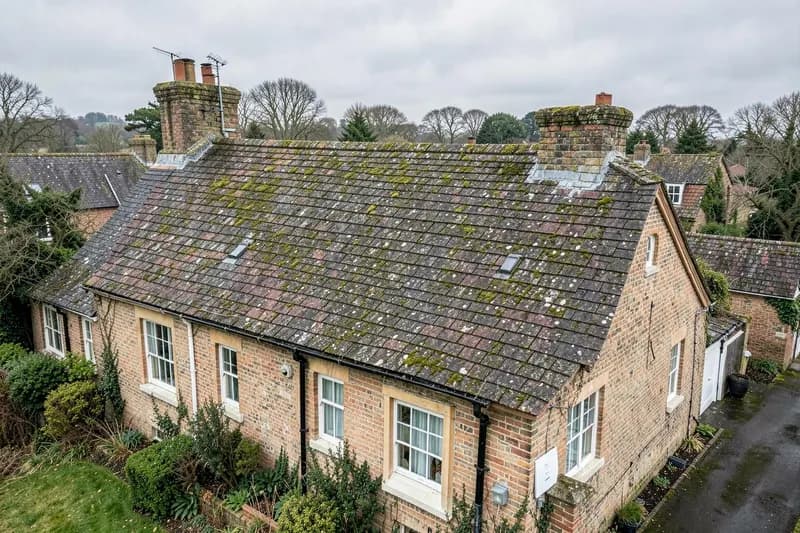
- By inspecting it first. Roof type, pitch, condition and access all shape the method, and the recommended approach is explained to you before any work is agreed.
- Yes, controlled roof moss removal and debris clearance are part of the service, including material built up around tiles and valleys.
- Gutters and downpipes are given attention as part of the work, because loosened moss and debris need to be cleared rather than left to block the drainage.
- Yes. The assessment is condition led, and you receive clear advice before work starts, including where a different approach would be better for the roof.
- Yes. Domestic pitched roofs and commercial buildings are both covered, with access considered as part of the quotation.
- On some roofs, yes. Coated metal commercial roofs are usually soft washed at low pressure, while tiled roofs with lichen have loose growth removed carefully and a biocide applied. The roof is assessed before a method is chosen.
- The roof is assessed first. Tiled roofs have loose growth removed carefully and a biocide applied, metal sheeting is soft washed at low pressure, and the gutters are cleared at the end.
- Soft washing a roof means applying a cleaning treatment at low pressure, giving it dwell time and rinsing, rather than relying on force. It suits coated metal sheeting.
- Remove loose moss and debris with care, avoid high pressure that can force water under tiles, and consider a biocide afterwards to slow regrowth. Never walk on fragile tiles.
- From a safe position with suitable access, never by standing on fragile coverings. Professional roof cleaning starts with an access assessment for that reason.
- No. Roof moss removal is not treated as a standard pressure washing job. The covering and condition are assessed before recommending careful removal, treatment or another suitable approach. Biocide is explained separately, and gutters and downpipes receive attention where loosened material collects.