
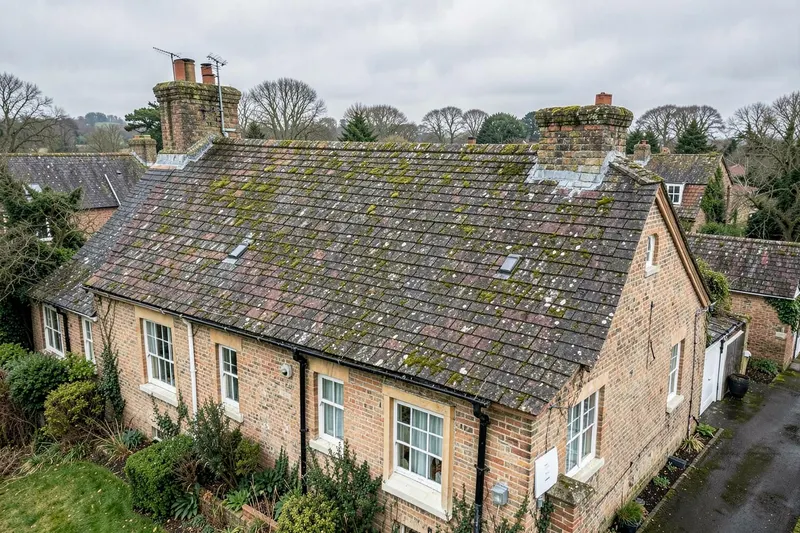
Why moss takes hold
Moss needs three things: moisture, a little shade and a surface it can grip. The north-facing slope of a roof gets less sun and stays damp longer after rain, which is why moss so often appears on one side only. Concrete tiles and older clay tiles have a textured face that traps dust and water, giving spores a foothold.
Trees make a big difference. Overhanging branches drop leaves and keep the roof shaded, and the debris that collects in valleys and gutters becomes a damp bed for growth. Properties in Kent's wooded areas and sheltered valleys tend to see it faster than exposed ones.
What moss does to a roof
A thin film of moss is mainly cosmetic. Once it thickens into cushions, it behaves like a sponge, holding water against the tiles for long periods. In cold weather that water can freeze and expand, which puts stress on older or already damaged tiles.
Moss also travels. Clumps break off in wind and rain and wash into gutters and downpipes, where they combine with leaves to cause blockages. Water that cannot drain properly can then overflow down walls, staining render and brickwork below.
- Holds water against tiles
- Can lift tile edges as cushions grow
- Sheds into gutters and downpipes
- Leads to overflow staining on walls
Moss killer for roofs: does it work?
Shop-bought moss killer can kill light, young growth if it is applied in dry weather and given time. It works slowly, the dead moss stays on the roof until rain and wind remove it, and coverage is only as good as the reach of whoever applies it. Climbing onto a roof to spray it is a real safety risk for a homeowner.
On established growth, killer alone often leaves thick dead cushions in place for months, still holding water and still heading for the gutters. That is why professional work usually combines removal with treatment.
Professional removal plus biocide
A professional approach starts with checking the covering, pitch and condition, because not every roof should be treated the same way. Moss is removed with a controlled method chosen for the tiles, debris is cleared from valleys and gutters, and a biocide is applied to kill the spores left in the surface.
Treating after removal means the roof starts again from a clean base. It will not stop moss forever, but it slows the return and reduces the debris that blocks the gutters. Where heavy removal is not advisable on a fragile roof, a treatment on its own may be the gentler choice.
Keeping it under control
Trimming back overhanging branches lets more light and air reach the roof. Keeping gutters clear stops a damp edge forming where moss can creep upward. A look at the roof from the ground once or twice a year will show when growth is returning, and catching it early is easier than dealing with thick cushions.
This guide does not cover cost. For the factors that shape the price of removal, see the separate roof moss removal cost guide.
Getting advice on your roof
OOR External looks at roofs for homes and commercial buildings across Kent. Send a photograph of the roof from the ground and the postcode, and Jordan will explain whether removal, treatment or both would suit it. You can also call 07860 962107.