
How the equipment works
A gutter vacuum system has three main parts: an industrial vacuum unit that stays on the ground, a run of hose, and a set of carbon or aluminium poles that slot together to reach the gutter line. A curved gooseneck at the top of the pole sits inside the gutter, and a small camera lets the operator see what is being lifted and check the gutter is clear once each section is done.
Because the debris goes into a sealed drum, very little ends up on paths, lawns or cars below. Wet silt, which is heavy and messy to scoop by hand, is lifted in the same way as dry leaves, although compacted material sometimes needs a second pass.
Why ground level work is often the better option
Ladders are still used in the trade, but every lean against a roofline brings risk to the operator and to the gutter itself. Plastic gutters can crack under the pressure of a ladder, and conservatory roofs, porches and bay windows often block a safe footing. Working from the ground sidesteps most of those problems.
OOR External uses high reach equipment so that much gutter work can be carried out from ground level. That lets the team work efficiently on many properties and combine the clearance with washing the fascias and soffits in the same visit, rather than returning later with different kit.
What an in and out gutter clean means
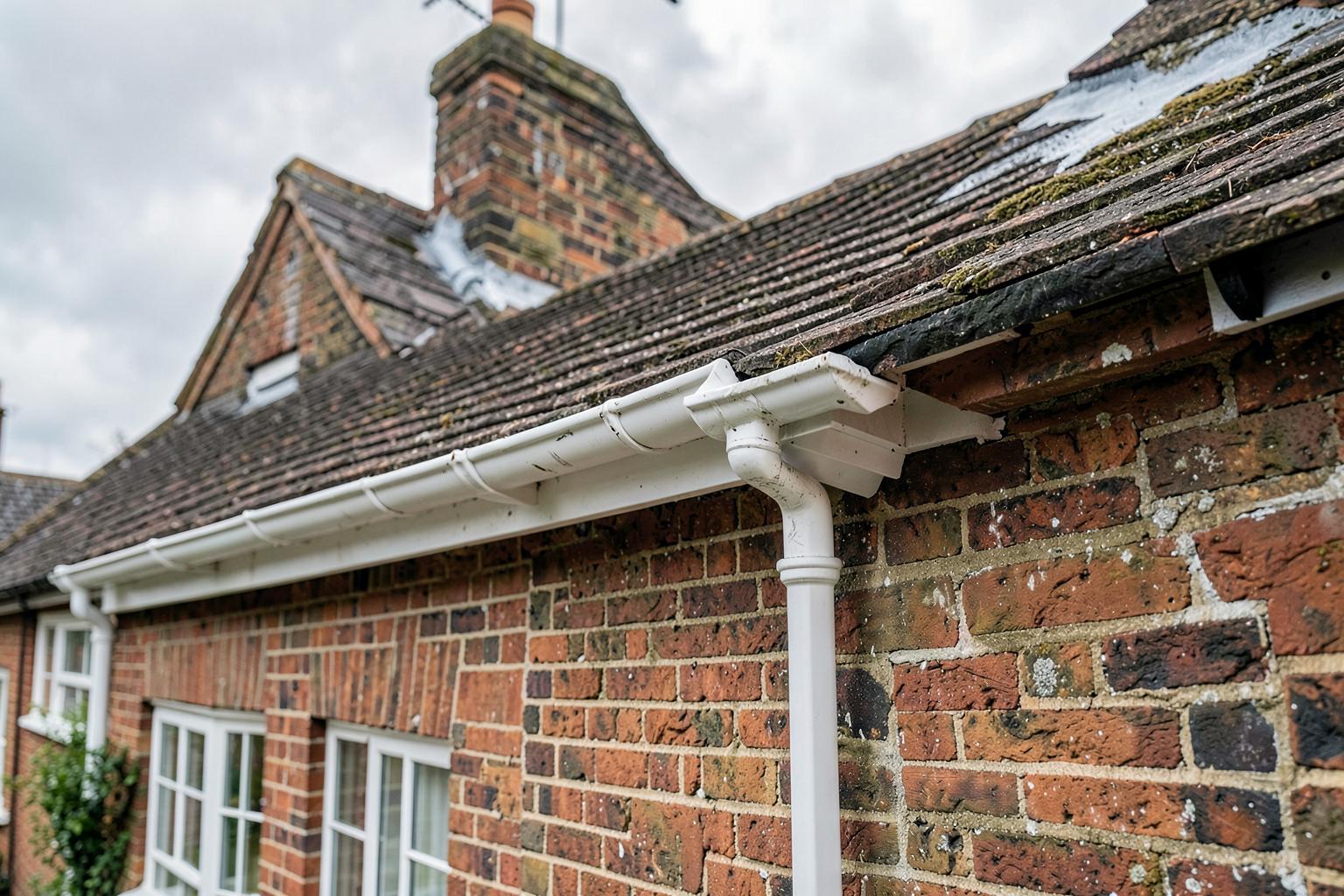
You will often see the phrase in and out gutter cleaning. The inside means clearing what sits in the gutter channel: leaves, moss washed off the roof, silt and the odd tennis ball. The outside means washing the face of the gutter and the fascia board behind it, which pick up green algae and the dark streaks known as tiger striping.
Clearing the inside fixes drainage. Cleaning the outside fixes appearance. Many owners only notice the outside, because that is what they see from the drive, but a gutter that looks bright while still full of silt will keep overflowing. A full service deals with both.
- Inside: debris, moss and silt removed from the gutter channel
- Outlets: checked so water can reach the downpipes
- Outside: gutter face and fascia washed to remove algae and streaks
- Soffits: the boards beneath the eaves cleaned at the same time
Signs your gutters need clearing
Blocked gutters rarely announce themselves until it rains. The clearest warning is water spilling over the front edge during a downpour, or a steady drip in one spot. Look too for plants or grass growing from the gutter line, damp patches on the wall below, green staining running down render or brick, and puddles forming where a downpipe should be carrying water away.
Properties near trees fill fastest, but a house with no trees nearby still collects moss that washes off the roof tiles, along with windblown grit. Blocked gutters affect drainage as well as appearance, so it pays to deal with them before a wet winter rather than after the damage shows.
Limits of vacuuming
Vacuum clearing is excellent for loose and wet debris, but it is not a repair service. It will not fix sagging brackets, leaking joints or cracked sections, although a camera inspection is a good way to spot those problems so you can arrange a repair. Very compacted material, or a downpipe blocked well below the gutter, may need extra work beyond the vacuum.
Some roofs also have features such as dormers, flat roof sections or tight valleys that change how the gutter is reached. That is one reason access is looked at before a price is given.
Booking gutter clearing with OOR External
OOR External clears gutters for homes and commercial properties across Kent from a Dover base, and the gutter page shows real before and after photos of roofline work. Send a few photos of the front and back of the property, mention any conservatory or extension, and ask for a free written quote that states whether fascia and soffit washing is included.