
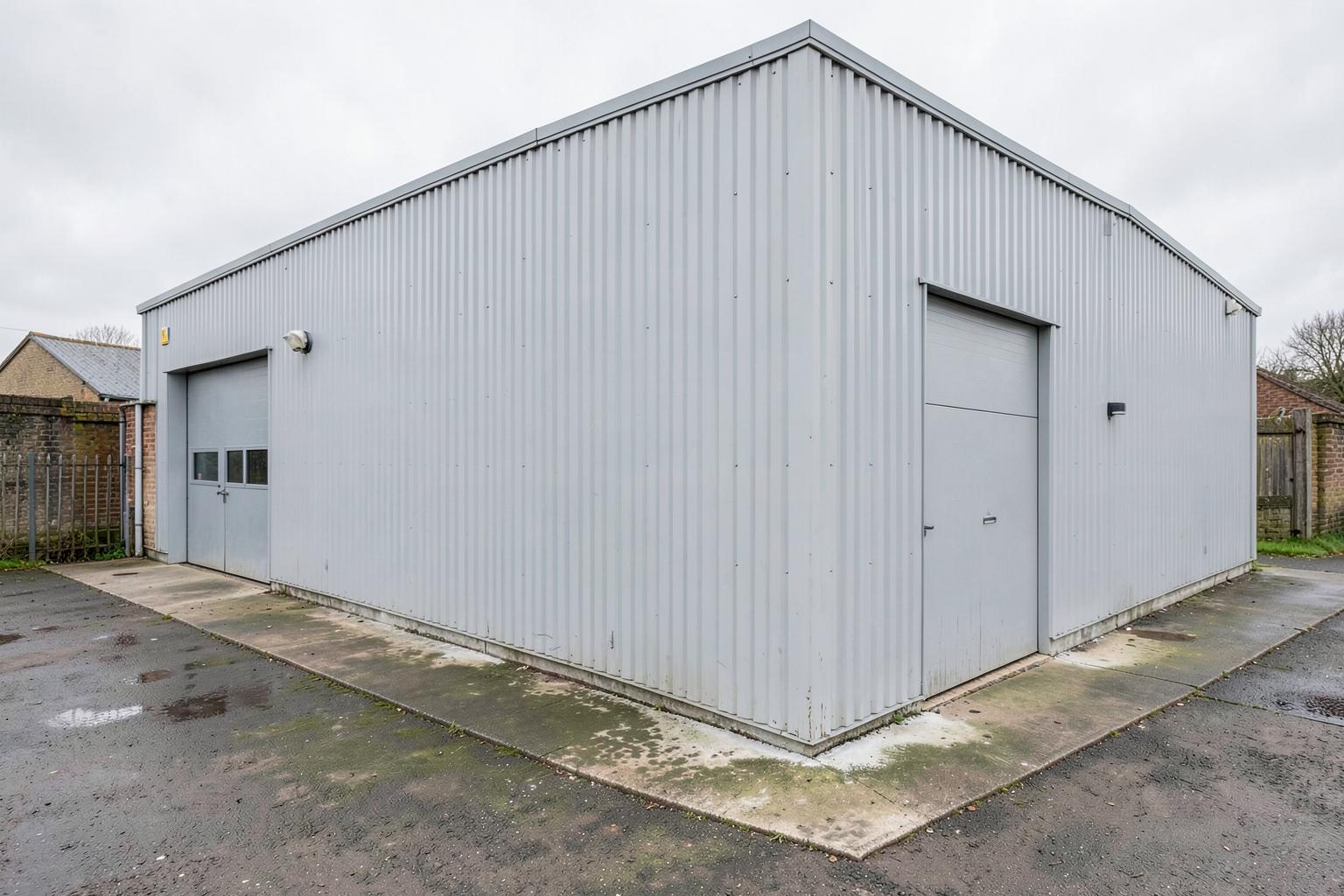
A sensible default interval
Once a year is the interval most property managers settle on, because it matches the way soiling behaves. Traffic film and airborne dirt build steadily, and organic growth gets going in the damp months, so a yearly clean resets both before either becomes ingrained.
Buildings that matter commercially, such as a retail frontage or a head office entrance, are often cleaned twice a year, with the second visit limited to the visible elevations rather than the whole building.
Sites that need cleaning more often
Conditions do more to set the interval than the cladding itself.
- Coastal locations, where salt laden air dulls the finish faster
- North facing and shaded elevations that stay damp and grow algae
- Roadside frontages collecting traffic film
- Buildings under or beside trees, which shed debris and hold moisture
- Food, agricultural and industrial processes that deposit residue on the panels
Why leaving it costs more
Organic growth that has been left for several years is not a harder clean in principle, it is a longer one. Denser growth needs treatment and dwell time, sometimes more than one application, and the labour is what you pay for. Regular cleaning is normally cheaper per visit than an occasional rescue clean.
There is a presentation cost too. Once staining becomes the first thing a visitor notices, the building reads as poorly maintained regardless of what is happening inside.
What manufacturer guidance usually expects
Coated cladding systems generally come with a maintenance recommendation, and many warranty terms assume the panels are cleaned periodically with appropriate methods rather than left indefinitely. Check the documentation for your system before agreeing a method, particularly if the coating is still in warranty, and keep a record of what was cleaned and when.
Building it into a maintenance plan
The easiest approach is to fix a month and keep it. Late spring and early autumn both work well in Kent. Cladding, roofline and entrance cleaning can be combined into one coordinated scope so the whole external presentation is dealt with in a single planned visit, with one point of contact for a building or a wider portfolio.