
Need this sorted?
Need help with roof moss removal? Book roof moss removal or get a quote from OOR External.
What a roof moss killer actually does
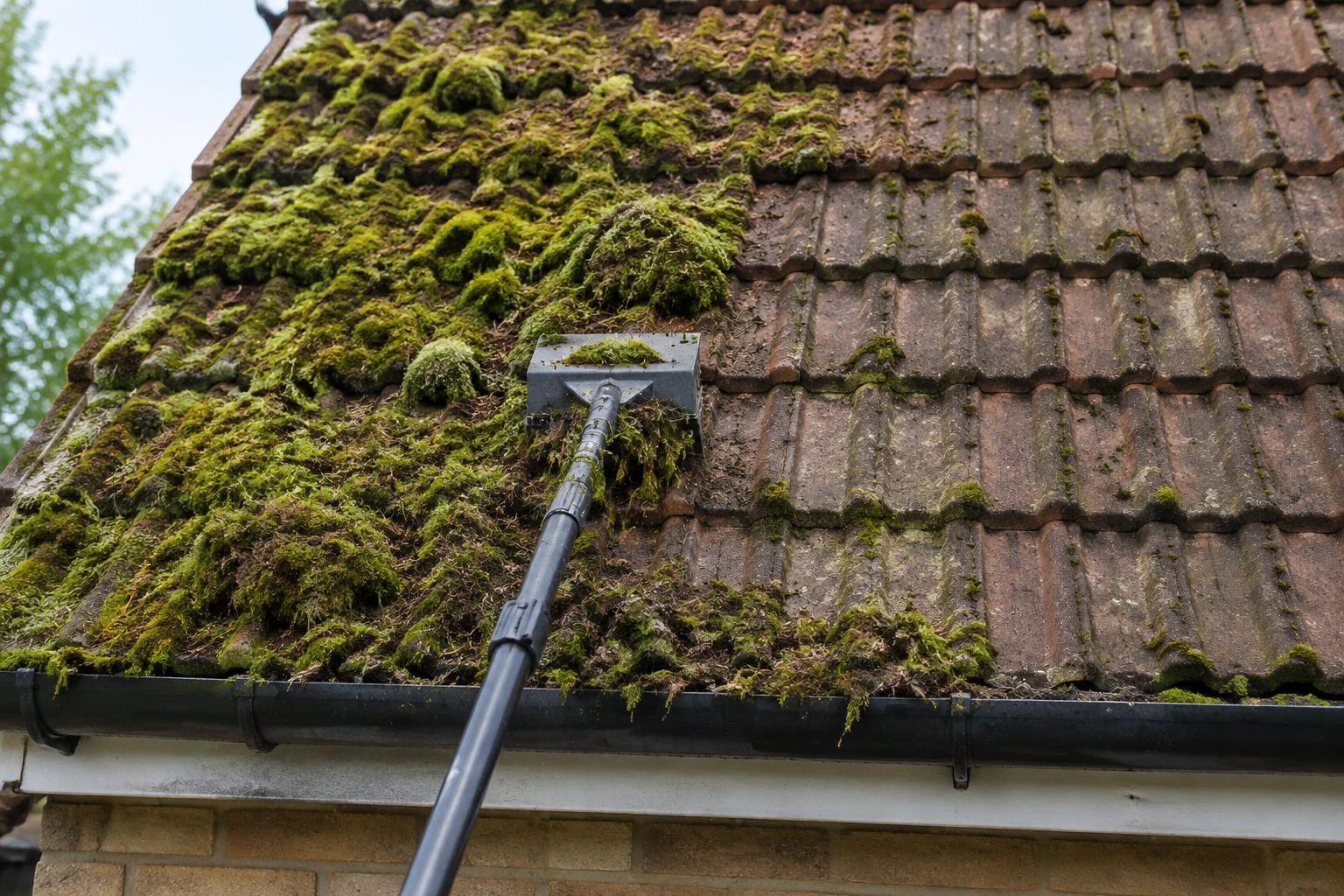
Moss killers do not wash moss away. They kill the plant, which then browns, shrinks and lets go of the tile over the following weeks. On a light coating that may be all a roof needs. On thick cushions, the dead moss still has to go somewhere, and most of it ends up in the gutters or on the ground below.
That is why a moss killer on its own is rarely the whole answer for a heavily covered roof. Loose growth is normally removed with care first, then a treatment is applied to what remains. The order matters more than the brand.
Shop moss killers and moss cleaners for roofs
Products sold as moss cleaner for roofs are usually sprayed from a garden sprayer or a hose-end bottle. They are designed for easy use, but on a pitched roof the hard part is reaching the surface. Spraying from a ladder while holding a pressurised container is a real fall risk, and walking on tiles can crack them.
Read the label closely. It tells you which surfaces the product is for, how to protect plants and drains, and the weather it needs. Some moss kill roof products are intended for paths and walls rather than roof coverings, and some are not suitable for felt.
Killing moss on flat and felt roofs
People often ask how to kill moss on a flat roof or a felt shed roof. These surfaces hold water, so moss spreads quickly in shaded corners. A moss killer can be brushed or sprayed on, but bitumen felt can be softened by some chemicals and scuffed by stiff brushes. Check that the product names felt on its label.
Outlets matter on a flat roof. Dead moss that is left in place washes into the drain and can block it. Clearing the outlet after treatment is as important as the treatment itself.
Moss killer for block paving
Moss killer for block paving is a different job from a roof. The moss grows in the joints, and killing it does not refill the sand it has displaced. A driveway usually needs cleaning, joint work and then treatment, so treating the surface alone leaves gaps for new growth.
How a professional biocide treatment differs
A professional biocide is applied at low pressure across the cleaned roof, given dwell time and left for the weather to finish the job. OOR External offers biocide as a separate line in the quotation, so you can see what the cleaning stage includes and what the treatment adds. Plants, ponds and nearby surfaces are considered before application, and the product is used according to its label.
The bigger difference is access. Every roof is assessed for covering, pitch, condition and access before a method is agreed, and anything needing specialist access is discussed and priced before work starts. Gutters and outlets are cleared after a roof clean so the dead moss does not stay at the eaves.
Choosing between the two
A shop product may suit a low outbuilding you can reach safely from the ground. A house roof with established moss usually needs careful removal first, a treatment second and gutter clearance last. If you are unsure whether moss is harming the tiles, the guide on moss damage covers what to look for.
- Light growth within reach from the ground: a labelled product may be enough
- Thick moss on a pitched roof: removal, then biocide
- Felt or flat roof: check the label and clear outlets
- Block paving: clean, refill joints, then treat