
Need this sorted?
Need help with brick cleaning? Book brick cleaning or get a quote from OOR External.
What efflorescence is
Bricks, mortar and concrete contain soluble salts. When water soaks into the wall, it dissolves those salts and carries them towards the surface. As the water evaporates from the face of the brick, the salts are left behind as a white bloom. The deposit can be a fine dust that brushes off, or a harder crust where it has built up over time.
It is most common on new walls, garden walls, retaining walls and chimney stacks, all of which get wetter than a sheltered house wall.
Why it appears on new brickwork
New walls hold a lot of construction moisture from mortar and from bricks that were rained on during building. As they dry out over the first year or two, salts migrate outwards. This is often called new building bloom. It usually reduces each season as the store of soluble salts is used up and the wall reaches a stable moisture level.
When it fades naturally
On a new wall with no ongoing water problem, efflorescence often fades with ordinary weathering. Rain washes some away and less returns each time. Patience is often the best first step. Cleaning too early can actually draw more salts to the surface if lots of water is used, so dry brushing is normally tried first.
When cleaning brick efflorescence helps
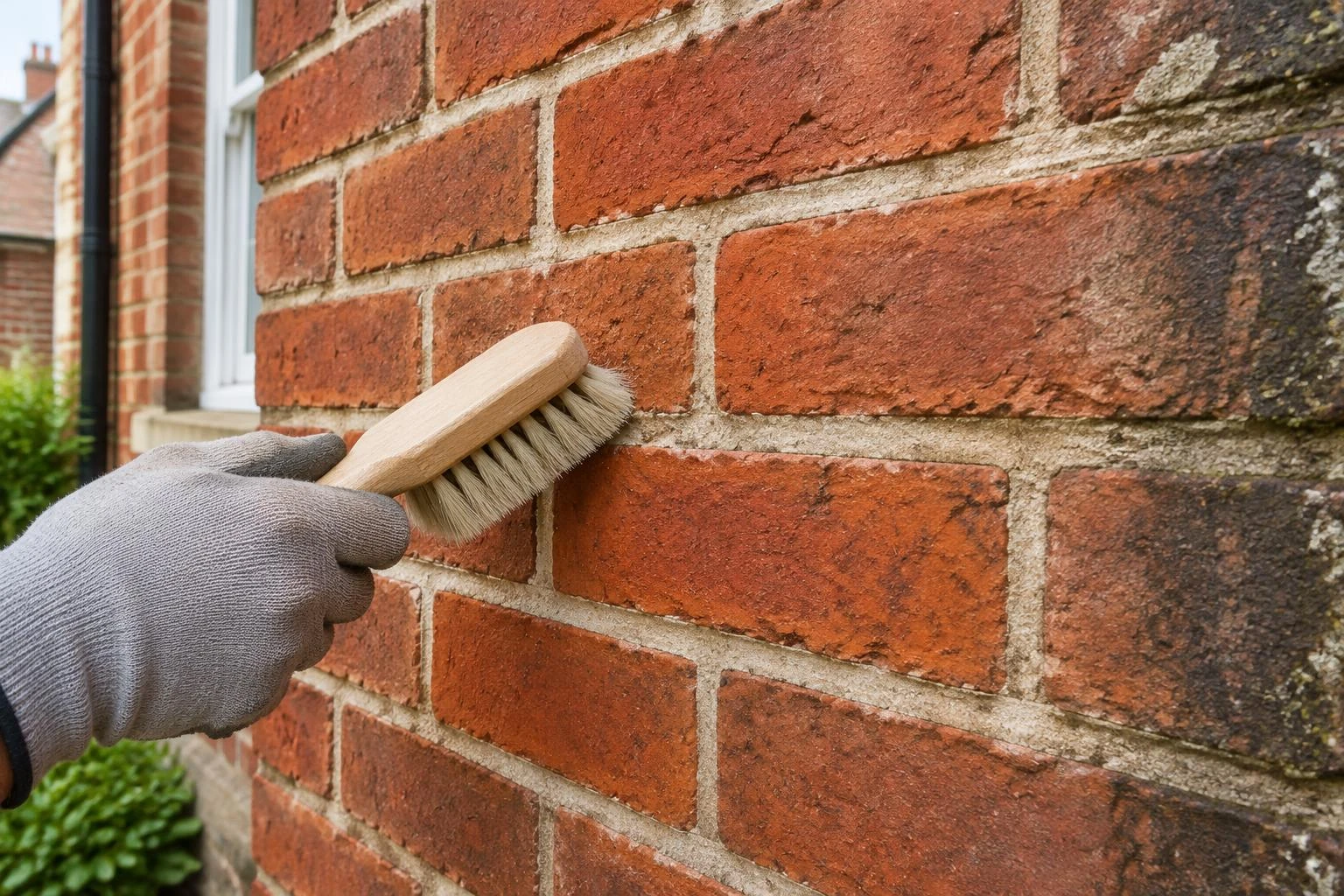
Where the bloom is persistent, thick or spoiling the look of a wall that has otherwise dried out, careful cleaning can help. The usual approach is to dry brush loose deposits with a stiff, non-metallic brush, then use a suitable masonry cleaner if needed, applied with low pressure and rinsed sparingly. Heavy soaking or high-pressure jetting is avoided because it pushes water back into the brick and restarts the cycle.
Strong acid products need great care. They can discolour some bricks, attack mortar and leave their own staining if not neutralised and rinsed properly.
When it signals damp to investigate
Efflorescence that keeps coming back on an older wall is a clue rather than the problem. It means water is getting into the masonry. Common causes include leaking or overflowing gutters, cracked copings, missing flashings, failed pointing, ground levels piled above the damp course and garden soil banked against a wall. Inside the house, efflorescence on plaster can indicate rising or penetrating damp.
In those cases cleaning only treats the symptom. The water source needs finding and fixing, sometimes by a builder or damp specialist, before the wall will stay clean.
Efflorescence or something else?
White deposits are not always salts. Lime bleeding from mortar leaves harder white runs that do not brush off. Paint, sealant or cement splashes from building work look different again. Green and black staining is organic growth rather than salt. If you are not sure what you are looking at, a photograph is usually enough for an initial view.
Preventing it returning
Keep gutters and downpipes clear and flowing, maintain copings and pointing, and make sure soil and paving sit below the damp course. On garden and retaining walls, a coping that throws water clear of the face makes a real difference. The guide on how to clean exterior brick covers general brick cleaning and safe methods once salts are under control.