
Need this sorted?
Need help with brick cleaning? Book brick cleaning or get a quote from OOR External.
Identify the dirt first
Brick picks up several kinds of staining, and each needs a different approach. Green and black growth is algae, mould or lichen. White powder is usually efflorescence, which is salt rather than dirt. Dark streaks under sills come from water runoff. Soot, traffic film, rust and paint splashes are something else again. Working out what you are dealing with avoids using the wrong product.
White salt deposits have their own guide on efflorescence on brickwork, because treating them with lots of water can make them worse.
Check the bricks and mortar
Before cleaning, look closely at the wall. Soft, crumbling or recessed mortar, spalling brick faces and cracks should be noted. Old lime mortar is softer than modern cement and easily eroded. If the joints are already weak, any cleaning needs to be very gentle, and repointing by a builder may be needed first. Cleaning cannot repair damaged masonry.
What you will need
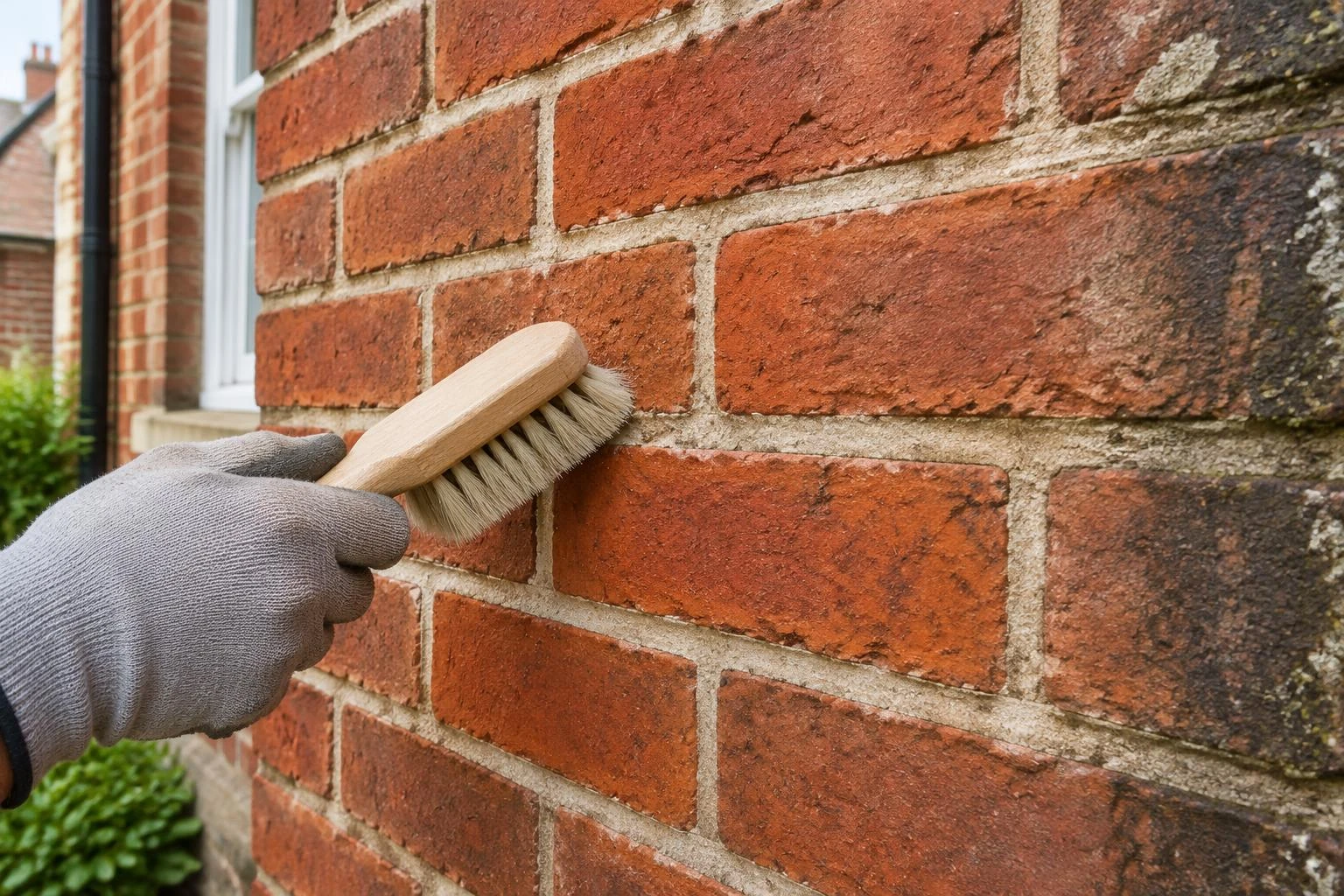
A soft or medium bristle brush with a long handle, a garden sprayer or watering can, a hose, a bucket, gloves and eye protection. For organic growth, a masonry-safe algae and mould cleaner from a builders merchant is usually enough. Avoid wire brushes, which leave scratches and can deposit metal that later rusts.
Cover plants and protect windows, doors and paving below from runoff before you start.
A safe step by step method
Lightly wet the wall from the bottom up so the brick does not absorb too much product. Apply the cleaner according to its label, again working from the bottom, and leave it to dwell for the recommended time. Scrub gently with the bristle brush, working on small sections. Rinse with a hose at normal pressure from the top down so dirty water runs over areas you have already cleaned. Allow the wall to dry fully before judging the result; brick often looks patchy while wet.
Organic stains may keep fading for a few weeks as dead growth weathers off.
Why to avoid high pressure
A pressure washer can blow mortar out of joints, erode the fired face of softer bricks and drive water deep into the wall. Damaged faces then absorb more water, which can lead to frost damage in winter. On older or handmade bricks the harm can be permanent. If you use a pressure washer at all, keep it on its lowest setting and only for rinsing.
Be careful with acids and bleach
Brick acid and similar products are for specific jobs, such as removing cement residue from new work. Used wrongly they can burn the brick colour, attack mortar and leave white or brown staining. Household bleach can harm plants and discolour some bricks. Always test any product on a hidden area first.
Paint and graffiti
Paint, spray marks and tags need different products altogether and can easily be spread or pushed deeper into porous brick. The guide on how to remove graffiti explains the options for that kind of marking.
When to call a professional
Large walls, anything above ground floor height, chimney stacks and fragile or historic brick are best left to a professional. So are walls with heavy staining that a household product has not shifted. Professional cleaning uses controlled low-pressure methods, the right solution for the stain and careful rinsing, with nearby surfaces protected throughout.