
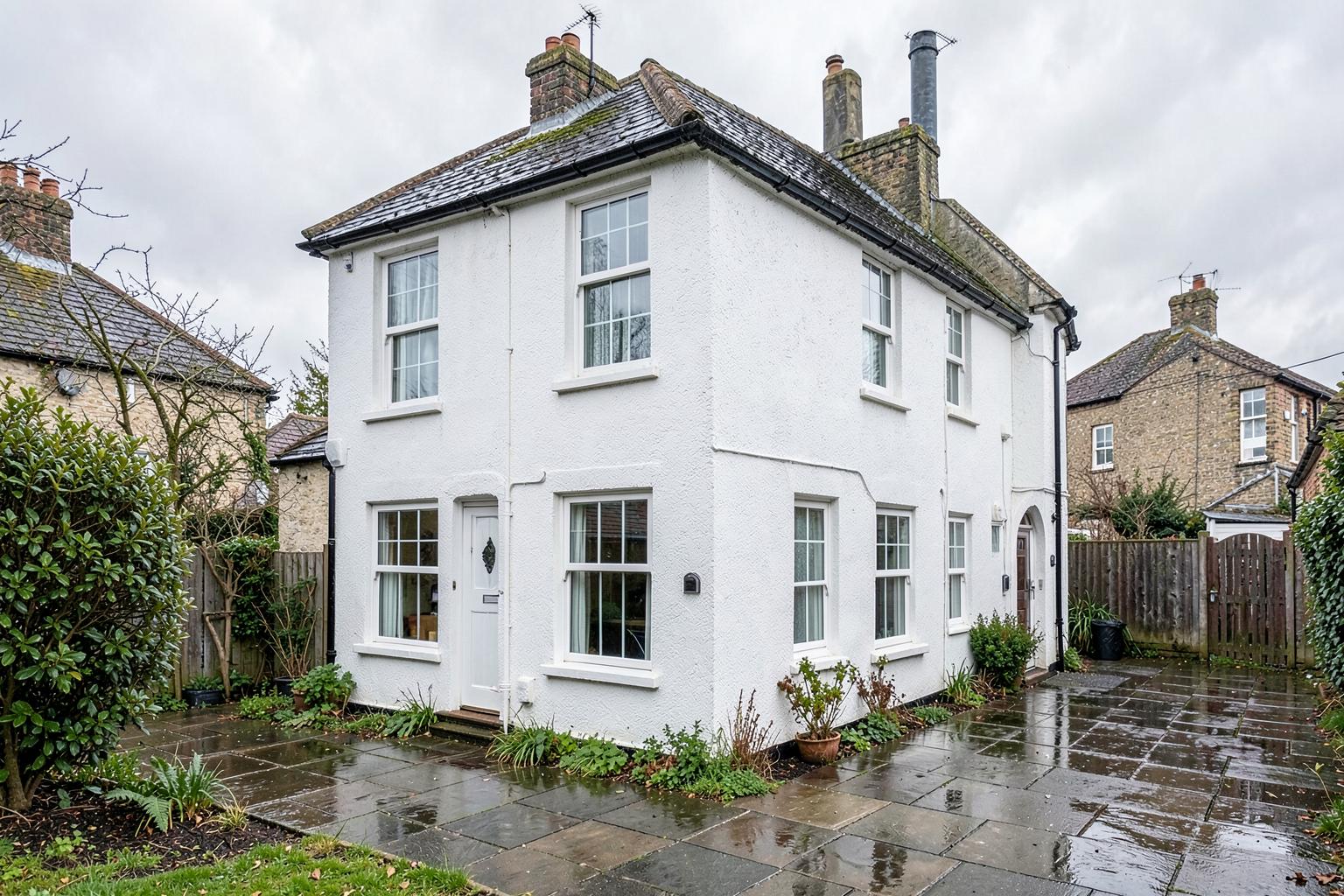
Why walls turn green
Algae needs moisture, light and a surface to hold on to. Rendered, textured and porous surfaces hold moisture well, and elevations that get little sun never dry out fully, so the growth establishes and then spreads.
That is why the north and shaded sides go green first, and why the greenest area on many walls sits directly under a gutter joint or beside a downpipe.
How the staining is removed
A soft wash treatment applied evenly across the wall, left to dwell, then rinsed at low pressure is the standard approach. The treatment works through the organic film rather than blasting the top off it, which is what makes the result last and keeps the finish even.
Whole elevations are treated rather than patches, because a cleaned patch beside untreated wall always shows.
Why scrubbing and pressure fail
Scrubbing lifts the surface layer of growth and leaves the rest, so the wall greens up again quickly. High pressure does the same thing and adds the risk of scarring render, opening hairline cracks and driving water into the wall. On coated and coloured surfaces those marks are permanent.
Stopping it coming back
Almost every long lasting improvement is about keeping the wall dry.
- Clear and repair gutters so they are not running down the face of the wall
- Redirect a downpipe that discharges against the render
- Cut planting back so air can move across the surface
- Move bins, stacked materials and fence panels off the wall
- Check that sills and copings are throwing water clear
How often walls need treating
A treated wall in reasonable conditions usually looks clean for a couple of years or more. Shaded, coastal and heavily planted elevations come back sooner, and it is normal to treat one problem elevation more often than the rest of the building rather than doing everything every time.
When to get help
Get a professional involved when the wall is above ground floor reach, when the surface is rendered, coated or coloured, when the staining keeps returning within months, or when there is damp showing inside. Each material is assessed before a method is recommended, so the clean is safe for the surface as well as effective on the growth.