
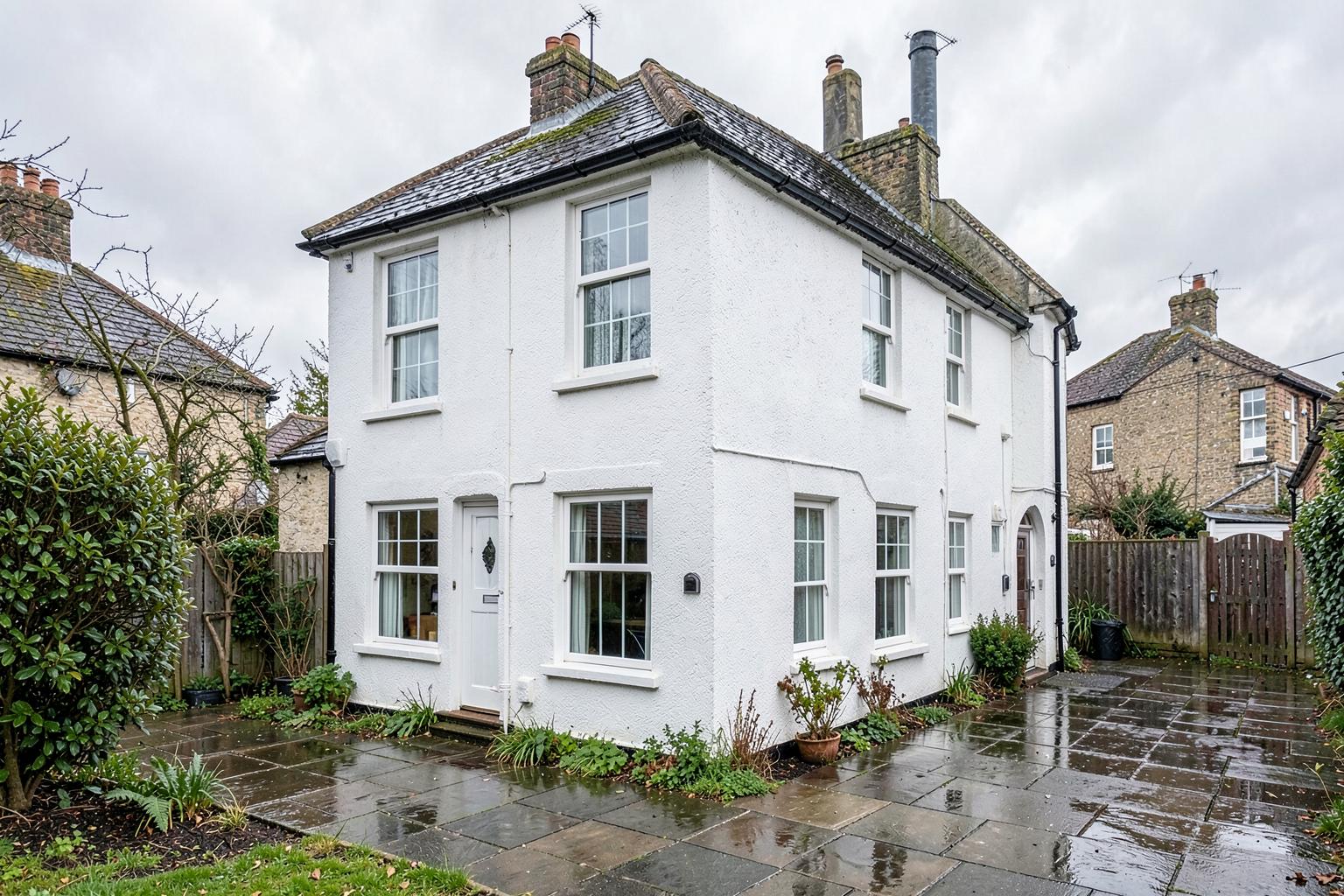
Do use a low pressure soft wash
A soft wash treatment applied evenly, given proper dwell time and rinsed at low pressure is the standard approach for through coloured render. It removes the organic film that causes the discolouration without touching the render itself, and it treats the whole elevation to the same degree so the result is even.
Do not use a pressure washer
High pressure on through coloured render abrades the outer surface. Where it does, that patch is lighter and slightly rougher than the render around it, it holds dirt faster afterwards, and no subsequent cleaning will match it back in. Lance marks and banding on a rendered elevation are almost always the fingerprint of a pressure washer.
Pressure also drives water into the system and can open up hairline cracking around beads and reveals.
Do treat the whole elevation, not the stained bit
Spot cleaning is the second most common mistake. If you clean only the green patch, you finish with a clean patch on a dirty wall, and the contrast reads worse than the original staining. Work elevation by elevation, corner to corner, so the finish is consistent.
Do not experiment with household products
Bleach splashes, patio cleaners and strong acids all carry real risks on render: colour change, streaking that runs down from the point of application, damage to the surrounding paving and planting, and staining on adjacent metalwork. The safe route is a product intended for the substrate, applied at the right dilution.
Do fix what is keeping the wall wet
Persistent growth on one part of a rendered wall usually has a cause behind it.
- A leaking or overflowing gutter above the stained area
- A downpipe discharging against the render
- Planting or fencing holding moisture against the wall
- A sill or coping shedding water back onto the face
- Deep shade that never lets the wall dry out
Do check the system documentation
Render systems come with manufacturer maintenance guidance, and following it matters most while the system is still within warranty. Confirm what is permitted before agreeing a method, and if a contractor cannot tell you what they intend to apply and at what pressure, that is your answer.