
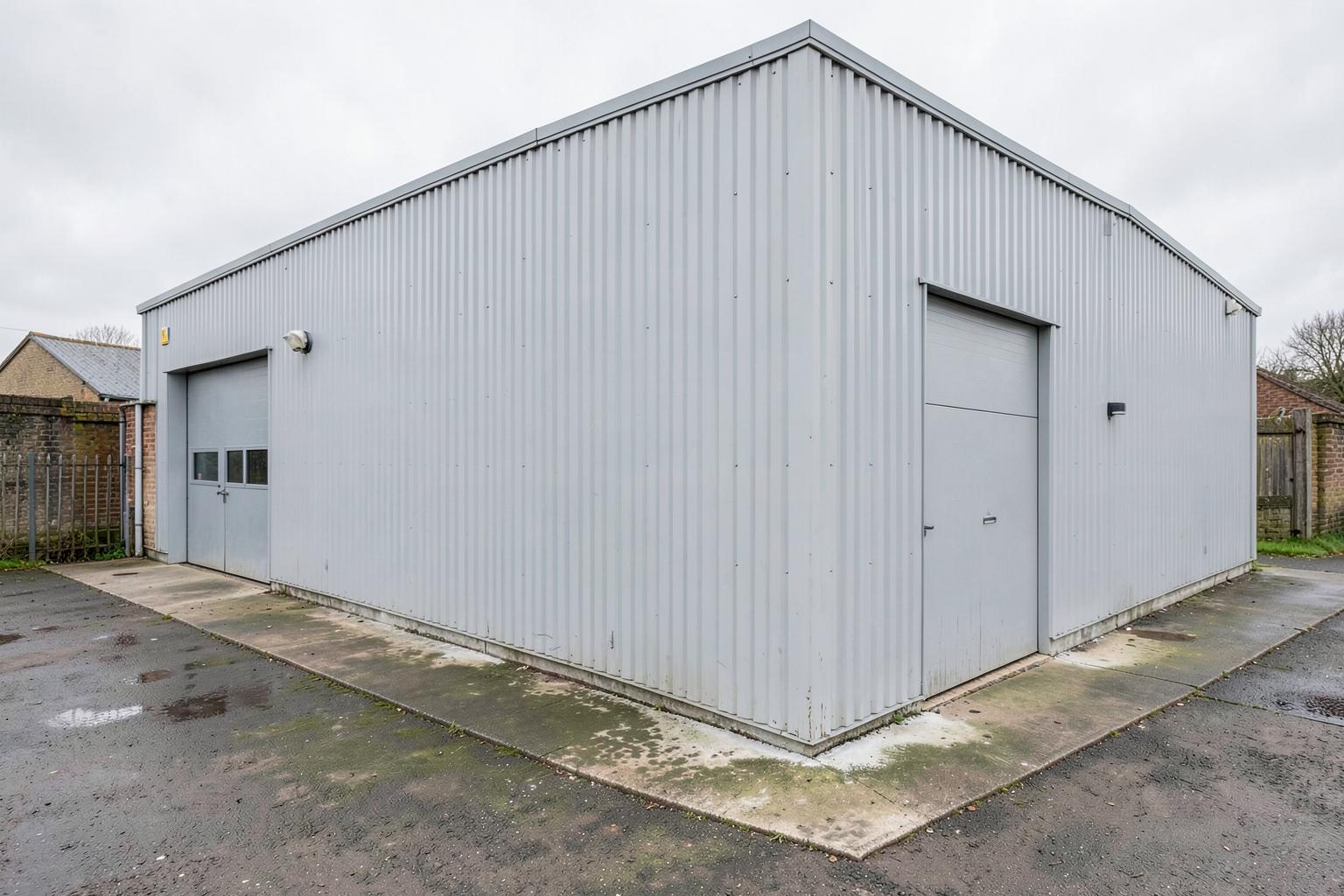
Read the elevation in zones
A warehouse elevation rarely soils evenly. The upper panels usually carry weather and traffic film, the mid band carries whatever the prevailing wind has driven at it, and the lowest two or three metres near doors and docks carry yard splash, tyre spray and process residue. Those zones can need different treatments, and a quotation that ignores the difference is either too high on the easy part or too low on the hard part.
Access along a long run
Length changes the economics. High reach equipment that can travel steadily along a run is far more efficient than repeatedly setting up and repositioning, and it also gives a more even finish, which matters because variation on a 150 metre elevation is obvious from the road. Where yard traffic prevents a clear run, the elevation is taken in bays and each bay released as it is finished.
Working around a live operation
Nothing shuts down for cleaning, so the sequence is agreed before the visit.
- Delivery and shunter movements mapped before work starts
- Vehicle routes and turning circles kept clear at all times
- Dock levellers, shutters and door surrounds cleaned to an agreed standard
- Stock, plant and external racking protected or worked around
- Timings set around shift changes where that helps
Roof, gutters and the drainage nobody looks at
Industrial buildings often have valley or internal gutters where a blockage puts water inside the building rather than down the outside. Those are worth inspecting more often than a domestic gutter, and any roof debris loosened during a clean has to be cleared rather than left to find the outlets.
What it does for the building
Beyond appearance, cleaning removes the organic growth and deposits that hold moisture against panels and fixings, and it gives you a proper look at the elevation. Damaged panels, failing seals, loose flashings and blocked outlets all show up during a clean, which turns a presentation job into useful maintenance information.
Keeping it to a cycle
An annual clean on the elevation and a more frequent look at the roofline is the pattern most industrial sites settle on, with the frontage sometimes done twice where it faces a road or a customer entrance. A fixed month makes it easy to budget and stops the site drifting into an expensive rescue clean.