
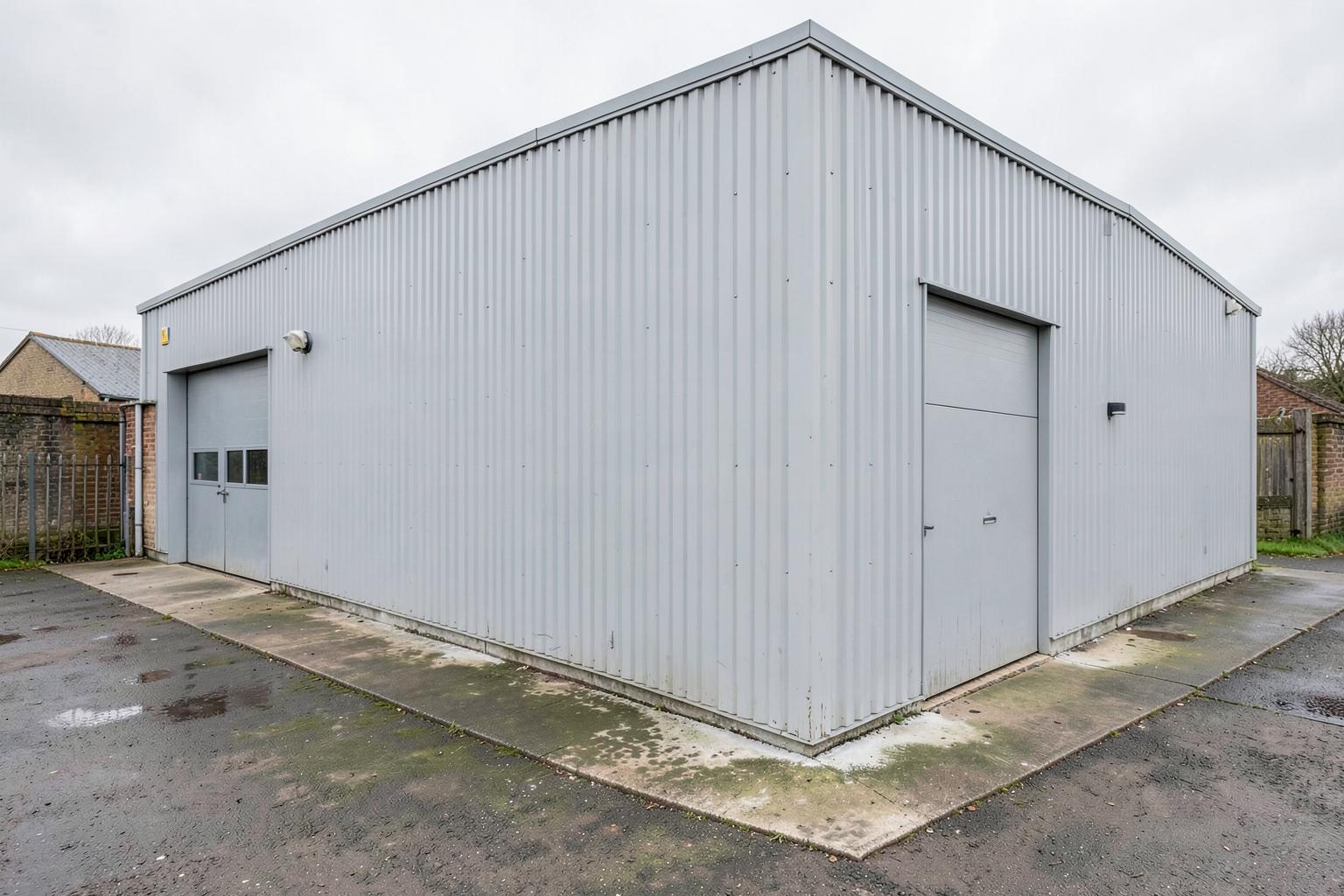
Sun, shade and drying time
The side that dries slowest grows the most. North facing elevations in the UK get the least direct sun, so moisture lingers, and algae establishes there long before it appears on a south facing panel that dries within an hour of rain stopping.
This is why a building can look freshly cleaned from the car park and neglected from the service yard behind it.
Prevailing wind and driven rain
In Kent the weather generally arrives from the south west, and coastal sites take salt laden air with it. The elevation facing that weather collects the most deposition, but it also gets the most natural rinsing, so it often looks streaked rather than uniformly green.
The sheltered elevation is the opposite case: less deposition, but almost no natural washing, so what lands stays put and builds into a film.
Streaking below fixings and details
Vertical streaks and dark tails have physical causes rather than random ones.
- Water tracking off fixings, rivets and screw heads
- Runoff from window heads, sills and copings
- A gutter joint or outlet dripping down the panel
- Ledges and horizontal joints holding dirt then releasing it in rain
- Signage and brackets interrupting the natural wash pattern
Traffic film and site processes
A frontage on a busy road collects a grey film of traffic dirt that is quite different from organic growth: it is evenly spread, it dulls rather than colours the panel, and it needs a wash rather than a treatment. Loading bays, yards and any process that vents or spills onto an elevation produce their own local pattern, usually concentrated near ground level.
Cleaning it back evenly
The practical answer is to treat the building as a set of elevations and match the method to each one, rather than applying one approach everywhere. A shaded elevation with established growth needs treatment and dwell time, while a road facing elevation may only need a controlled wash.
The result should still be even overall, so the whole building is assessed first, including profile, coating and access, and each elevation is priced for what it actually needs.
Reducing the difference next time
You cannot change which way a building faces, but you can remove the things that make one elevation worse: fix gutter joints and outlets that drip onto panels, keep planting off the wall so air can move, and clear ledges and horizontal joints where debris collects. On a shaded elevation, plan for cleaning more often than the rest of the building rather than waiting for it to match.