
Trading hours decide everything
Frontage work is usually an early morning job, finished before the first customers arrive. Larger elevations and rear service areas can run through the day, because nobody is being sold to there. On a multi unit park the practical pattern is to work unit by unit at opening, then move to the back of house and yard areas once trading starts.
Anything that needs a longer setup, such as a high canopy or a full elevation, is better booked for a quiet trading period than a peak weekend.
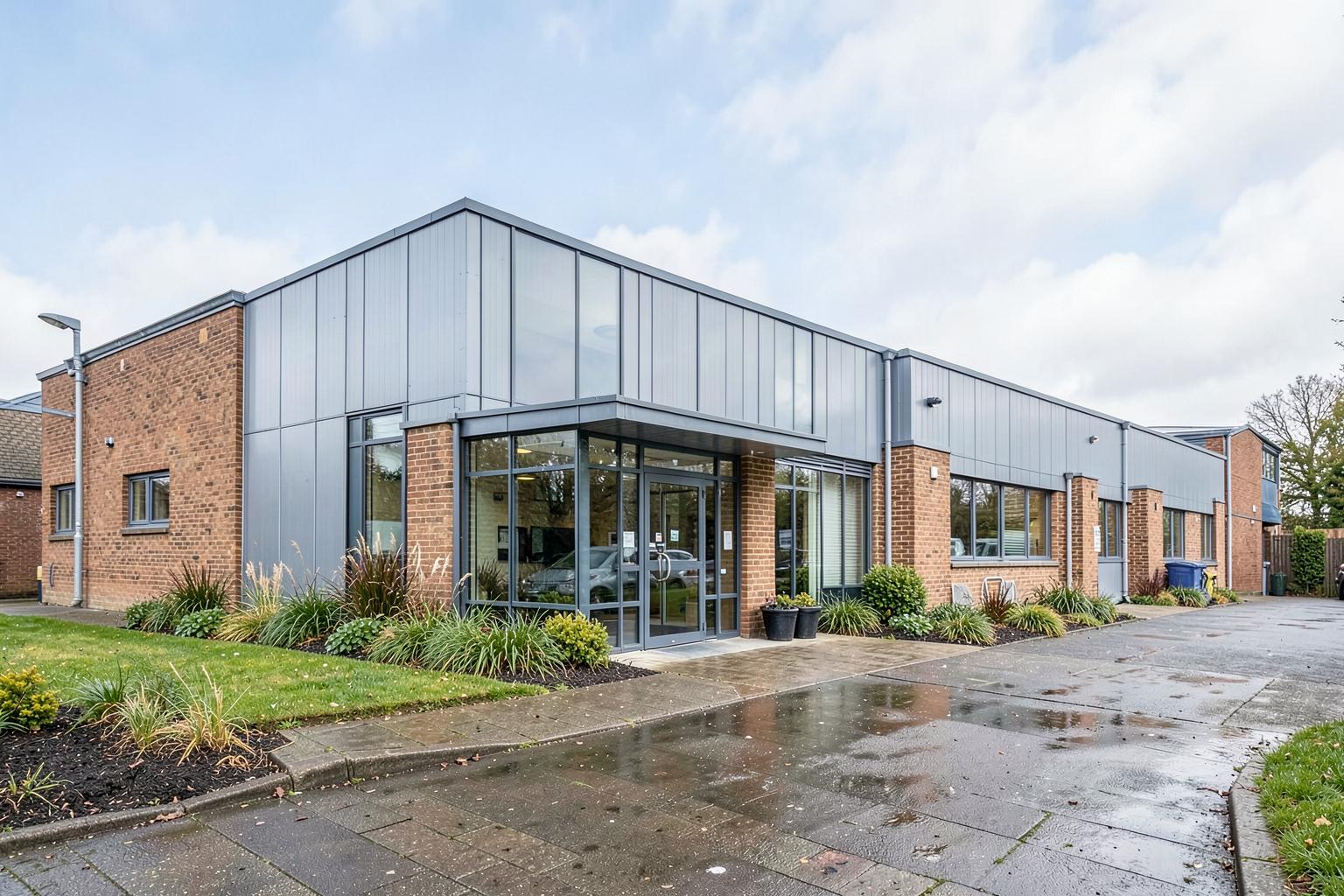
Where the spend actually shows
Customers notice a short list of things, and they are cheap compared with a whole building.
- Glazing frames and door surrounds at eye level
- Canopy soffits and undersides, which streak first
- Signage zones and the fascia band above the shopfront
- Entrance paving, mats and the first few metres of approach
- Bin stores and trolley bays, which read as neglect if left
Landlord and tenant scopes
Confusion over who cleans what is the usual reason a park looks half maintained. Common areas, car parks, service yards and often the main elevations sit with the landlord or managing agent, while the demised shopfront and signage usually sit with the tenant. Agreeing the split in writing before booking avoids a clean building with a dirty shopfront on it, or the reverse.
Method on a retail frontage
Coated cladding and composite panels are washed at controlled pressure, painted and rendered areas are soft washed at low pressure, and glazing frames and canopy soffits are cleaned by hand or with a low pressure application where detail matters more than force. Drainage and runoff are planned so the customer route is not left wet and slippery.
Frequency for a retail site
A visible retail frontage is worth cleaning more often than a warehouse elevation, because it is doing commercial work every day. Twice a year on the frontage with an annual clean on the rest of the building is a common and sensible pattern, and it costs less overall than letting the whole site slide into a rescue clean.