
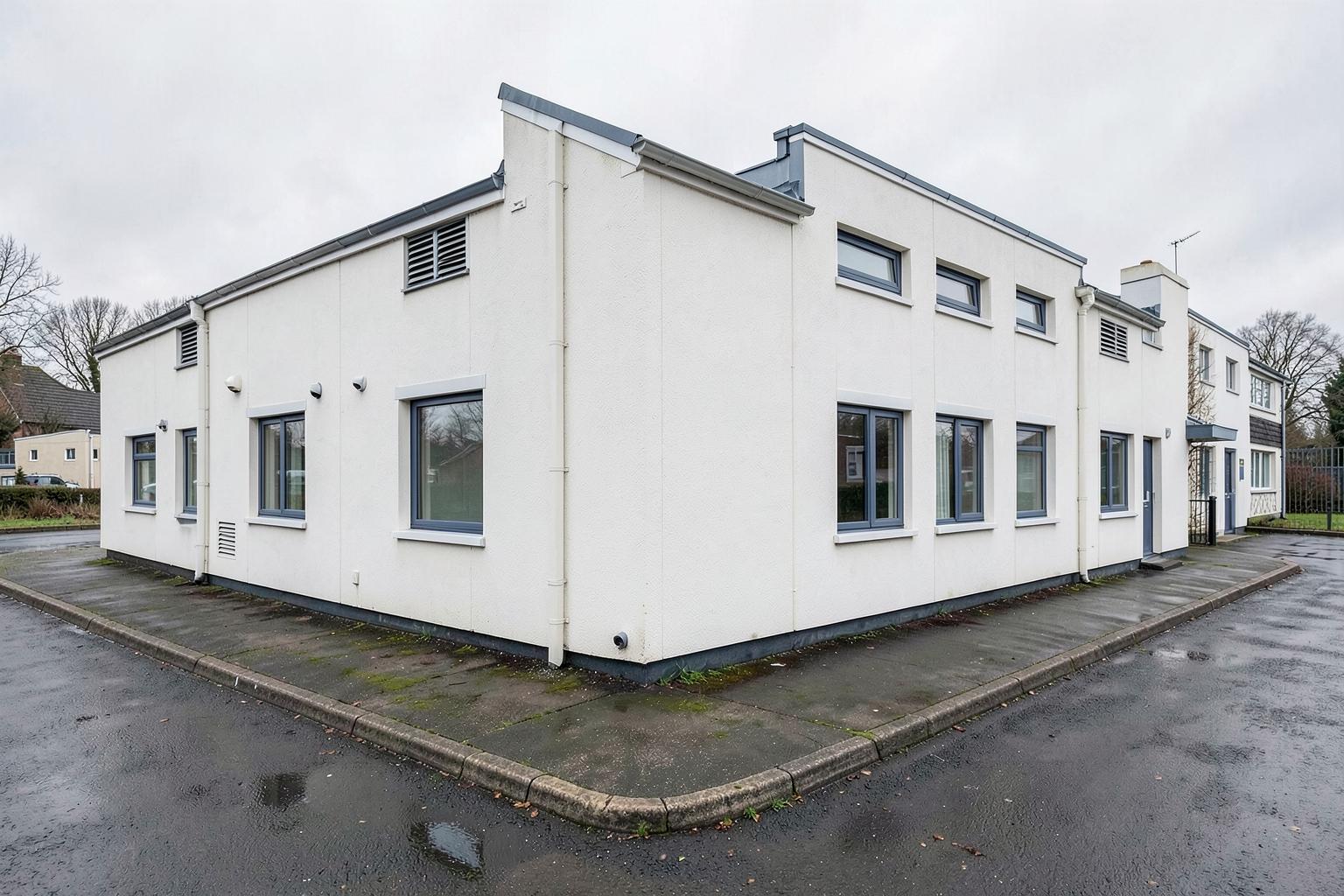
Why soft washing is chosen
Rendered walls, painted elevations and coated cladding can be scarred, stripped or driven full of water by unsuitable pressure. Soft washing changes the job by letting an appropriate treatment loosen organic growth before a gentle rinse. The aim is an even clean without using force against a finish that was not designed for it.
That makes the process useful for algae and green staining, but it is not a universal answer. Loose paint, damaged render, failed seals and fragile materials need to be identified first. Jordan checks the surface and access before proposing a method, and the quotation sets out the agreed scope.
Preparing windows, doors and occupied areas
Windows, doors and roof lights should be closed before application. Openings, sensitive details and nearby materials are checked so treatment is not directed where it should not go. Cars, movable furniture and loose items are taken away from the working zone, while staff, residents or customers are kept clear until the section is rinsed and released.
On a commercial property, work can be divided into elevations or bays around trading, deliveries and entrances. On a home, a short conversation about access, pets and neighbouring boundaries helps prevent surprises. Preparation is part of the method, not an optional extra added after spraying begins.
Plants, pets and garden surfaces
Planting and adjacent paving need attention before, during and after treatment. The exact protection depends on the product and site, so labels and safety information take priority over a generic rule. Beds can be shielded where appropriate, surrounding areas managed carefully and the working zone rinsed as required by the chosen process.
Pets should stay away from the active work area and any stored products. Their water bowls, toys and bedding should be moved before work starts. The area is only handed back when the agreed cleaning and rinsing steps are complete.
Safe use of cleaning products
Cleaning products can irritate skin and eyes, and spray can create mist. The Health and Safety Executive's guidance for low pressure cleaning explains that exposure should be prevented or adequately controlled under COSHH, with suitable working practices and protective equipment. A professional operator should be able to explain the controls for the product being used without relying on vague claims that it is harmless.
Products must never be mixed casually or decanted into unlabelled containers. Storage, dilution, application and disposal follow the supplier information for that product. This guide does not prescribe a chemical recipe because the surface, staining and surrounding property differ from job to job.
Runoff, drains and neighbouring property
Before work starts, note where rinse water will travel. Steps, paths, gullies, planted beds and neighbouring surfaces can sit below the elevation. The clean should be sequenced so runoff is controlled and finished areas are not contaminated again from work above.
Busy sites may need barriers or a temporary route around the work. Wind direction matters too, particularly near parked vehicles, open entrances and public paths. If conditions make spray control unreliable, the sensible choice is to pause or move to another elevation.
Questions to ask before booking
Ask what is being treated, why soft washing suits it, how the surroundings will be protected, what access restrictions apply and what the finish should look like afterwards. Also ask what happens if damaged render, failing paint or open joints are found. Clear answers show that the site has been considered as a whole rather than as a wall to spray.
- Which surfaces have been assessed?
- How are openings and nearby finishes protected?
- Where will people and pets stay during the work?
- How will rinse water be controlled?
- What product instructions and safety controls apply?
- Which defects would stop or change the clean?