
Need this sorted?
Need help with driveway cleaning? Book driveway cleaning or get a quote from OOR External.
Act quickly on a fresh spill
The sooner you deal with oil, the less it soaks in. Blot or cover a fresh spill with an absorbent material such as cat litter, sawdust or a proprietary absorbent, press it down and leave it to draw the oil out. Sweep it up and dispose of it responsibly. Do not hose a fresh spill, as water spreads the oil and pushes it deeper into joints.
Once the surface oil has gone, a degreaser suited to the driveway surface can be worked in and rinsed. Check the label first, especially on tarmac.
Will oil stain a driveway permanently?
It can. Oil penetrates porous surfaces such as concrete and some paving, and over months it bonds into the material. Old stains can usually be lightened but may leave a faint shadow. Sealed surfaces resist staining better, which is one reason some owners seal block paving after cleaning.
Concrete driveways
Concrete is porous, so oil sinks in. A degreaser or poultice is applied, given time to draw out the oil and then rinsed with hot water or pressure. Repeated treatments may be needed for older stains. The aim is to lighten the mark evenly without etching the concrete around it, which would leave a clean patch that stands out as much as the stain did.
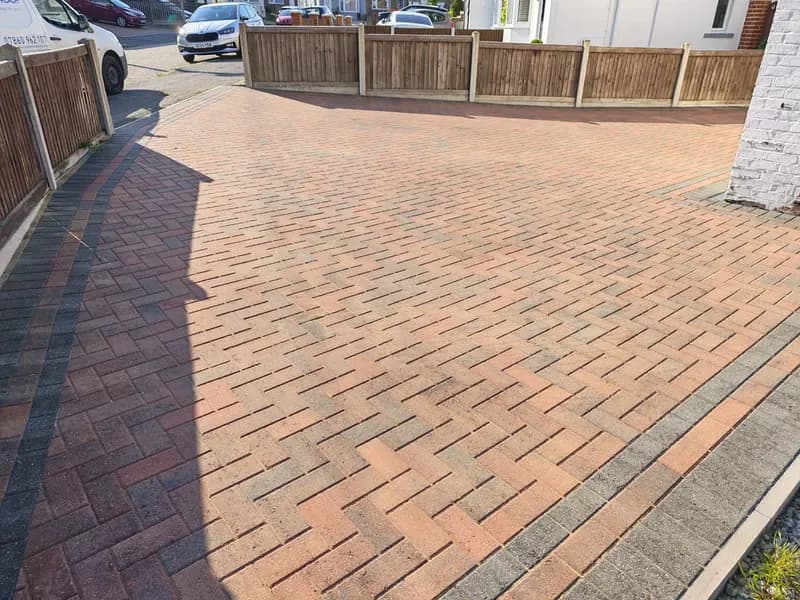
Tarmac and block paving
Tarmac needs extra care because bitumen is related to oil, and strong solvents can soften the surface. Gentle degreasers suited to asphalt and patience work better than aggressive products. On block paving, oil collects in the blocks and the joint sand. The stained sand may need removing and replacing once the blocks are clean.
Does pressure washing remove oil stains?
Pressure washing on its own rarely removes an oil stain. Oil repels water, so the jet tends to clean the surface around the stain while the mark stays. Pressure washing is effective as the final step, rinsing away oil that a degreaser has loosened, and hot water helps. Expect a lighter mark rather than a guaranteed disappearance on older stains.
Preventing new stains
A drip tray or mat under a car that leaks, prompt attention to fresh spills and a suitable sealer on porous paving all help. Getting the leak itself repaired is the most effective step of all.
- Use a drip tray under a leaking vehicle
- Cover fresh spills with absorbent quickly
- Avoid hosing fresh oil
Need it sorted? Book driveway cleaning
If stains are spread across the driveway, or you want the whole surface cleaned at the same time, driveway cleaning deals with oil marks alongside general grime and growth. Send photographs of the stains and the driveway, and use the quote form below for a free quotation.
Products to avoid
Some home remedies do more harm than good. Petrol, paint thinner and other solvents can spread oil, damage tarmac and create a fire risk. Strong acids can etch concrete and leave a pale patch. Biological washing powder and washing-up liquid can help on very fresh drips, but they rarely shift an old stain. Whatever you use, rinse it away thoroughly and keep it out of drains and away from plants.