
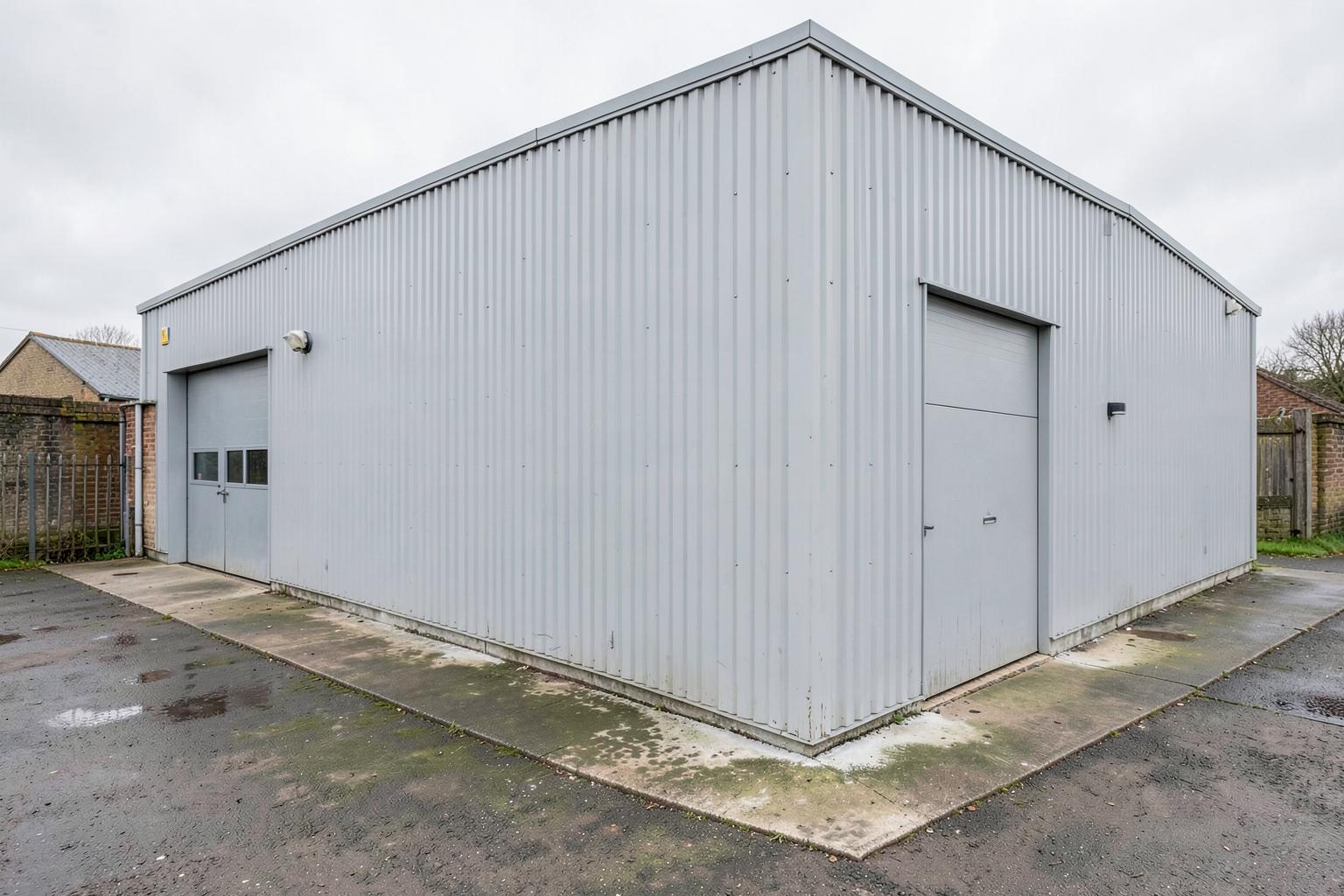
What dirty cladding and failing cladding look like
Dirty cladding tends to look darker, patchy and streaked, with green or black growth concentrated on shaded elevations, around panel joints and below roof edges. Failing coatings look different: colour faded evenly across the most sun exposed faces, a powdery surface, peeling or flaking at edges and cut ends, and in bad cases rust breaking through. The two problems often overlap, which is why a close inspection matters before anyone quotes for either.
The simple chalking test
Rub a clean, dry finger or a dark cloth firmly across a panel. If it comes away with a coloured powder, the coating is chalking, which is a sign it is weathering and losing its protective binder. Light chalking is normal on older panels and does not mean the coating has failed. Heavy chalking across the sunniest elevation is a sign that recoating may be approaching. Dirt that wipes off grey or green and leaves the colour below looking bright suggests cleaning alone will make a big difference.
Why cleaning comes first either way
Even if a building does need recoating, the panels must be thoroughly cleaned before any paint goes on, because new coatings do not bond to dirt, algae or chalk. So a professional clean is never wasted. In the best case it shows the existing coating is fine and restores the look of the building. In the other case it is the essential preparation, and it lets whoever specifies the coating see the true condition of the panels.
Comparing the two options
These are the practical differences that owners usually weigh up.
- Cleaning is quicker and far less disruptive to a working site
- Cleaning keeps the manufacturer finish rather than replacing it
- Recoating addresses genuine coating failure, fading and corrosion
- Recoating always needs thorough cleaning as preparation
- Regular cleaning can extend the time before recoating is needed
Cleaning without harming the coating
Coated cladding panels should be cleaned with a soft wash at low pressure, using products compatible with the coating. High pressure risks stripping or scarring a finish that was perfectly serviceable, which would push the building toward recoating sooner. Manufacturer maintenance guidance for the panels should be checked where it is available, as it sometimes sets out how often and how the cladding should be cleaned.
Getting the building assessed
OOR External cleans commercial cladding on industrial units, offices, schools and retail parks across Kent. Every project starts with an assessment of the cladding profile, coating and access, followed by a free written quote with a clear scope. If the clean reveals coating problems, you will know about them, so you can plan the next step with the right information.