
Need this sorted?
Need help with patio cleaning? Book patio cleaning or get a quote from OOR External.
What is black spot on patio slabs?
Black spot is a lichen, a partnership between a fungus and an alga, that grows tightly on stone and concrete. Each spot starts small and spreads outwards, and over a few years a patio can become speckled all over. Because the lichen roots into tiny pores in the slab, it is not simply sitting on top like dirt or algae.
Not every black mark is black spot. Mould from leaves, tannin stains, soot and rust can also look dark. Black spot is distinctive for its round, crusty dots that do not wipe off.
Why do you get black spots on patio slabs?
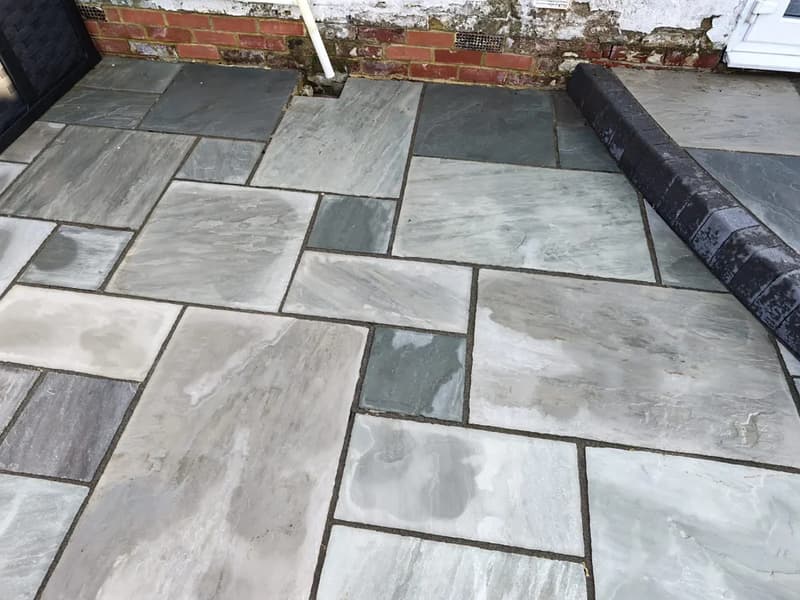
Black spot likes clean air, moisture and a slightly rough, porous surface. Sandstone is ideal, which is why black spots on sandstone patios are so common. Concrete slabs and textured tiles can also be affected. Porcelain resists it better, though growth can start in the joints and spread to the slab edges.
What removes black spots on a patio?
A treatment designed for lichen, applied to the slabs and left to work, is the usual approach. The spots may not vanish on the day; they often fade over the following weeks as the lichen dies and weathers away. Pressure washing beforehand removes surface dirt and algae, but high pressure aimed at black spots tends to damage the stone more than the lichen.
Harsh chemicals and undiluted bleach can discolour natural stone, so products need choosing for the material.
Black stains on different surfaces
On sandstone, black spots and green algae often appear together, and the stone needs low pressure and patient treatment. Black stains on concrete patios are usually lichen or mould and can take slightly firmer cleaning. Black stains on a porcelain patio are more often organic growth in the joints or leaf tannin than true black spot. Black spots on patio tiles with a textured finish sit in the texture and need dwell time.
How to remove lichen from a patio yourself
If you want to try yourself, use a product labelled for lichen on patios, follow the instructions closely and protect plants and ponds. Avoid wire brushes and a narrow pressure washer jet on natural stone. Expect gradual results. If the patio is large, heavily affected or a delicate stone, a professional clean may give a more even finish.
Stopping black spot coming back
Black spot returns over time because spores keep landing. A suitable sealer on sandstone can slow regrowth, and regular gentle cleaning keeps it from establishing. The guide to cleaning patio slabs covers routine care for different stones.
Need it sorted? Book patio cleaning
Patio cleaning with OOR External uses a method chosen for the slab, with black spot treated rather than blasted. Send photographs of the patio and close-ups of the spots, and use the quote form below for a free quotation.
Is black spot harmful?
Black spot does not usually damage a patio structurally, but it spoils the look of the stone and can make some surfaces rougher underfoot. Where black spot grows alongside green algae, the patio can become slippery in wet weather, which is often the more pressing concern. Treating both together keeps the surface safer as well as cleaner.