
Area and layout
The size of the surface is the starting point, but layout matters too. One open driveway is quicker to clean than the same area split into narrow paths, steps and borders, because there is less repositioning and fewer edges to work carefully.
Raised beds, walls, fences and doors beside the paving all need protecting from spray, which adds time. A clear rectangular yard and a winding garden path of the same size can take very different amounts of work.
Surface type
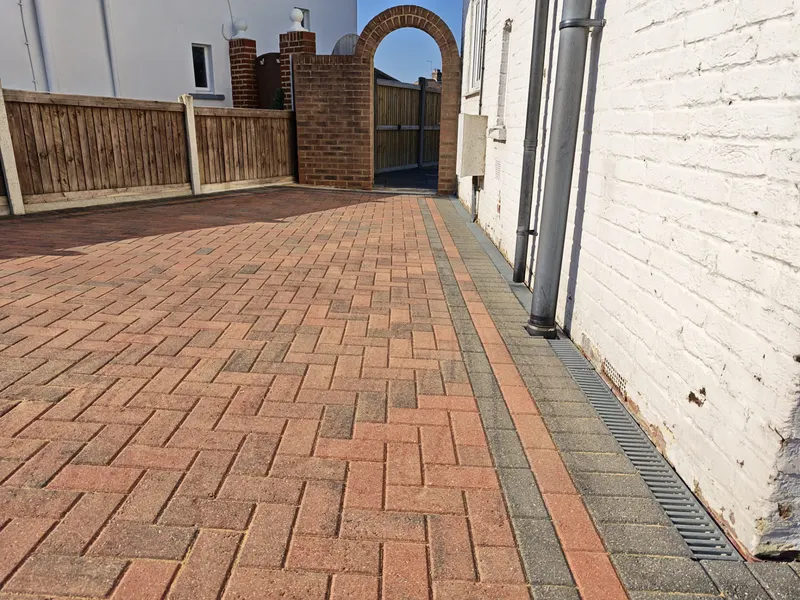
Concrete and block paving can take controlled pressure and are generally straightforward. Natural stone such as sandstone or limestone needs more care, a lower pressure and sometimes a different technique. Imprinted concrete may have a sealant layer that changes how it is cleaned.
Brick walls, steps and bin stores each have their own considerations. The more delicate or varied the surfaces, the more time the job needs.
How heavily it is soiled
A surface cleaned every year or two mainly carries surface dirt and light growth. One that has been left for many years can have thick moss in the joints, embedded black spots and deep staining, all of which take longer to shift.
Oil, rust and tyre marks are worth mentioning when you ask for a quotation. They may lighten rather than disappear, and treating them can add time.
Re-sanding, sealing and treatment
Pressure washing block paving removes old sand from the joints along with the weeds. Brushing kiln-dried sand back in once the surface is dry helps keep the blocks stable, and it is quoted as its own step. Some customers also ask about sealing, which is a separate process again.
A biocide treatment after cleaning slows the return of algae and moss, especially on shaded patios. It is offered as an optional line so you can see what it adds.
- Joint re-sanding for block paving
- Sealing, where suitable and requested
- Biocide treatment to slow regrowth
- Removal of weeds from joints
Water, drainage and access
A usable outside tap and somewhere for wash water to drain make the job simpler. If there is no water supply, or the runoff has to be managed carefully away from neighbours, doors or a pond, planning takes more thought.
Timing can matter as well. Paving needs to dry before joints are re-sanded, so a job booked during a wet spell may take two visits instead of one. Planning around the forecast keeps the work efficient.
Access affects time too. Equipment carried through a house or down a narrow side passage takes longer to set up than equipment wheeled onto an open drive. On commercial sites, cleaning around traffic and deliveries may mean working in sections.
Getting an accurate quotation
It also helps to say whether you want a quick refresh before an event or a thorough deep clean, because the two can be quoted quite differently for the same patch of paving.
The quickest way to an accurate price is to send the postcode, a few photographs of each area and a note of anything unusual, such as oil stains or loose blocks. Jordan will then recommend a method and set out a written quotation. You can also call 07860 962107.